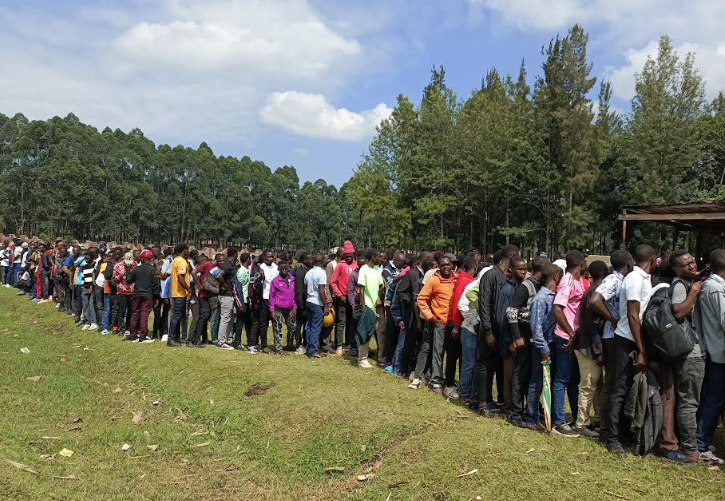
A total of 207 youth have been enrolled into the second cohort of the National Youth Opportunities Towards Advancement (NYOTA) Programme.
This follows the launch of a month-long skills training exercise at Tendere Secondary School in Gucha Sub-County, Kisii County.
The programme was officially launched by Gucha Youth Officer Jennifer Onsando in an event attended by the Deputy County Commissioner (DCC) for Gucha, Esther Kungu, World Bank–NYOTA Programme representatives Anita Isige and Sylvia Kezengwa, as well as other government officials, trainers and community stakeholders.
The NYOTA Programme is financed by the World Bank through the Government of Kenya and is designed to enhance youth employability by equipping beneficiaries with market-driven and demand-responsive skills.
The five-year project, which will run until 2030, targets approximately 830,000 youth across the country, with the aim of improving income-earning opportunities and promoting self-reliance among young people.
Speaking during the launch, Ms Onsando said the programme focuses on practical skills tailored to the needs of the labour market, enabling youth to transition smoothly into employment or self-employment.
She urged the trainees to remain committed throughout the training period in order to fully benefit from the opportunity.
“This training is not theoretical. It is practical and structured to prepare you for the world of work and entrepreneurship. I encourage you to take it seriously, as it has the potential to transform your economic future,” she said.
Under the programme, the participants will undergo one month of institutional training at accredited centres, after which they will be attached to master craftsmen for a five-month apprenticeship.
The apprenticeship component is intended to provide hands-on experience and exposure to real working environments.
Upon successful completion of the training, the youth will be assessed and certified by the National Industrial Training Authority (NITA).
In addition, graduates of the programme will receive financial support in the form of grants to help them establish viable income-generating ventures based on the skills acquired during training.
World Bank–NYOTA Programme representatives Ms Isige and Ms Kezengwa noted that the initiative goes beyond technical training to incorporate life skills, entrepreneurship education and national values.
They said this holistic approach aims to produce disciplined, responsible and productive citizens who can contribute meaningfully to economic development.
“NYOTA is about empowering young people with practical skills, discipline and confidence so that they can actively participate in economic growth at both the local and national levels,” Ms Isige said.
The programme targets vulnerable youths aged between 18 and 29 years, with eligibility extended to persons with disabilities up to the age of 35 years.
Apart from vocational and technical skills, participants are also trained on life skills, civic education and national codes of conduct to reinforce patriotism, integrity and social responsibility.
Addressing the trainees, Deputy County Commissioner Esther Kungu encouraged them to embrace the opportunity for both personal and professional growth, noting that youth empowerment initiatives play a vital role in addressing social and economic challenges facing the country.
“When young people are economically engaged, cases of drug abuse, crime and other social vices reduce.
This programme is therefore not only about individual success but also about community stability and national development,” she said.
The launch of the second cohort comes as Kisii County prepares to host President Dr. William Ruto, who is expected to officiate the award of NYOTA grants to beneficiaries from the first cohort at Gusii Stadium.
The event is anticipated to mark a major milestone in the implementation of the youth empowerment programme in the region.
Government officials and development partners reiterated that the NYOTA Programme remains a key pillar in Kenya’s broader agenda on youth empowerment, job creation and inclusive economic growth.
By Misheba Alfred