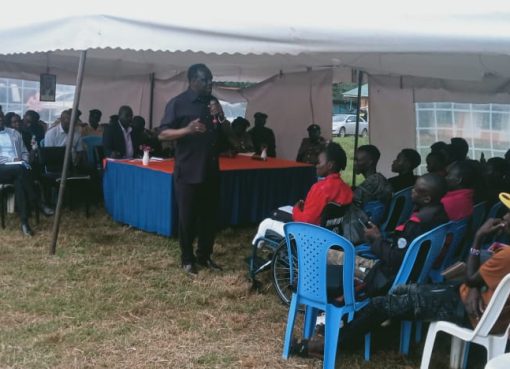
A non-governmental organisation, Childline Kenya, has rescued 60 children from exploitative domestic work in Kakamega County since the launch of the Not Invisible Anymore (NIA) project in 2024, which aims to end exploitative Child Domestic Work (CDW).
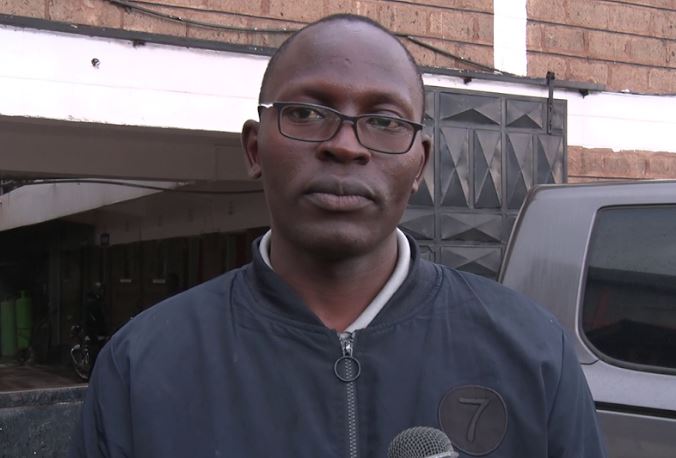
Speaking to KNA in Kakamega town Friday, Childline Kenya Projects officer, Erickson Ngetich, said exploitative Child Domestic Work (CDW) exposes children to hazardous conditions for prolonged periods.
Long-term exposure and abuse, he said, deny children the opportunity to interact with their peers, thereby hampering their self-development and growth.
The rescue is part of the organization’s three-year project, ‘Not Invisible Anymore (NIA) that is funded by the Freedom Fund, which works to end slavery and human trafficking.
Ng’etich said research carried out by the Freedom Fund’s Kenyan Hotspot Program showed that majority of children in Kakamega are exposed to child domestic work and also face abuse.
According to Ng’etich, the survey led the Freedom Fund to consider exploitative child domestic work and abuse a form of slavery and servitude, given that its focus is ending slavery and human trafficking.
“We saw it as a concern because children are deprived of their rights: right to attend school, the right to interact freely with others in the community and so on. We wanted to ensure that children understand that it is their right to go back to school and interact with others,” Ngetich explained.
He also said that child employment is illegal, adding that under the 2010 Kenyan Constitution, anyone under 18 should not be employed.
“That was another driving factor why we stepped in to safeguard children from exploitative child domestic work,” he said.
Once rescued, Ngetich said, the organization assesses the severity of the cases and reports to relevant authorities in case there is need for quick response.
He added that they are placed in a safe environment, such as children homes or Charitable Children Institutions (CCIs) temporarily while Childline Kenya assesses their backgrounds and determine if the condition of their families is still conducive for reintegration.
“If successfully reintegrated, we make follow-ups to ensure that these children return to school and continue with their education,” he added.
While under a safe place, Childline Kenya together with other partner organizations provide psychosocial support and counselling to the rescued children due to exposure to abuse and exploitative child domestic work that left most of them traumatized.
“Exploitative child domestic work is extremely traumatizing for our children, as they are exposed to hazardous conditions for prolonged periods and sometimes abused, whether physically or emotionally. At times, these children feel they no longer belong in society and become isolated. Psychosocial support comes in to help restore them to their normal ways of perceiving issues, ensure they are accepted back into society, and promote cognitive healing and smooth reintegration,” he explained.
He noted that the community has welcomed the project, supporting it by reporting cases of exploitative child domestic work, maltreatment, abuse, violence, and neglect.
He encouraged anyone who encounters such cases to report them through the toll-free number 116, or by visiting any Childline Kenya office, the police or other relevant government offices such as the Directorate of Children Services (DCS).
Meanwhile, a local Non-Governmental Organisation (NGO), Kakamega County Widows Empowerment Project (KCWEP), in partnership with Coalition on Violence Against Women (COVAW), is set to unveil a project to address the plight of domestic workers in the county.
Under the project, domestic workers will receive life skills training on their roles and how to perform their duties effectively.
The Project will also encourage employers to pay domestic workers fairly, based on the effort, value and the volume of work they perform.
KCWEP Project Officer in charge of programmes, Fred Anami, said the project is designed to ensure that the interests of both domestic workers and their employers are protected so that no one is treated unfairly.
By Moses Wekesa