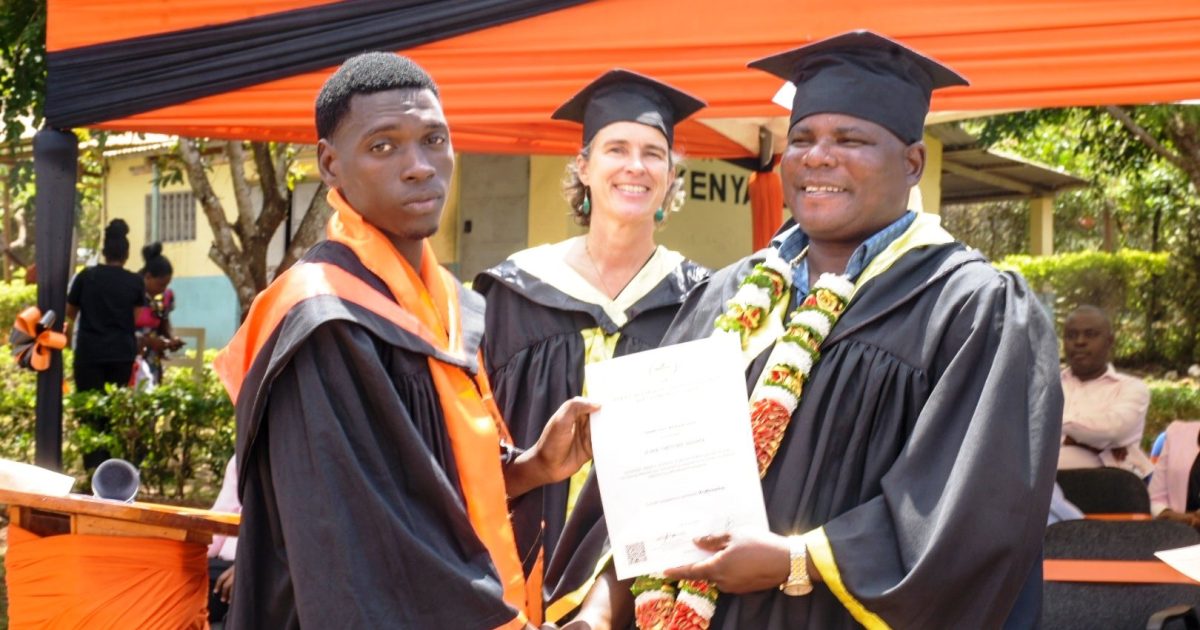
A total of 71 students graduated from the Kenya School of Integrated Medicine (KSIM) in a colourful ceremony held at Tsimba Golini ward, Matuga sub county of Kwale.
Kenya School for Integrated Medicine was established in 2007 with the vision of bringing the best educational opportunities for young people in Kenya, particularly in Kwale County.
The medical school is recognized in Kenya and is accredited by the Technical Vocational Education and Training Authority (TVETA).
It is in the leading edge of medical education by offering an integrated approach to health, bringing together courses that focus on a preventative approach to healthcare.
The facility offers courses in Community Health, Community Development and Social Work and Counselling Psychology.
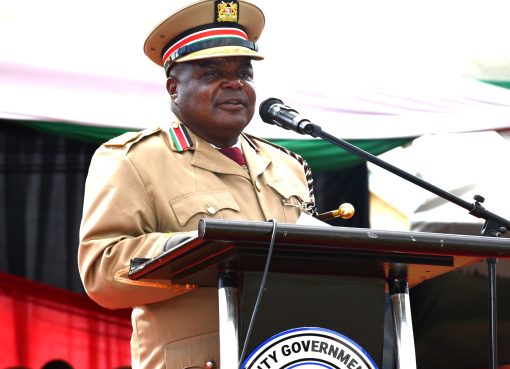
The 16th graduation event, graced by Kwale Deputy Governor (DG) Chirema Kombo, local leaders, education stakeholders and representatives from AMREF Health Africa, underscored the county’s continued investment in healthcare.
Kombo reaffirmed the county’s strong commitment to transforming the health and education sectors, while commending the medical institution for producing competent health professionals ready to serve in both public and private spaces.
Kombo praised the graduates for their perseverance and emphasized the county’s commitment to transforming the healthcare sector.
“Education and health go hand in hand. An empowered, educated health workforce is the backbone of community transformation. As a county, we will continue investing in institutions like Kenya school for integrated medicine to bridge the healthcare gap at the grassroots,” he said.
He also lauded the institution for producing health professionals ready to serve in both public and private sectors, especially in hard-to-reach areas.
“You are not just graduating with academic papers, but carrying the responsibility of improving lives, the county depends on young professionals like you to lead the future of public healthcare,” he said.
The Deputy Governor said Kwale has made significant strides in the health sector, noting that since the advent of devolution in 2013, the number of operational health facilities has grown from 35 to 162, and the health workforce has expanded to over 1,800 professionals, including specialists.
The school’s Principal, Ann Soita highlighted the school’s dual role in academic excellence and community service.
“Our mission goes beyond the classroom. We train compassionate, skilled professionals who understand the real challenges our people face on the ground,” she said, urging stakeholders to support the expansion of community-based training models.
Soita said very few resources are given to mental health in Kenya and community health is only now being recognized as a key component of health education and the needs of trained community health workers are vital to embrace the challenges of Universal Health Coverage.
She says the school seeks to introduce the benefits of an integrated approach to healthcare in Kwale County as well as providing skilled medical practitioners for the Kenyan healthcare system.
The principal said students gain an introduction to the principles of a holistic view on health and life, exploring the concepts of mind/body medicine, natural and alternative forms of healing, permaculture, and other holistic philosophies.
“Our aim is to open a student’s mind to what is possible in health education and also to know what it means to be healthy, since health and disease are part of human experience and it is important for students to get an understanding of what it means to be healthy,” she said.
The college is also embracing a more competency based learning and evaluation strategy, one that allows a student based learning model, focusing more on problem based learning techniques.
The philosophy behind this is to make learning more experiential and real, and less theoretical.
AMREF Health Africa, a key partner of the institution and Kwale County was represented by Dr. Edna Kimaiyo emphasized its continued support through training, outreach, and capacity building.
“We’re proud to partner with Kwale in building a robust community health system from training health promoters to providing mobility tools like bicycles, our focus remains on enabling last-mile care,” she said.
By Hussein Abdullahi & Rachael Nzioki