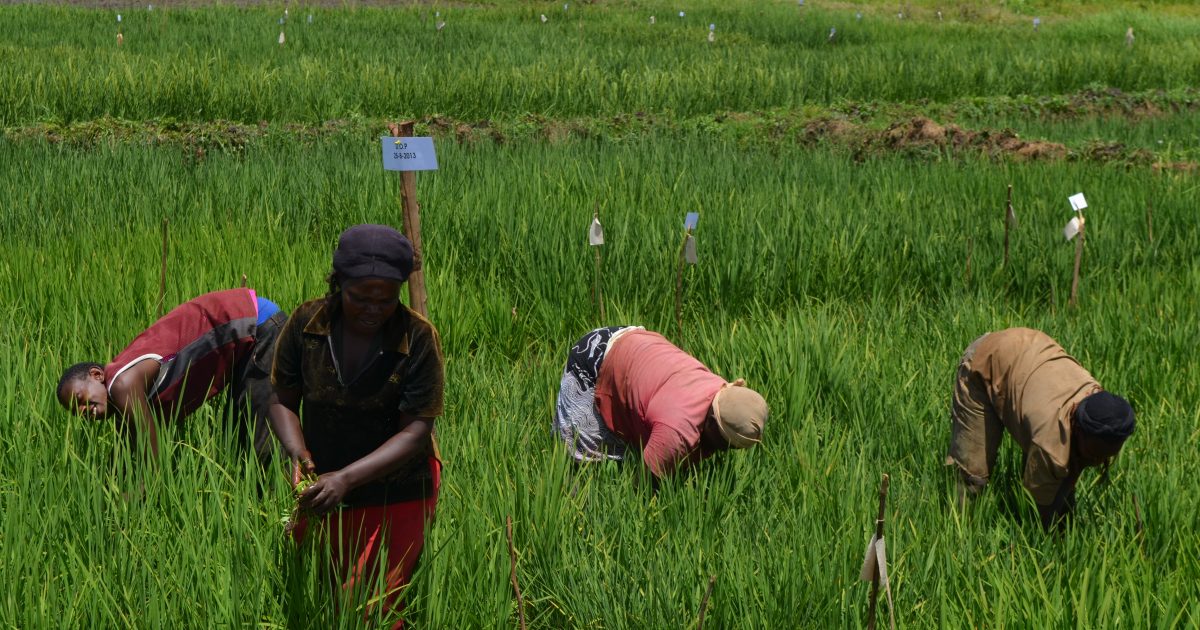
Rice farmers, under the Bunyala Irrigation Scheme, are set to save on the cost of production once the lower Nzoia irrigation project (LNIP) is commissioned, the principal secretary for irrigation, Ephantus Kimotho, has said.
According to Kimotho, huge electricity bills incurred by the scheme to pump water into the paddy fields were set to be a thing of the past as farmers will get water by gravity when LNIP begins operations.
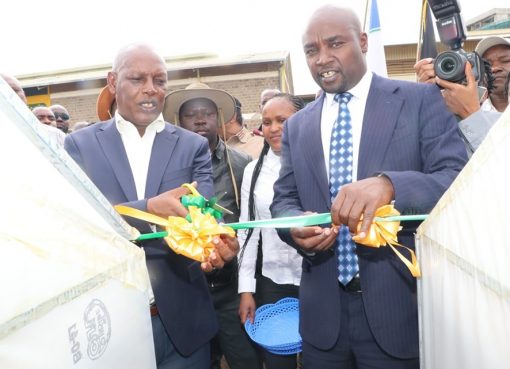
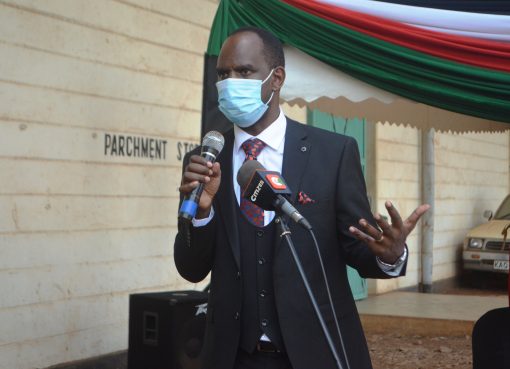
He was speaking in Siaya town today during the Lower Nzoia Irrigation Project aggregators’ conference that brought together stakeholders from Siaya and Busia counties.
Kimotho, who was accompanied by Siaya County Commissioner Norbert Komora, said farmers were expected to increase production as a result of the low operation and maintenance costs, adding that the money saved should be set aside for more inputs so as to increase production.
The PS said the government has incorporated all stakeholders into the planning and execution of the project in a move meant to ensure that LNIP was a success.
“We want this project to be market-driven; hence the meeting with stakeholders,” said.
Kimotho said President William Ruto would, on Wednesday, January 22, 2025, inspect the ongoing works under phase one and launch phase two that is set to cover 7,500 acres.
Siaya County Executive Committee Member for Agriculture, Sylvester K’okoth, called on the national government to protect local rice farmers from competition with cheap imports as a way of encouraging production.
K’okoth lamented that 75 to 85% of shelf space reserved for rice in supermarkets in the country was taken up by imported rice, leaving the local brands struggling.
“We cannot purport to be supporting our value chains and farmers while we are not protecting them from cheap imports that get into the country,” said the CECM.
“We are comforted that the government’s Bottom-up Economic Transformation Agenda (BETA) is focused on ensuring that we reduce imports of agricultural products that we can do locally.”
Addressing the occasion, Busia CECM for Agriculture, Dr. George Mkok, and his Trade and Cooperatives counterpart, Olakachun Omuse, said the LNIP was going to be a game changer for residents of Siaya and Busia counties who have been relying on rain-fed agriculture over the years.
They called on the locals to take advantage of the project to uplift their economic status.
By Philip Onyango