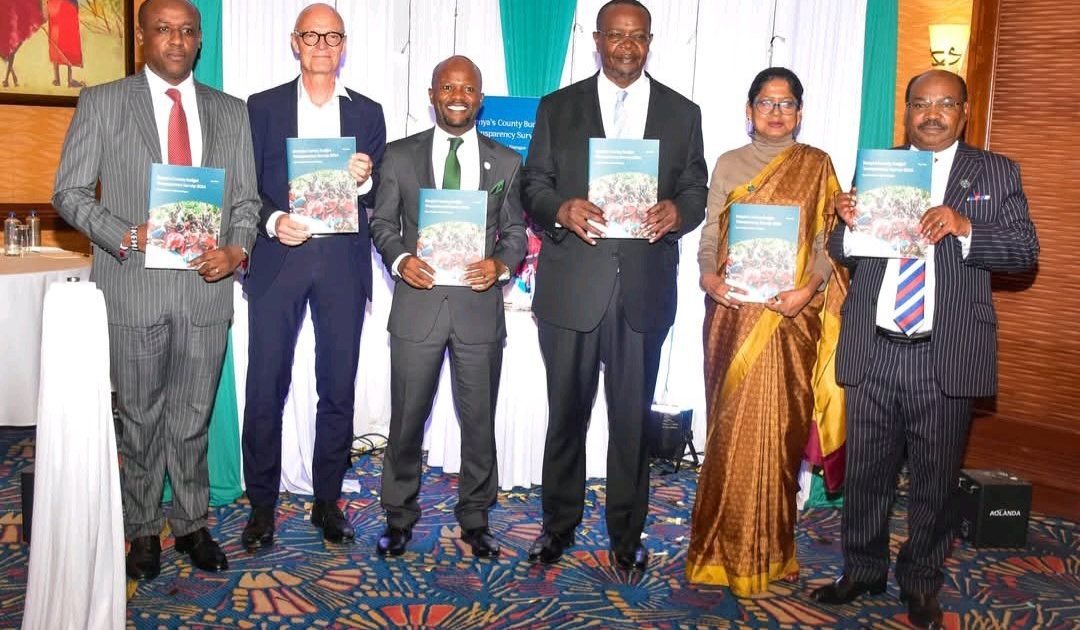
Bajeti Hub on Friday launched the Kenya County Budget Transparency Survey (CBTS) 2024. The report, titled ‘Open Budgets, Open Dialogue’ highlights the level of budget transparency by county governments in the preparation and implementation of public budgets.
The Constitution of Kenya and the Public Finance Management (PFM) Act requires each of the 47 counties in Kenya to publish and publicize key budget documents throughout the budget cycle.
These budget documents are supposed to help the public shape county priorities and monitor the implementation of budgets to ensure resources are reaching those who need them most.
According to a recent report, West Pokot, Makueni and Busia emerged as the counties with the most transparent budgets. The three counties scored 84, 83 and 81 out of 100 points, respectively. Nakuru and Wajir landed in the top five, scoring 79 and 77 points, respectively.
The report revealed that the least transparent county was Marsabit, which scored 10 out of 100 points. Isiolo, Migori, Embu and Trans Nzoia were the other four counties in the bottom five, scoring 31, 34, 38 and 45 out of 100 points, respectively.
In the report, Homabay, Uasin Gishu, and Garissa registered the most impressive gains in CBTS 2024, with their transparency index rising by 50 points, 43 points and 37 points, respectively.
Lead researcher of the County Budget Transparency Survey 2024, Cuba Houghton, said that Counties continue to improve both the number and quality of budget documents they publish, noting that 33 out of 47 counties improved in Kenya’s county budget transparency survey 2024
Houghton said the average county budget transparency index for 2024 recorded an eight-point improvement compared to the CBTS 2023. The improvement is driven by counties making more budget documents publicly available and increasing the comprehensiveness of the information in the published budget documents.
“Today, 84 percent of key budget documents required to be published by counties are publicly available (CBTS 2024),” he said, adding that this is a significant milestone compared to the previous CBTS 2020, when it was only 32 percent.
The Lead Researcher said the number of counties publishing all key budget documents increased significantly, from just one county in CBTS 2020 to 24 counties in CBTS 2024, this is as a result of the will by counties to publish budget information.
“Citizen Budgets, Approved Programme-Based Budgets, and Finance Acts continue to lag in comprehensiveness despite the increase in the number of key budget documents published by counties,” Cuba added.
He said that to address the gaps in this area, Bajeti Hub, with support from UNICEF, has been conducting direct technical assistance to Directors of Budgets on Programme-Based Budgets and Citizens Budgets.
“We have developed and disseminated guidelines along the budget cycle on best practices for the counties” he said adding that the number of counties scoring in the ‘A’ category (81-100 points) also increased to three counties from one in CBTS 2023.
Executive Director of Bajeti Hub Dr Abraham Rugo highlighted that meaningful progress in budget transparency stems from collaborative action, as demonstrated by regional budget hubs and their communities collaborating to analyze, engage, and advocate, despite their varying sectoral priorities.
“Disclosure of information on public participation continues to present a challenge, as this remains the least provided information, scoring only 12 out of 100 points in CBTS 2024, a slight decrease from 13 points in CBTS 2023.
He said that this has been a trend since CBTS 2020, as there has been little to no progress. To enhance not only feedback on public participation but also the processes of deliberation, there is a need to localize the public participation guidelines at the county level, and Bajeti Hub has been at the forefront,” said Dr Rugo.
He said the County Budget Transparency Survey evaluates the level of budget transparency across Kenya’s 47 counties and scores the counties based on whether a county had its budget documents publicly available and on the level of information that was provided in those documents.
“When communities are empowered to access and contribute to budget decisions, everyone benefits, and this will ensure public resources effectively address critical needs,” he said.
By Anita Omwenga