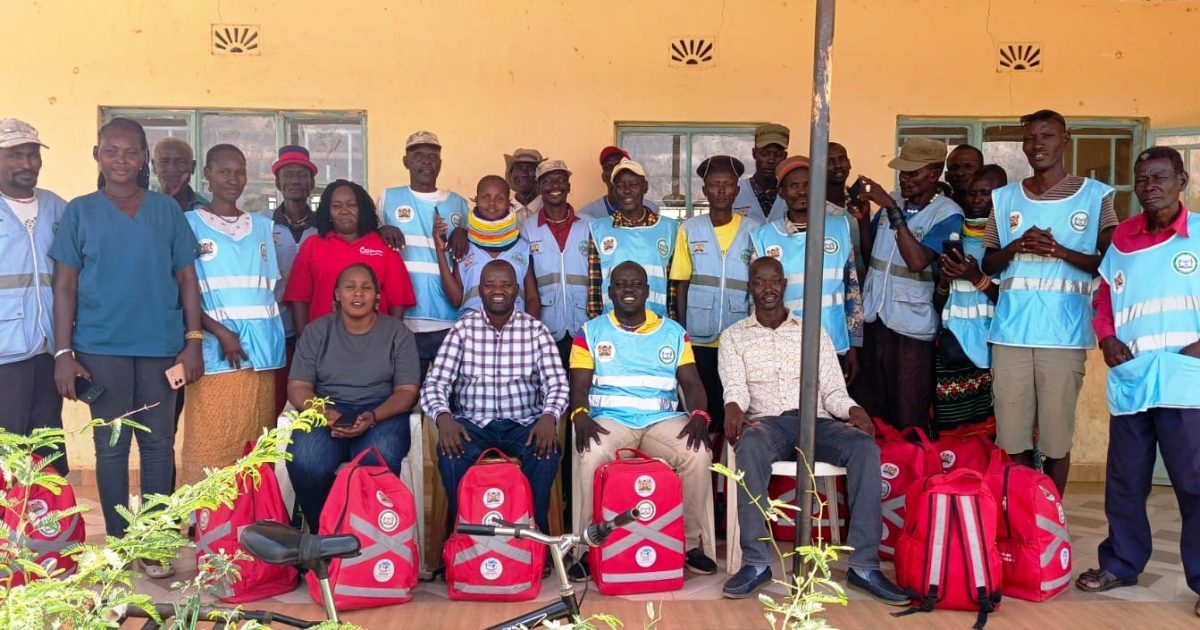
At least 87 Community Health Promoters (CHPs) from Lokichoggio Sub-County have successfully completed a five-day intensive training on Non-Communicable Diseases (NCDs), equipping them with vital knowledge and skills to test, detect, prevent, and manage conditions such as diabetes, hypertension, and common cancers at the community level.
The training was implemented by the Department of Health and Sanitation with support from Amref Health Africa through the Danida Transcend project. Prior to this, all six Community Health Assistants (CHAs) in the sub-county underwent a Trainers of Trainers (ToT) course, enabling them to cascade the training to CHPs effectively.
“This training is important. It is good to see the County Government values us as important members of the healthcare sector, and they need us to gain more knowledge,” said Veronicah Narubu, one of the trained CHPs.
Benjamin Areman, a CHA at Aochele Health Unit, noted that the ToT curriculum has empowered CHAs with the ability to deliver comprehensive training to CHPs. “This training was brought to our level as CHAs so that we may build the capacity of the CHPs in order for them to know the risk factors predisposing our communities to NCDs,” he stated.
According to Dr. Joseph Lolepo, County Director of Community Health Services, the last similar training was held in 2017. However, a noticeable rise in NCD cases prompted this renewed effort. “This training is meant to build capacity to address these issues and enhance community education. The NCD cases are mostly due to lifestyle habits such as excessive consumption of alcohol and tobacco products,” he said.
Narubu emphasized the impact of the training on their understanding of cancer: “This has been an eye-opener, especially in understanding how deadly cancers can be. We can now identify symptoms and refer patients appropriately.”
Ann Nduta, Program Officer for Community Health Services at the Ministry of Health, underlined the urgency of the training: “Non-Communicable Diseases are silent killers. They often show no signs until it’s too late. That’s why it is crucial for frontline health workers to grasp the basics.”
Gabriel Ejikon, Primary Healthcare Officer at Amref Health Africa, emphasized that one of the four major objectives of the Danida Transcend project is to increase demand for quality health services in underserved areas. “This initiative will improve health outcomes, particularly in remote areas of Turkana County,” he said.
The training curriculum covered screening techniques, risk factors, myths and misconceptions, palliative care, and the management of NCDs—specifically focusing on Breast, Cervical, Colorectal, Prostate, and childhood cancers.
Peter Erukudi, a CHP, appreciated the practical nature of the training: “There was a knowledge gap that has now been filled. We are confident in our ability to conduct screenings, ask the right questions, and refer patients appropriately.”
Supervising Officer Ann Nduta praised the enthusiasm of CHPs and urged for continued support: “With the interest shown, I’m confident that the CHPs are ready to utilize their new skills and tools effectively.”
James Lobokan, Director of Policy, Planning, Monitoring, Evaluation, and Research, reiterated the importance of the CHPs’ role in disease surveillance. “Through active case search and identification, this initiative will improve both prevention and reporting of NCDs at the sub-county level,” he said.
To follow up on the training, Dr. Lolepo announced that a Rapid Results Initiative would be rolled out in the coming week to activate household-level screenings and conduct a county-wide mop-up exercise.
The training was supervised by the Sub-County Health Management Team, including Dalmas Lokok (Sub-County Medical Officer of Health), Denis Erot (Danida Transcend Project Officer), and Emmanuel Sigei (Public Health Services Officer, Ministry of Health).
By Peter Gitonga