Nakuru County Government in collaboration with the Kenya Meteorological Department (KMD) is in the process of establishing a Climate Information Centre that will empower farmers with agro-weather information to enhance their farming activities.
The County Executive Committee Member (CECM) for Water, Environment, Energy, Climate Change, and Natural Resources, Dr Nelson Maara explained that the centre will be used in collating, analysing, packaging up, and distributing climate data on variables such as temperature, rainfall, wind, soil moisture, lake conditions, and extreme weather indicators.
The CECM said the data collected was crucial to farmers in the County as it will enable them make the right decisions for their farming activities in addition, he said the data will help decision-makers in the County come up with right and relevant polices.
The initiative, Dr Maara pointed out was aimed at building resilience and promoting sustainable development in Nakuru County through enhanced access to and utilization of climate related information and intelligence.
“The centre will also have other capabilities including serving as a call centre for disaster risk management”, added Dr Maara.
The County official was happy that the agro-weather information that will be disseminated to farmers would enable them make proper planning and execution of their farm activities for improved production.
He said Governor Susan Kihika’s administration had put in place policies that recommend the use of appropriate technology for reliable data collection, analysis, and dissemination of climate information adding that the establishment of a vital County Climate Information Centre, was aligned with the implementation of the Financing Locally Led Climate Action (FLLoCA) programme.
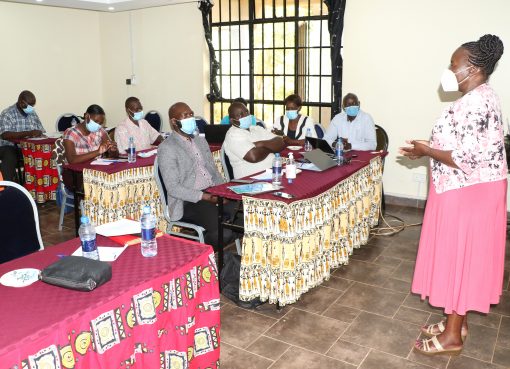
Dr Maara spoke when he hosted a delegation from the Kenya Meteorological Department (KMD) led by the Deputy Director of the Institute for Meteorological Training and Research (IMTR) Edward Muriuki.
The proposed one-stop shop, stated the CECM, will empower the public with easily accessible climate information, crucial for adapting to evolving environmental conditions.
The centre will disseminate localised data on rainfall, temperature, and potential hazards, enabling communities to make informed decisions regarding agriculture, water management, and disaster preparedness, added the CECM.
He said the climate information was expected to guide the county government action under the FLLoCA framework, ensuring that locally driven climate adaptation initiatives are informed by robust scientific data.
On climate change, Dr Maara said the collaborative efforts will help Nakuru as a City adapt to the impacts of climate change by providing timely information on air quality, temperature, rainfall, and other relevant factors, where the data will be accessible to members of the public through a smartphone app and digital dashboard.
He said the County government was focused on how KMD would collaborate with the County Climate Unit (CCU), to implement the National Framework for Climate Services (NFCS). The framework, he added seeks to ensure that climate data, forecasts, and advisories are effectively integrated into county planning, policy-making, and development practices across various sectors such as agriculture, health, water, and disaster risk reduction.
The CECM who was flanked by County Director of Meteorology Julius Kilemba and County Climate Unit Director Ms Grace Karanja noted that accurate and timely climate information was essential for building resilience among communities vulnerable to climate change and affirmed the devolved unit’s commitment to working closely with KMD and other partners to enhance access to actionable climate information.
The Deputy Director of the Institute for Meteorological Training and Research (IMTR) Edward Muriuki indicated that county Governments were critical actors in Kenya’s responses in dealing with the thorny issue and challenges brought about by climate change.
He observed that the devolved units were pivotal because of their proximity to the grassroots communities and their mandate as prescribed under the devolved governance structure.
Muriuki pointed out that the counties were more strategic in developing and executing home-grown climate action strategies to the specific environmental and socio-economic conditions of their regions which ensures relevant and targeted interventions on localised climate issues such as deforestation, flooding and droughts.
By Esther Mwangi and Esther Otieno