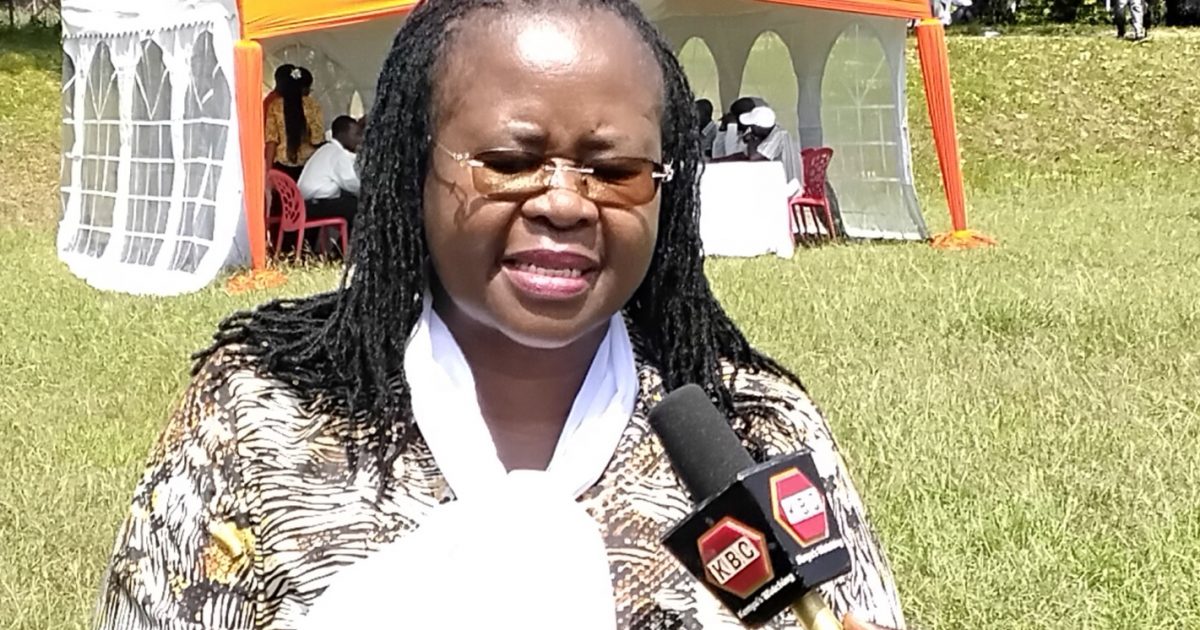
Nominated Senator Catherine Mumma has called for urgent, collective action to address Gender-Based Violence (GBV) and femicide, terming the crisis a national emergency.
Speaking during a community engagement in Nyakach Sub-County under the presidential “Komesha Dhuluma” campaign, Mumma rallied residents, leaders, and institutions to take responsibility in ending the scourge.
“Gender-Based Violence is not just a Nyakach or Kisumu problem; it’s a national crisis,” she declared, urging elected leaders to step up efforts in their respective constituencies.
“The President tasked Members of Parliament (MPs) and leaders to pick a constituency and lead this campaign. I chose Nyakach because I come here often, and I believe it is my duty to act,” she said.
Mumma expressed concern over rising GBV cases despite Kenya’s robust legal framework against defilement, rape, and emotional abuse.
She cited worrying trends, including high teen pregnancy rates, placing Kenya third globally and Kisumu’s lead in teenage HIV infections.
Lack of sex education in schools and at home, she said, has exacerbated the problem, leaving children, especially girls, exposed.
She called on elders to champion the development of community-specific forums on sex education to ensure that children are mentored and nurtured to stay out of harm’s way.
The Nyakach forum brought together a broad spectrum of community stakeholders, elders, youth, boda boda operators, police officers, chiefs, persons with disabilities, child protection officers, and health promoters, all in a bid to collectively identify causes and community-driven solutions to GBV.
Each group was encouraged to introspect and define its role in both the problem and the solution. “We need every man, every woman, every leader to stop and think. This is not just a women’s issue. It’s a societal crisis,” Senator Mumma said.
Kisumu County Executive Committee Member for Gender, Beatrice Odongo, welcomed the increased reporting of GBV cases in Nyakach, saying it was a critical step toward unmasking the depth of the problem.
“Many cases go unreported. Without data, there can be no action,” she observed. Odongo noted that the Kisumu County SGBV Bill currently before the assembly seeks to address systemic drivers of GBV, including poverty and lack of awareness.
National Syndemic Diseases Control Council Kisumu and Siaya Lead, Steve Kathaka, underscored the urgency of intervention, citing statistics that place Kisumu at the top nationally for HIV infections and teenage pregnancies, both linked to GBV.
The County, he said, was registering some of the highest indicators in the country across all three dimensions. “Kisumu is currently ranked number one nationally in HIV burden, with approximately 135,000 people living with HIV. Of these, over 53,000 are men — the highest figure among all counties,” he said.
Kathaka further attributed the county’s high HIV prevalence to underlying issues such as GBV and rising teenage pregnancies.
“These are not isolated challenges. The three threats are interlinked — gender-based violence and early pregnancies are fueling the spread of HIV, particularly among the youth,” he explained.
He noted that Kisumu Central Sub-County leads in new HIV infections, followed by Kisumu East, with Nyakach ranking fourth among young people in new infections.
“The numbers don’t lie and they’re telling us we must act now and act together,” he said.
and urged county leaders, communities, and stakeholders to confront the crisis holistically by addressing cultural practices, improving reporting mechanisms, and empowering adolescents with reproductive health education.
“Kisumu is at the epicenter of this crisis, and Nyakach is part of the puzzle. Unless we stop the cycle of silence and stigma, we will continue to bury our future generation,” Kathaka warned.
Nyakach Council of Elders Chair George Arogo admitted past silence from traditional leaders and pledged to use community barazas to raise awareness. “We were silent before, but today we have been challenged to speak up and lead,” he affirmed.
David Ocheo from the National Gender and Equality Commission called for increased male involvement in the fight against GBV.
“Most perpetrators are young men aged 24 to 44. We need men to be part of the solution, not the problem,” he said.
By Chris Mahandara