The year 2030 is round the corner and with it the target of attaining the sustainable development goals adopted by all united nation members in 2015. The aim of the global goals is peace and prosperity for people and the planet while tackling climate change and working to preserve oceans and forests.
With this date quickly approaching, the need to focus on True Value Accounting (TVA) in ensuring that there is sustainable food production which ensures that nations can produce high quality healthy food which ensures there is no starvation or malnutrition cannot be gain said.
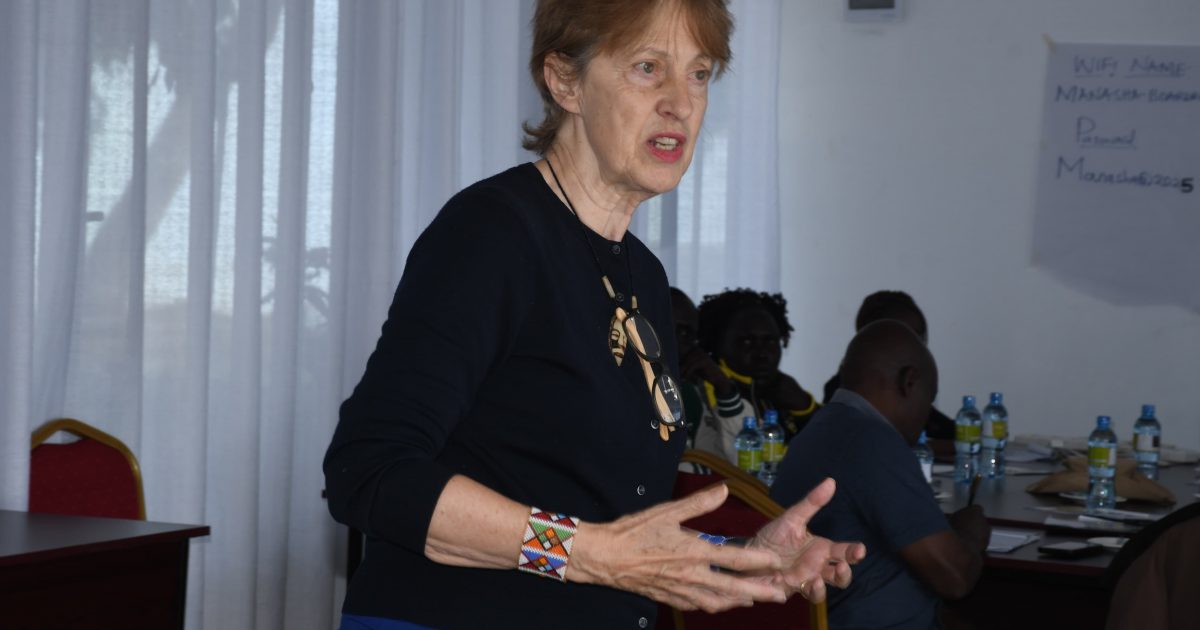
According to Prof. Jacqueline McGlade of Strathmore University, TVA is an approach that captures the full range of social, environmental and economic impacts both positive and negative of the food system activities.
According to the prof., TVA goes beyond measuring not only yields and profits for instance the bags of maize produced by increased use of inorganic fertilizer but its long-term effect on the soils, water and more importantly the health of the consumers.
Noting that healthy soils translate to healthy food, the professor who teaches ecological economics at Strathmore University emphasized the importance of a healthy soil saying it is the greatest engine we have together with the sun in the growth of plants.
“However, it’s sad that year in year out we are witnessing reduction of the quality of soils on large tracts of agricultural land around the world as a result of the loss of carbon which is an organic matter in the soil helping plants grow,” she said.
The prof. was speaking in Iten during a two-day workshop under the true value of food Kenya project, a nationally focused initiative co-developed with the UN TEEB AgriFood Team to transform Kenya’s food systems by integrating the economic value of nature into policy and practice. She called for the adoption of principles which she says will help restore the soils’ quality.
Farmers in the north rift which is considered the country’s grain basket plant maize in March/April and harvest between October and December.
After harvesting, the land is left idle before they start tilling in January for preparation for the subsequent planting season.
This, according to Prof. McGlade should change saying soils are not supposed to be left uncovered since when nothing grows in the soil it dries out. “When the soil is left uncovered by any vegetation, it basically gives out the carbon which should be in the soil,” she said.
Prof. McGlade who is leading the implementation of the project which is supported by the United Nations Environment Programme (UNEP) is calling on farmers to practice agro ecology by introducing a cover crop like chia seeds or any other crop which may not necessarily be a food crop citing fodder and pasture for animals.
The scholar said when the soil is covered, the cover crops retain moisture in the living roots which keep feeding it as the plants transfer the energy from the sun down into the soil thus feeding the microbes which work to bring in minerals like vitamins, phosphorous and nitrogen among others to the plant to make it healthy.
She is also calling on farmers to practice diversification comparing the planting of one crop with feeding on corn meal (ugali) every day of your life without eating its accompaniments like milk, vegetables or any proteins.
“It makes me sad to see a field left bare then after tilling the same crop which was planted in the previous season is planted again and that’s why I compare it to feeding on ugali all the year round,” she said.
The professor said there is need for crop rotation irrespective of the size of the shamba saying farmers should plant maize, peas, beans fruit trees saying growing the same crop each year is what is draining the soils which she termed as the source of life.
She is also calling for minimum tillage saying farmers should try not to disturb the soil, therefore, she called for use of lighter agricultural machines saying the current heavy machines being used crushes the soil squeezing out the water and oxygen.
“If we adopt these principles, and the plants become more and healthier than we can put aside the use of chemical fertilizer, pesticides and herbicides. This way we can change the inorganic fertilizer we are using and instead make our own bio fertilizer which locally suits us and makes our plants immune to pests,” she said.
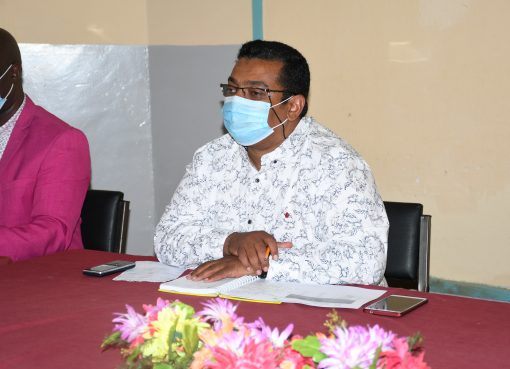
The Elgeyo Marakwet deputy governor Prof. Grace Cheserek who is also an environmentalist says the soil is a naturally regenerating resource and just like a human being it is alive, breathing and requires to eat and even rest to regenerate.
“The continuous use of our soils without taking care of it and too much use of fertilizer has messed up our soils,” she said.
The DG who officially opened the two-day workshop said while initially farmers would plant without the use of fertilizer, the soils have been mismanaged to a point where farmers have been forced to use more fertilizer which has become quite expensive.
“When a farmer is made to understand that they can conserve the soil, they will realise better benefits as they can produce without using too much inputs,” she said.
The DG said the human being is another eco system driven by the food eaten, how healthy it is from production to processing; hence people can live longer if they feed on foods produced organically.
The workshop brought together farmers, agro business traders, policy makers and conservatists from Elgeyo Marakwet, TransNzoia and West Pokot which comprise counties covered by the Cherangany water towers with a visit to Cheptebo Agricultural Training Centre in Kerio Valley, a model farm which practices agro forestry.
By Alice Wanjiru