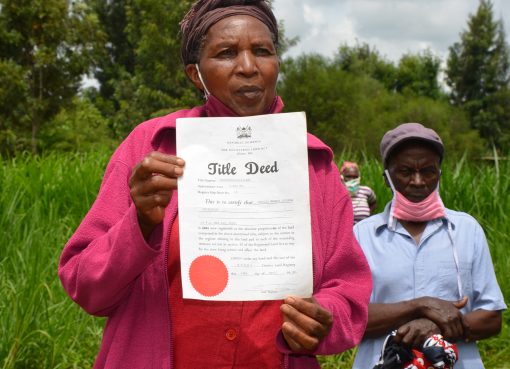
The government has reaffirmed its commitment to addressing systemic inequalities that hinder women from fully realising their land rights.
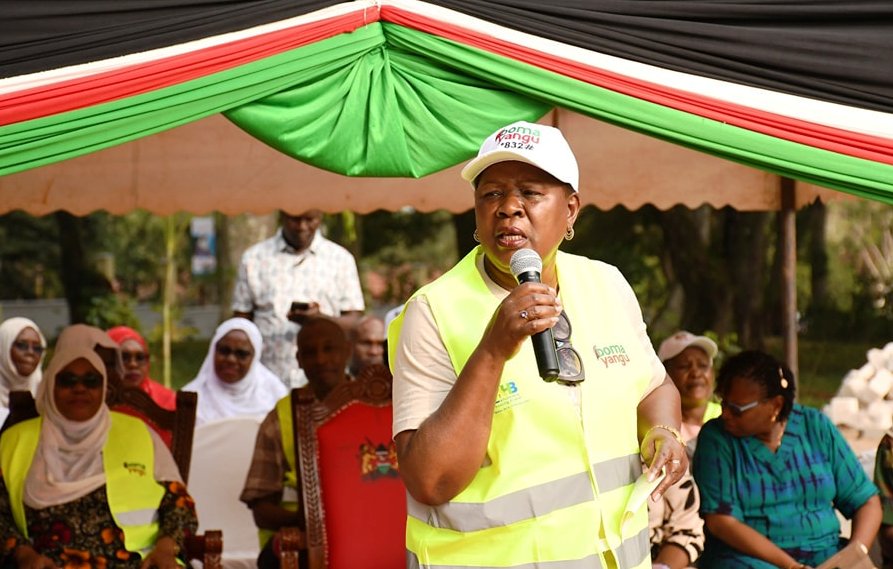
The assurance was made during IGAD’s Regional Dialogue with Women Parliamentarians and Duty Bearers on Gender, Land, and Climate Resilience held in Nairobi, where stakeholders explored strategies to improve women’s access to land.
The forum brought together women parliamentarians, duty bearers, policymakers, technical experts, and development partners from IGAD Member States to deliberate on the vital linkages between gender equality, land governance, and climate resilience.
The Cabinet Secretary (CS) for Lands, Public Works, Housing, and Urban Development, Alice Wahome, stated that her Ministry is a key enabler of the realisation of the National development agenda – The Kenya Vision 2030 and its MTPIV 2023–2027, the Bottom-up Economic Transformation Agenda (BETA), the East African Community Vision 2050, the African Union Agenda 2063, and the United Nations Agenda 2030 for Sustainable Development.
She pointed out that BETA seeks to promote job and wealth creation through secure land tenure for all, Affordable Housing, enhanced revenue collection, and sector value chains – promoting the Country’s National Gross Domestic Product (GDP) for improved livelihoods.
The CS highlighted that secure land rights, which include women’s equal access to, control over, and ownership of land; digitalisation; regulation and development of the construction industry; affordable housing; development of urban and metropolitan areas; and research and development in land and the built environment are key priority areas for the Ministry.
In the housing sector, Wahome disclosed that the Ministry aspires to implement policies and initiatives that promote affordable and sustainable housing solutions, while the urban development initiatives are geared towards creating attractive, inclusive, and well-planned cities that cater to the evolving needs of the citizens.
“In the realm of public works, the Ministry commits to robust infrastructure development, fostering connectivity and accessibility for citizens across the nation,” added the CS in a speech read on her behalf by Dr. Juliana Mutua, Senior Deputy Director, State Department for Lands and Physical Planning.
Further, Wahome noted that rampant systemic inequalities and discriminatory practices have for a long time prevented women from fully realising their land rights, thereby impacting their social, economic, and political empowerment in society.
She assured that the Government has made major milestones in the Land Reform and Transformation Process on Land Rights for all, which was prompted as a response to several land-related upheavals that had confronted the Country over time.
According to the CS, countless Customary Law and Traditions, which Govern about 65 per cent of land rights in Kenya, make women face severe restrictions on inheritance under the law as well as negative attitudes towards women taking on leadership roles – leading to women facing strong barriers to entry.
“Traditional Dispute Resolution Mechanisms (TDRM) operated at Community Levels are also conducted by traditional male elders,” she stressed, outlining the various upheavals preventing women from fully realising their land rights.
Wahome listed some of the Government milestones in the Land Reform, including: Policy and Legal Provisions addressing Land & Gender Issues; The Kilimanjaro Initiative – 2016, The institutional restructuring of the Land Sector; and The Kenya Women Land Rights Agenda, assuring that Action Plans (2021 – 2030) for implementation of the above priorities have been developed.
Additionally, the CS mentioned that the key issues to be addressed include, Securing Land Tenure that involves ensuring women have secure and legally recognised rights to land, including ownership, inheritance, and access to land resources.
Also Promoting Women’s Participation that includes increasing women’s representation in decision-making processes related to land governance, land use planning, and resource management, Reforming Discriminatory Practices entails challenging and reforming customary practices, cultural norms,
Further, CS added that legal frameworks that discriminate against women in land matters and Addressing Systemic Inequalities, which recognise that women’s land rights are intertwined with broader issues of gender equality, social justice, and economic empowerment.
Other issues the CS highlighted include Promoting Awareness and Education that involves raising awareness about women’s land rights and educating communities about the importance of gender equality in land governance.
“This will enable economic empowerment, social empowerment, political empowerment, food security, poverty reduction, peace and stability, which will contribute to women’s economic independence, decision-making power, and autonomy and strengthen their political voice and influence,” said Wahome.
She reiterated the Ministry’s unwavering commitment to addressing the systemic inequalities that prevent women from realising their land rights under the broader efforts to achieve gender equality, social justice, and sustainable development.
By Michael Omondi