The Kenya Correspondents Association (KCA) in collaboration with ASPEN and Free Press Unlimited is implementing a three-year project on investigative journalism with the aim of empowering young journalists in Kenya.
The project dubbed Supporting African Future Investigative and Responsible Journalism (SAFIRI) is supported by the European Union (EU) and will run until February 2028.
SAFIRI is targeting 60 young journalists from Nyanza, Nairobi and the Coastal regions, particularly those from underserved rural areas and they will be equipped with investigative, ethical and leadership skills.
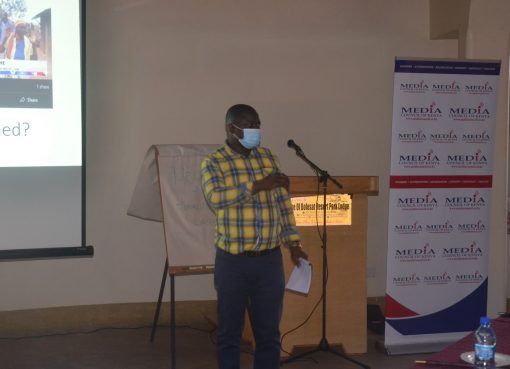
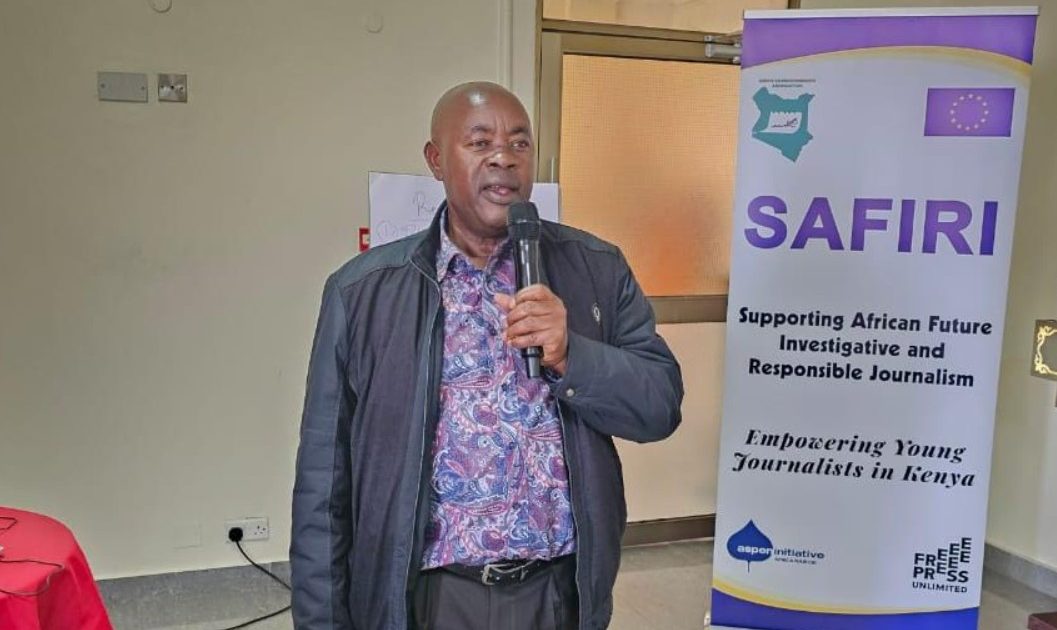
Speaking during the project’s first training workshop for journalists at a hotel in Kisumu, KCA Chairman Araka Matara encouraged the scribes to remain committed to the project, saying that investigative journalism plays a key role in holding the leaders to account.
Araka noted that investigative journalism was a special branch of reporting that entails conducting thorough research while at the same time learning self-protection techniques.
“As a journalist, you need to learn some protection tactics when covering investigative stories because we have seen cases where the media are even robbed of their equipment,” the Chairman pointed out.
One of the media trainers, Caleb Atemi, noted that it was critical to teach the young journalists various skills that can help them to navigate the world of media.
“We want to mentor journalists and nurture their writing skills in order for them to tell impactful stories in the society,” Atemi said.
His counterpart, Kevine Omollo, also pointed out that many young journalists in their early careers have found it difficult to pursue investigative journalism due to limited time and resources.
As a long-term project, Omollo added that they hope to get the next cohort of investigative journalists who can file stories on issues of human rights, corruption and mismanagement of funds that continue to manifest within the governance structures.
“Through this project, we hope to mentor the young journalists so that they can come up with story ideas that can transform the communities,” he affirmed.
One of the participants, Victoria Magar from Busia County, said she had gained insights on investigative stories, adding that the stories require a lot of research as well as a wide range of sources.
The next two training workshops are expected to take place in the Nairobi and Mombasa regions between August and October, 2025.
Besides the training, the journalists will be paired with senior journalists for mentorship purposes during the project period and receive investigative grants on corruption, human rights and governance.
The project will also organise media dialogue sessions in Nyanza, Nairobi and the Coastal regions to build on community engagement and inclusion of women, the youth and marginalised voices.
The forums are aimed at fostering collaboration and partnership among diverse stakeholder groups in the three project regions to improve appreciation of the role of the media in society and promote access to information and freedom of expression.
By Mercy Osongo