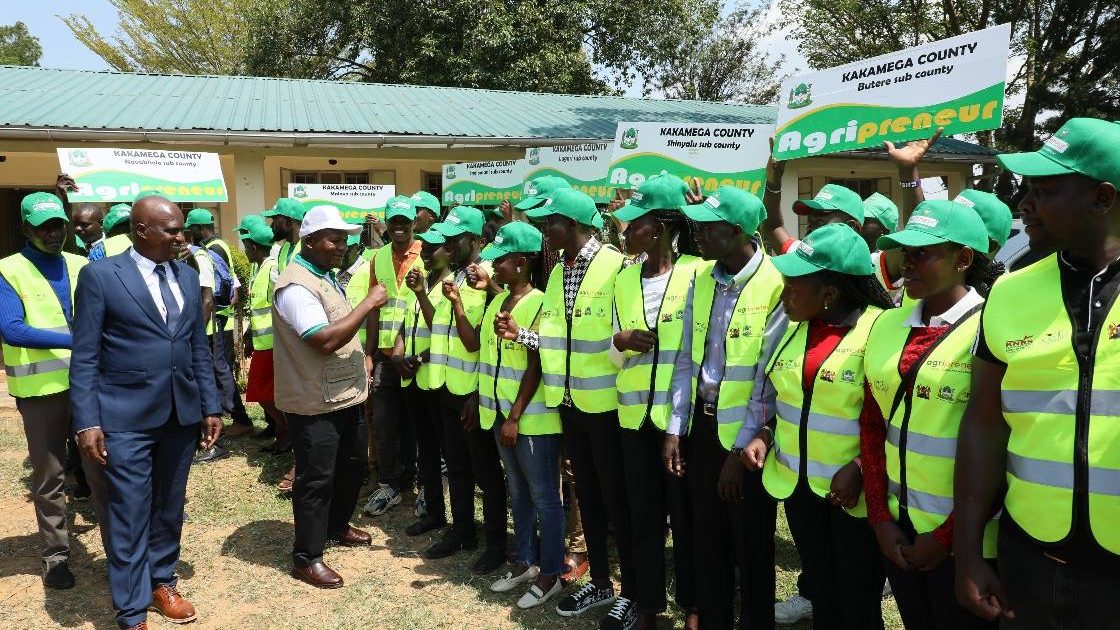
Kakamega Governor Fernandes Barasa on Tuesday launched the second cohort of the Kakamega County Agripreneurs Model at the Mumias Cultural Centre.
The programme aims to empower youth and transform agriculture into a profitable tech-driven venture. It is being implemented by the county government in collaboration with the National Agricultural Value Chain Development Project (NAVCDP).
Over 420 youths have been recruited into the programme under the Know Your Farmer (KYF) platform and have undergone a Two-week rigorous training to support farmers across the 60 wards in the county.
The training was conducted by the county government agriculture officials in partnership with technical experts from Practical Action, Cereal Growers Association (CGA), One Acre Fund, and Welthungerhilfe organisations.
So far, over 283,000 farmers across Kakamega have been registered in the Kenya Integrated Agricultural Management Information System (KIAMIS) through the programme, whose server is located at KALRO Kakamega.
The programme also supports 7,700 Common Interest Groups (CIGs) and 20 Farmer Producer Organizations (FPOs).
During the launch, Governor Barasa urged the 420 youths to support farmers at the grassroots to enhance food security and promote wealth creation. “All the farmers registered through the KIAMIS system are farmers who need to be supported. As agripreneurs, your role is to walk through all the wards and support them in fish farming, chicken rearing, dairy and other farming enterprises,” he explained.
He said that the project will support farmers in improving their farming practices and also link them to markets to sell their produce.
The governor also encouraged the agripreneurs to promote the county’s various value chains to farmers at the grassroots. He challenged farmers across the county to diversify into high-value crops to maximize their farming practices and increase their incomes.
“We must be ready to diversify. Coffee farming is one of the best crops that guarantees maximum returns. The national government has set aside enough funds to support coffee farmers, and for the first time, leaders have agreed that we must sensitize our people about the crop,” he explained.
By Moses Wekesa