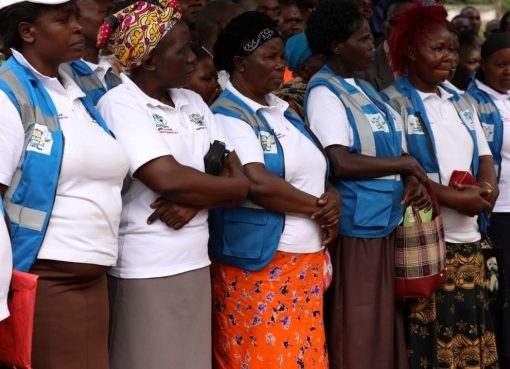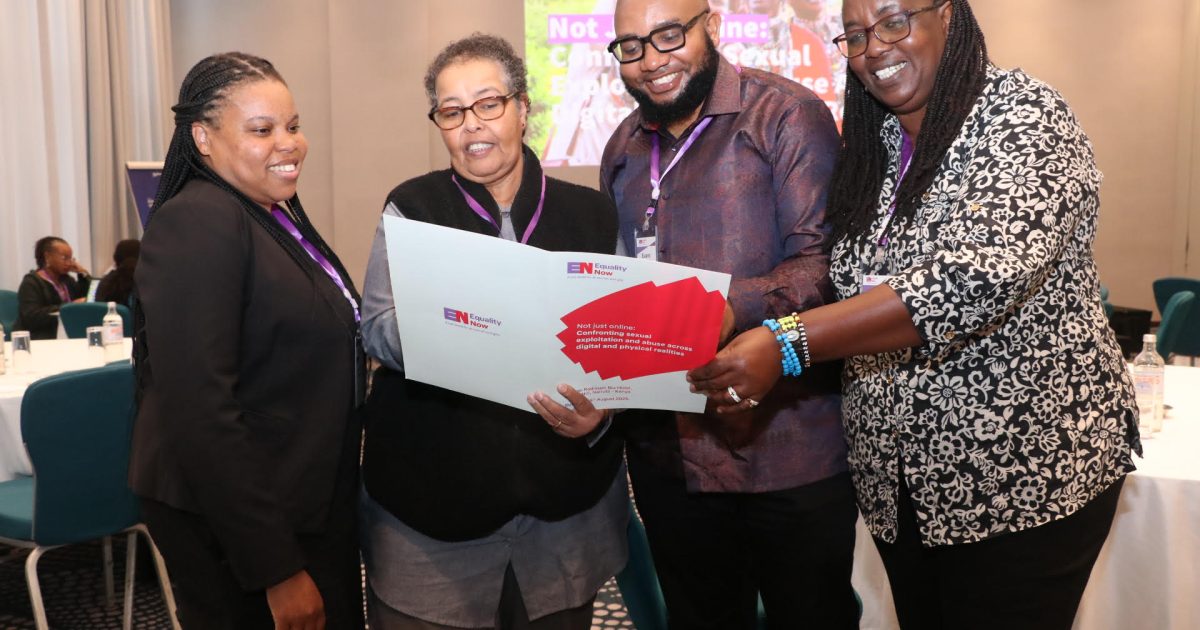
Leaders, activists, policymakers, and survivors gathered in Nairobi for a landmark consultation aimed at confronting one of Africa’s most entrenched crises: the trafficking and sexual exploitation of women and girls.
Hosted by Equality Now, the convening united state and non-state actors committed to forging a holistic approach to prevention, legal reform, survivor support, and community education.
Faiza Mohammed, Africa Office Director of Equality Now, opened the event by underscoring the urgency of collective action.
“Today we are convening this important consultation and planning session with partners, including state officials and civil society groups, as well as survivors themselves,” Mohammed said. “While we are working to end trafficking of minors and women into sexual slavery, the challenge has expanded beyond the physical realm. The digital space has become a major frontier of abuse.”
Across Africa, inconsistent laws and weak enforcement allow traffickers to operate with impunity. Some countries have strong legislation, Mohammed noted, but overall, the lack of implementation erodes any deterrence.
“When the law is working, it creates fear in potential perpetrators,” she said. “But when it fails, the cycle of harm persists.”
For Equality Now, advocacy is central. The organisation specialises in campaigning for legal reforms that ensure robust protections for women and girls. Yet Mohammed emphasised that legal change alone is not sufficient.
“We need to see how we can best work together—the survivors’ networks, state officials charged with protecting women and girls from harm, and civil societies like ours,” she said.
One theme resonated throughout the day: the power of prevention. “I think what we need is to reach a place where we don’t have victims at all,” Mohammed explained. “You don’t need to flood the courts when you stop exploitation before it happens.”
Evans Munga, Programme Lead for Ending Sexual Exploitation in Africa at Equality Now, echoed this sentiment. “Trafficking starts offline and ends online,” he said.
“We need to stop imagining that these are separate problems. They are deeply interconnected.” Munga called for clearer frameworks to bridge the gap between offline and online exploitation, pointing out that technology firms, legal practitioners, and law enforcement must coordinate their efforts.
The convening included survivor testimony, highlighting the lived realities of exploitation and the barriers to justice. Participants discussed how powerful interests often interfere in the legal process, stalling prosecutions or silencing victims. While some courts are making progress, Munga noted, the system remains overburdened and under-resourced.
To address these gaps, the conference produced recommendations that range from policy reforms to capacity building for frontline workers. “Survivor voices are essential,” Munga said. “Without them, we cannot design solutions that are grounded in reality.”
The day’s discussions also focused on the socio-economic factors driving exploitation. Katherine Wanjohi, Founder and CEO of Life Bloom Services International, shared harrowing stories from Naivasha and Nakuru counties, where girls are sexually exploited in exchange for basic necessities like sanitary pads.
“Remember, they are coming from a place of vulnerability,” Wanjohi said. “That vulnerability might be about poverty or having never gone to school. It repeats itself in families and households.”
Since 2004, Life Bloom has worked with thousands of women and girls, offering rescue, legal support, counselling, and livelihood programmes.
Wanjohi stressed that without breaking the cycle of poverty and marginalisation, the risk of re-exploitation remains high. “Women who have been sexually exploited—what we call prostituted women—often see their daughters follow the same path,” she said.
To counter this, Life Bloom has established mentorship programmes in schools and communities, pairing survivors with peer mentors and mentor mothers who act as supportive guides.
The approach is yielding promising results: over 150 children have been able to remain in school and avoid early exploitation, and some graduates have become role models in their communities.
“We have seen cultures change,” Wanjohi said. “Positive culture is one that promotes equality and human dignity. But it takes dialogue and education to get there.”
Throughout the conference, speakers returned to the idea that justice must extend beyond the courtroom. “Socio-economic justice supports legal justice,” Wanjohi emphasised.
“We have to meet survivors at their point of need, even 10 years later, when they still require counselling or economic assistance.”
The convening marked a crucial step toward a unified strategy to combat trafficking and sexual exploitation across Africa. From the frontlines of grassroots community work to the halls of justice, participants agreed that collaboration, not isolation, will drive progress.
Faiza Mohammed called on governments, private sector actors, and citizens to refuse complacency. “Discrimination happens to women and girls in different forms and shapes,” she said. “When you deny girls education, when you deny them safety, you are cutting off over 50% of your population from being productive and engaging in meaningful work.”
The stakes, she reminded the audience, could not be higher. “This is about human dignity. It is about whether we will allow exploitation to define our societies or whether we will stand together to end it.”
Equality Now’s Digital Rights Advisor, Amanda Manyame, stressed the urgent need to address online sexual exploitation.
“We’re here to hear survivors and craft solutions that deter perpetrators and ensure digital safety,” she said.
Manyame highlighted tech’s dual role: while tools like Stop NCIC help remove abusive content, technology is also misused to exploit women.
She called for laws mandating equality and safety by design in apps. Acknowledging Kenya’s judiciary’s commitment, she emphasised that outdated laws hinder justice for online harms, urging reforms to reflect the digital nature of modern trafficking and abuse.
By Alex Mwema and Duncan Sikoyo