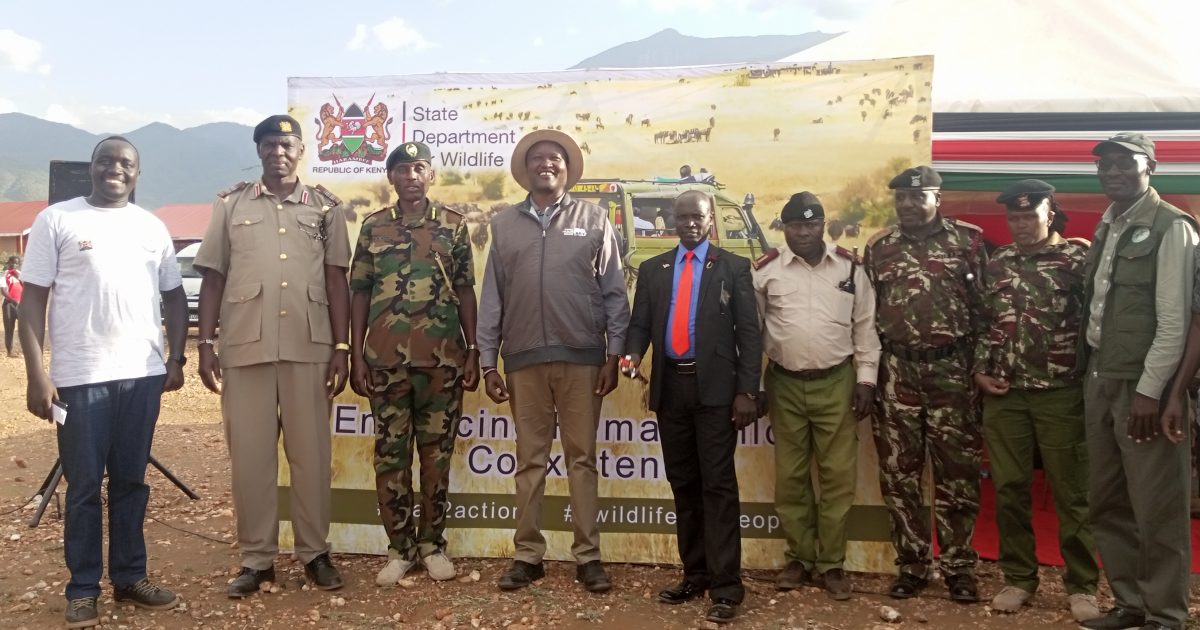
West Pokot County has a great potential to develop conservancies that could generate sustainable revenue through tourism.
Speaking during the World Elephant Day celebrations at Sarmach Primary school in Nasolot National Reserve, West Pokot County, the Conservation Secretary at the State Department for Wildlife, Dr John Chumo, stated that if conservancies were effectively harnessed, they could create employment opportunities, support local communities, promote conservation efforts, and contribute significantly to the country’s economic development agenda.
“Establishing well-managed conservancies, the county government of West Pokot can attract Eco-tourists in experiencing its unique wildlife, landscape, and cultural heritage,” said Dr Chumo.
He said strategic investment, community involvement, and strong marketing could transform West Pokot into a renowned eco-tourism hub in the country.
He explained that since August 12, 2012, the region has celebrated worldwide events, including World Elephant Day, with an effort to raise awareness about the threats faced by African and Asian elephants’ species, which are classified as ‘‘Vulnerable’’ and ‘‘Endangered’’ by the International Union for Conservation of Nature (IUCN).
He said that despite the importance of elephants, they faced habitat destruction, poaching, and climate change, causing their population to decline.
“West Pokot can establish more conservancies to attract tourists and thereby raise revenue and improve local livelihoods,” he said.
He said Kenya’s tourism sector attracted 2.4 million visitors last year, and many of them came to see wildlife.
He urged communities and authorities to collaborate in conserving wildlife, preventing habitat destruction, and combat poaching.
Dr. Chumo highlighted the underutilized potential of Nasolot National Reserve and called for increased tree planting and reduction of deforestation to boost tourism.
He noted that banditry and illegal activities created unsafe environments for tourists and called on residents to desist from engaging in or allowing such illegal activities.
“Human-Wildlife conflict is worsened by habitat encroachment and climate change, leading to loss of life, property, and crops,” he stated.
He said the government had paid nearly Sh980 million in compensation last year and was moving towards a digital system for quicker payouts.
Dr. Chumo pointed out the importance of wildlife corridors, such as the one in West Pokot connecting Nasolot to Rimoi and Turkana, which are threatened by gold mining.
“Protecting these corridors is vital for elephant migration and reducing human-wildlife conflict,” he noted.
He disclosed that Kenya’s elephants have increased from 16,000 in 1989 to 36,000 in 2021, with ongoing efforts to reach 40,000, but habitat loss and climate change remain key threats.
“Strengthening conservancies, community engagement, and sustainable tourism are essential for the future of elephants and regional development,” he said.
He visited the Turkwel multipurpose dam, where he said the dam has the potential for sporting activity hence the need for the activity to be tapped.
He described the dam as magnificent, offering stunning scenery and being ideal for educational purposes.
He praised the dam’s role in power generation, tourism promotion, and fishing and urged that the water be further utilized for irrigation to support local agriculture and development.
In his remarks, the Deputy County Commissioner (DCC) of West Pokot Sub-County, Wycliffe Munanda, expressed gratitude to the State Department of Wildlife for organizing the World Elephant Day celebration at Nasolot National Reserve, terming it a crucial habitat where elephants find food and thrive.
Munanda raised concerns about the challenges posed by illegal gold mining activities in the region, noting that mining has created dangerous conditions for elephants.
While calling on the mining authority to take action against those engaged in illegal gold extraction in the county, also urged those involved in mining to refill the holes they dug to prevent harm to wildlife.
He also commended the Kenya Wildlife Services for their efforts in fighting poaching, noting that individuals caught with elephant tusks have faced prosecution in court
Munanda stressed the importance of environmental conservation and urged the community to take responsibility for protecting elephants for future generations.
Highlighting traditional wildlife corridors, he called on community members to protect the elephant’s routes by avoiding activities like agriculture and mining that could disrupt the elephant’s movement in Nasolot, emphasizing the importance of community engagement in wildlife preservation.
He expressed pride in hosting the event at Nasolot National Reserve, underscoring the region’s potential to support conservation efforts and sustainable tourism.
The Managing Director for Tourism and Wildlife in West Pokot County, William Patang’ole, expressed gratitude to the national government for organizing the Elephant Day Celebrations in the region.
He urged all conservation stakeholders to support the important event at Nasolot and emphasized the need for peaceful coexistence between residents and wild animals, noting that wild animals attracted tourism and generated revenue for the county.
He acknowledged ongoing gold mining activities in the county but pointed out that such efforts do not substantially improve local families’ livelihoods.
Instead, Patang’ole highlighted the significant potential of tourism and agriculture to boost the economy.
He stressed the importance of conserving wildlife corridors and the Big Five species, which could greatly attract tourism and contribute to the national GDP growth.
The MD said that in the current financial year, the government is working on developing infrastructure, including the intention to construct a gate at Nasolot National Reserve.
Patang’aole described Nasolot as a sanctuary for diverse wildlife, including elephants, waterbucks, kudus, impalas, bushbucks, duikers, leopards, dik-diks, hyenas, baboons, and gazelles, among other wild animals. He said the conserve plays a role in conserving endangered species.
He said Nasolot is located 146 km north along the Kitale-Lodwar road, and the conservancy features a hot, arid climate, rugged rocky terrain, and a mix of savanna plains and forested galleries.
He called upon visitors to consider choosing West Pokot as their preferred destination, highlighting that the region offers rich opportunities for wildlife viewing and ecotourism.
The MD emphasized the region’s diverse flora and fauna, stunning landscape, and unique cultural experiences and encouraged tourists to explore West Pokot to enjoy its natural beauty and contribute to local conservation and economic development.
By Anthony Melly