Even though the majority of Kenyan farmers are aware of crop insurance and its benefits, only a few understand how it works, thus limiting their ability to make decisions with regard to its uptake.
It is against this background that an agricultural insurance and technology company has teamed up with the county government of Nakuru to promote the uptake of the insurance policy to cushion farmers against the ever-increasing risk especially in the wake of erratic climatic conditions.
As the maize harvesting season approaches, PULA has announced a partnership with the devolved unit’s administration to undertake rigorous training to enable the crop’s farmers understand the insurance scheme clearly and make informed decision.
The firm offers index-based insurance and digital services to help farmers manage risks associated with climate change, crop failure, and other factors that can impact their yields and income.
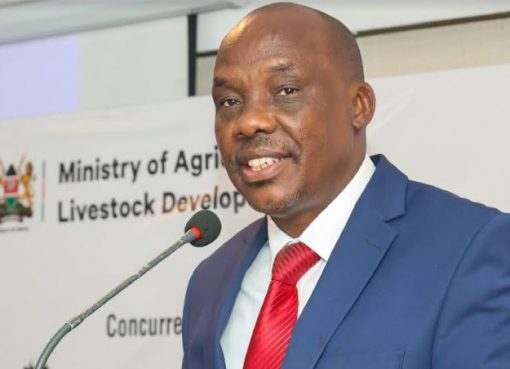
County Executive Committee Member (CECM) for Agriculture, Livestock, Fisheries and Veterinary Services Leonard Bor indicated that through the collaboration, maize farmers who redeemed at least two bags of e-Voucher subsidized fertilizer used in planting are automatically covered by the insurance.
Bor stated that his department in collaboration with PULA had initiated measures towards supporting farmer groups to access crop insurance services, which he noted will provide financial security, particularly to small holder growers against unpredictable risks.
“In the meantime, we will be conducting a sensitization campaign to create awareness about the insured maize program to ensure that every farmer understands their coverage and how to benefit from it.
The program is tailored to enable better financial protection for vulnerable farmers and also reduce the need by both levels of government to provide financial support following natural disasters,” stated the CECM.
He underscored the need for an efficient and simple communication mechanism that allows for feedback from farmers needs to be put in place in order to enable further refinement of insurance products to reflect farmers’ needs, tastes and preferences.
The Kenya Climate Smart Agriculture Strategy 2017-2026 indicates that 98 percent of the country’s agricultural systems are rain-fed and highly susceptible to climate change and variability.
The document indicates that smallholder farmers, who depend on rain-fed agriculture and use low-technology farming methods, are particularly vulnerable to droughts and floods, given that less than 1 per cent are currently protected by some form of insurance.
Bor stated that access to insurance helps strengthen farmers’ resilience and is a useful tool to mitigate the risks that come with climate change.
They have resolved to focus on educating farmers about the importance of insurance while also bundling it with other goodies.
“It’s difficult to sell insurance on its own to a farmer. So, we bundle insurance with other services. This approach, alongside other strategies, have worked well,” he says.
Speaking after hosting officials of PULA who were on a courtesy call, Bor highlighted the importance of nurturing the understanding of the crop insurance’s value and emphasized the need for more training and sensitization to help farmers fully appreciate insurance benefits.
PULA specifically targets small-scale farmers, who are often underserved by traditional insurance providers.
They offer insurance products at low costs, often bundled with agricultural inputs like seeds and fertilizer, making it easier for farmers to access and afford.
The company utilizes digital platforms and mobile technology to reach farmers, manage data, and streamline the insurance process.
It collaborates with various stakeholders, including banks, governments, and agricultural input companies, to expand their reach and impact.
Bor observed that smallholder farmers are the backbone of Kenya’s agricultural production. However, in recent years, he noted, they have had to bear the huge risk that comes with effects of climate change.
“The weather is no longer predictable and natural disasters have become more frequent, leading to huge crop losses. We aim to address this challenge to livelihoods, our bread basket and our economy by encouraging uptake of crop insurance,” Bor said.
He added “The best way to protect agricultural investments is through agriculture insurance. If anything happens to crops, farmers will receive compensation: that’s the beauty of agriculture insurance.”
The CECM stressed the importance of technology in simplifying insurance processes and improving accessibility for farmers.
“Through innovations, there is a need to leverage technology to simplify the distribution of insurance products, making it easier for farmers to access coverage. This is essential for the country’s food security and income stability,” he said.
He said that the insurance product is accessible to all categories of farmers –both small scale and large-scale farmers
According to Egerton University’s Tegemeo Institute of Agricultural Policy and Development (TIAPD), Agriculture has become a risky enterprise due to its cyclical nature, risk of loss from drought, floods, pests and diseases, fires and natural disasters.
Research shows frequency and severity of crop failure and livestock mortality have increased over the years.
Because of the highly variable climate where any season can bring harsh conditions, farmers have been reluctant to invest in more profitable technologies and practices. This lack of investment has led to unpredictable yields, a major factor keeping farmers trapped in poverty.
The Institute notes that mitigation of these risks is a priority to reduce income loss, increase agricultural productivity and enhance farmer’s well-being.
Given these growing concerns about the impact of climate change, crop insurance, though not a new concept has gained recognition and support from both public and private institutions as an important risk management tool.
Bor observed that agricultural insurance can assist farmers to access credit for inputs, do business with other value chain actors, including off-takers.
Insurance settlements can also be used to pay bills, make repairs and reinvest for faster production recovery, he added.
By Anne Mwale