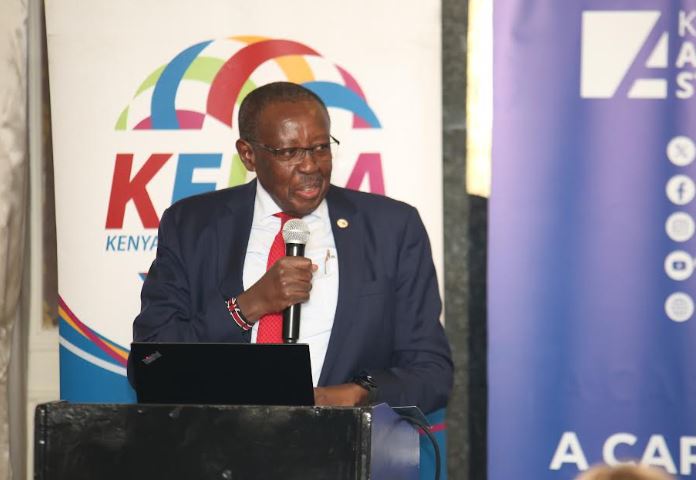
In a strategic meeting convened by the Kenya Private Sector Alliance (KEPSA) in Nairobi, the private sector has presented and discussed its inputs on the Finance Bill 2026 to the National Assembly Departmental Committee on Finance and National Planning.
This marks the second consecutive year that KEPSA has spearheaded a series of proactive private sector engagements with the committee to ensure that private sector perspectives are effectively integrated into the Finance Acts and subsequent legislation and inform the development of more pro-Kenyans and business-friendly Finance Bills, aligning with both government and private sector priorities.
During the discussions, both the private sector and the committee emphasised the critical need for policy predictability and fiscal credibility upon which investment decisions are made.
Specifically, KEPSA Director Eng. James Mwangi maintained that the Finance Bill 2026 presented an opportunity not just to assess fiscal numbers but to re-anchor Kenya’s policy direction toward stability, competitiveness, and long-term growth.
“A credible fiscal framework must be anchored in realistic assumptions, strengthened compliance through efficiency, not pressure and a clear commitment to pending bills,” he emphasized.
Notably, key recommendations from the private sector included extending the period for carrying forward tax losses from five to ten years to support capital-intensive sectors and reinstating a 15 percent preferential corporate tax rate for local motor vehicle assemblers and large-scale housing developers.
“We also call for an extension of the amnesty deadline by 24 months, to allow completion of Alternative Dispute Resolution (ADR) cases and boost voluntary compliance,” Chair of the KEPSA Public Finance Sector Board, Rose Mwaura added in a quick rejoinder.
Furthermore, the private sector also proposed that the Third Schedule of the Income Tax Act be amended to ensure the highest PAYE tax Band is 30 percent (down from 35 percent) and increase relief to Sh3,000 (creating a 30,000 tax-free base).
According to the Kenya Bankers Association (KBA) Chief Finance Officer Kennedy Mutisya, this amendment will cushion low-income earners from the higher taxes and levies, and release Sh28.1B to workers, which will translate to higher spending power, creating an estimated Sh42B GDP bump and 36,000 jobs.
Likewise, the private sector also proposed amending section 35 of the Income Tax Act to extend the remittance of withholding VAT tax to the 5th of the following month from the current 5 working days after the deduction was made.

“This will translate to ease of cash flow for businesses, thus widening operating capital that will translate to increased revenue and consequently income taxes and VAT,” stated KEPSA’s Vice Chairperson of the Public Finance Sector Board, Jilna Shah.
Additionally, they advocated for the zero-rating of essential agricultural inputs like biofertilizers, foliar feeds, and soil products or consider a lower VAT of 5 percent which the Tax Advisory Director at BDO Kenya Steve Okoth will contribute greatly to Kenya’s food security and support the 2024 Nairobi Declaration on Africa Fertiliser and Soil Health.
According to KEPSA, Kenya’s 2026 fiscal and policy environment is defined by a convergence of fiscal strain, energy constraints, and regulatory instability, forming a ‘Triple Crisis’ that is undermining economic performance.
With a national budget of approximately Sh4.7 trillion and debt servicing consuming about 53 percent of revenues, fiscal space for development has significantly narrowed. This has contributed to the accumulation of pending bills estimated at Sh664.8 billion, which has weakened private sector liquidity, disrupted business operations, and slowed economic activity.
Similarly, efforts to increase revenue through taxation have also faced resistance and legal challenges, further complicating fiscal consolidation.
Speaking on behalf of the Chair, National Assembly Departmental Committee on Finance and National Planning, FCPA Kimani Francis Kuria, Turkana South Member of Parliament who is also a member of the committee, Ariko John Namoit, recognized this emerging legislative landscape, particularly the various pending Bills with fiscal and regulatory implications, whose cumulative effect may inadvertently increase the cost of doing business, create compliance burdens, and introduce overlaps within the existing legal and tax framework, even as they pursue legitimate policy objectives.
“As we turn to the Finance Bill, 2026, the Committee will be guided by the need to strike a careful balance between revenue mobilisation and economic growth, since sustainable fiscal policy must not only secure government resources, but also create an enabling environment for enterprise, innovation, and competitiveness,” noted Namoit, adding that the Finance Bill will be approached as part of a broader economic strategy, rather than a standalone annual exercise, so that its provisions are coherent with national priorities, including industrialisation, support for key sectors, cost-of-living considerations, and the need to enhance Kenya’s position as a preferred investment destination.
The meeting, hosted under the theme ‘Shaping a Growth-Oriented Finance Act 2026: Enhancing Competitiveness and Fiscal Stability through Inclusive Dialogue’, was supported by Konrad Adenauer Stiftung (KAS), whose Social Market Economy approach recognises that sustainable economic growth and social stability must go hand in hand.
To this regard, Carolin Unger, KAS Deputy Director insisted that achieving this balance requires open and consistent engagement between government, Parliament, and the private sector.
Meanwhile, Kenyans and relevant stakeholders have been encouraged to provide clear, evidence-based, and solution-oriented proposals, particularly those that demonstrate how Kenya can broaden its tax base, enhance compliance, and increase revenue, while at the same time safeguarding business growth and economic resilience.
By Michael Omondi