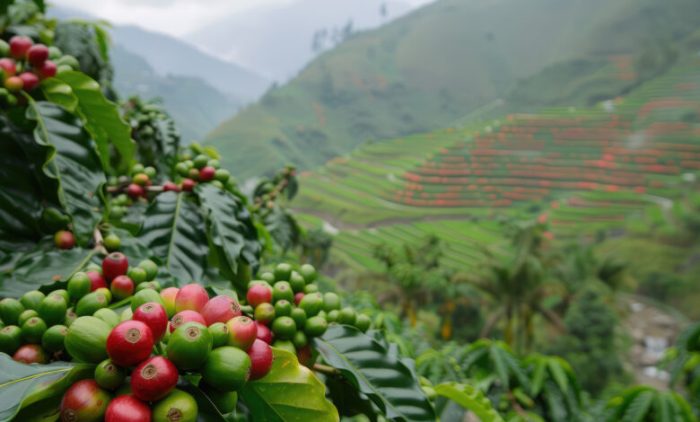
The country is working on modalities to comply with the European Union Deforestation Regulation (EUDR), a new law requiring all agricultural exports to meet certain standards.
The new EUDR law stipulates exporters to the European market must prove that all their agricultural exports were not produced from lands that were forested but reclaimed for production as of 31st December 2020.
The State has affirmed that it will meet a firm deadline of 30th December 2025 to ensure full traceability of key commodities, including coffee to land and not deforested land in the past four years.
Kenya risks losing up to Sh90 billion in coffee exports if it fails to complete the geo-mapping within the set timeframes.
European Union Deforestation Regulation (EUDR), Principal Agricultural Officer for Food Security in the Ministry of Agriculture and Livestock Development Mr. Tasisio Odongo indicated that the country was committed to fast-tracking all outstanding activities necessary for compliance, adding that already over 30 percent of the national coffee area, spanning 16 out of 33 counties, had already been geo-mapped using satellite imagery since the exercise kicked off in July.
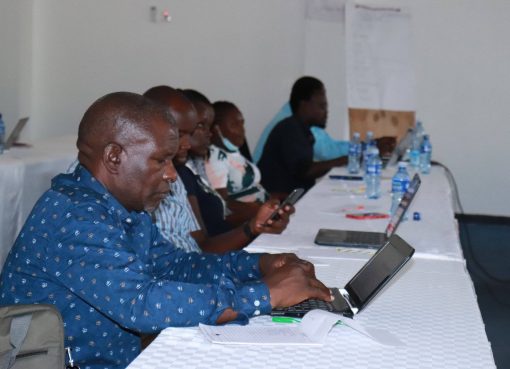
Tasisio is leading a multi-agency EUDR Data Committee team in a coffee mapping exercise scheduled to take place in Subukia, Bahati and Rongai sub-counties within Nakuru.
The EUDR Data Committee team comprises the State Department of Agriculture (SDA), State Department for Cooperatives, Kenya Forest Service (KFS), Kenya Space Agency (KSA), Directorate of Remote Survey and Remote Sensing (DRSRS) and Kenya Agriculture and Livestock Research Organization under the coordination of the Agriculture Food Authority (AFA).
According to AFA, Kenya exports 95 percent of its coffee, with approximately 55 percent exported to the European Union mainly Belgium, Germany, Sweden and Finland.
Over the past five years, Kenya exported 122,699 metric tons (MT) of clean coffee to the EU, valued at USD 695.7 million, equivalent to about KES 90 billion.
The Agricultural officer said they would be mapping out the remaining part under coffee production countrywide before December 30, which is the deadline, adding that the process will not only promote compliance but also strengthen Kenya’s coffee sector in the long run.
According to Tasisio, by erecting the new regulations, the EU aims to ensure that a set of key products exported in the EU and globally, which are heavily linked to deforestation, such as coffee, cocoa, soy, beef, palm oil, rubber, and wood, would no longer enter the EU market.
Tasisio emphasized that smallholder farmers were a vital part of the equation, contributing around 70% of Kenya’s total coffee output.
“Smallholder farmers form the backbone of the rural economy in 33 coffee-growing counties,” added the official.
With 70 percent of Kenya’s coffee produced by smallholder farmers, the implications of non-compliance are significant.
Mr. Tasisio indicated that coffee farming supports the rural economy across 33 counties, making the success of the geo-mapping project and EUDR compliance critical not just for trade but for the livelihoods of tens of thousands of farmers.
He noted that the Kenyan government’s swift action to ensure traceability and environmental sustainability highlights both the economic importance of the EU market and the growing global emphasis on sustainable agricultural practices.
He called on stakeholders and the public seeking clarification on the regulation or mapping efforts to reach out to the EUDR Data Committee.
By boosting the consumption of ‘deforestation-free’ products and reducing the EU’s impact on global deforestation and forest degradation, the new Regulation (EU) 2023/1115 on deforestation-free products aims to bring down greenhouse gas emissions and biodiversity loss.
The Regulation is part of a plan to tackle deforestation, first outlined in the 2019 Commission Communication on Stepping up EU Action to Protect and Restore the World’s Forests and later confirmed by the European Green Deal, the EU Biodiversity Strategy for 2030 and the Farm to Fork Strategy.
The new rules aim to avoid that the listed products Europeans buy, use and consume contribute to deforestation and forest degradation in the EU and globally; reduce carbon emissions caused by EU consumption and production of the relevant commodities by at least 32 million metric tonnes a year; and address all deforestation driven by agricultural expansion to produce the commodities in the scope of the regulation, as well as forest degradation.
By Esther Mwangi