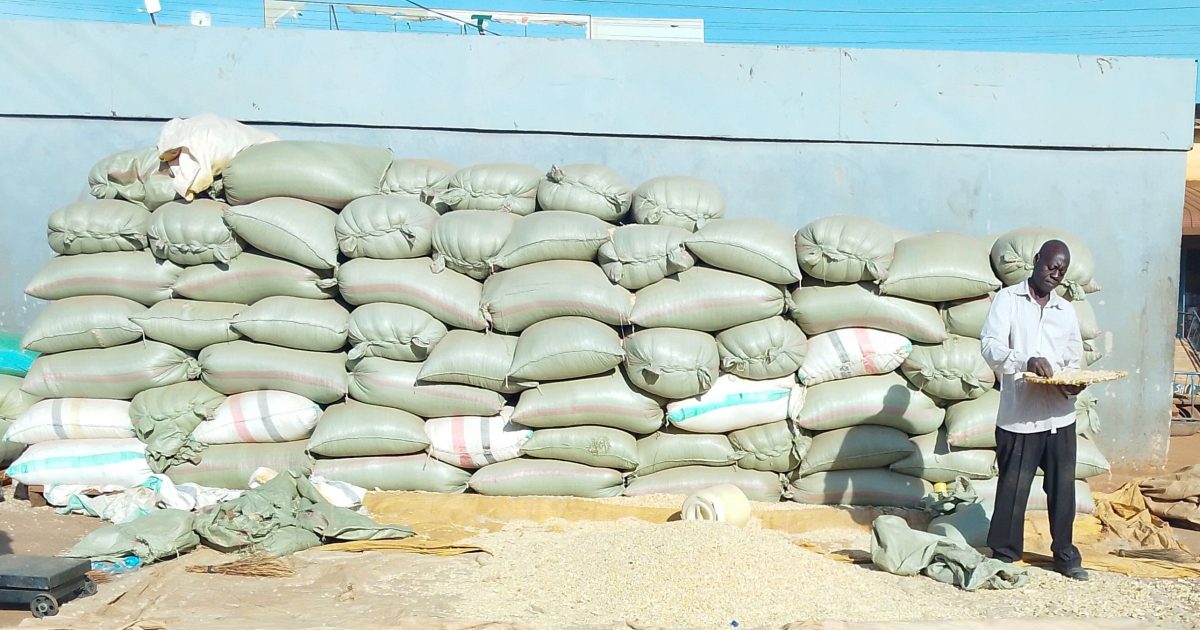
Residents of Tinderet Sub County are experiencing a relatively stable supply of dry maize, but with notable price variations that continue to shape household consumption and trading patterns of the staple food.
A spot check across markets and stores in the area indicates that dry maize is readily available, with stockists attributing the steady supply to the inflows from neighboring counties such as Uasin Gishu and Trans Nzoia.
However, prices remain inconsistent, reflecting broader national trends. Recent market data shows that retail prices of dry maize in Kenya currently range between about Sh 42 and Sh57 per kilogramme in major urban centres, with some regions recording highs of up to Sh70 per kilogramme depending on demand and location.
Traders in Tinderet say they are retailing a 90-kilogramme bag at between Sh4,200 and Sh4,500, though prices can drop when supply is high. Nationally, the price of a 90kg bag has recently hovered around Sh 3,800 to Sh4,100 in many producing areas, reflecting a stabilized but competitive market.
One maize stockist at Maraba market, Joseph Kiprono, noted that the availability of the commodity has improved significantly compared to earlier months.
“We have enough stock in our stores because farmers released their produce after harvest. The only challenge is that prices keep shifting depending on supply from other regions,” he said.
He added that an influx of maize from across the border and surplus production in the North Rift has contributed to the price fluctuations, sometimes forcing traders to sell at lower margins.
Another trader, Mary Jelagat, observed that while supply is steady, purchasing power among residents has declined, affecting sales volumes.
“People are buying in smaller quantities. Instead of a full bag, most households are purchasing in tins or a few kilogrammes at a time,” she said.
Residents, on the other hand, expressed mixed reactions over the current prices. While some welcomed the relative affordability compared to previous years, others argued that the cost remains high when combined with other household expenses.
A local resident, Peter Kibet, said the current price is still a burden to low-income families.
“Even if the price has dropped slightly, it is still expensive for many of us. We depend on maize daily, so any increase is felt immediately,” he said.
Another resident, Jane Chepkoech, noted that the availability of maize has at least eased fears of shortages.
“We are not worried about finding maize anymore, but we are concerned about the prices going up again,” she said.
Agricultural stakeholders attribute the current situation to a combination of increased production and market forces.
Reports indicate that a bumper harvest in some parts of the country has led to an oversupply, which in turn pushed prices down from earlier highs of around Sh4,000 per 90kg bag to lower levels in some markets.
At the same time, government interventions, including the National Cereals and Produce Board’s purchase price of about Sh 4,000 per bag, have helped stabilize the market and ensure farmers have a guaranteed outlet.
Despite the current stability, both traders and residents in the area remain cautious, noting that maize prices are highly sensitive to seasonal changes, transport costs, and cross-border trade dynamics.
By Sammy Mwibanda