The State-owned Geothermal Development Company (GDC) has unveiled plans to exploit the Geo-tourism potential at the 12-km-wide Menengai volcanic caldera to create a new revenue stream in the industry.
Deputy Manager for Corporate Communications and Marketing at GDC Eric Wamanji said the company was planning to set up a geothermal heated swimming pool and spa complex at the caldera, which is the largest volcanic feature in Kenya and the second largest in Africa after the Ngorongoro Crater in Tanzania.
He explained that the components of a natural geothermal spa resort were unique and the first of its kind in Africa, with the potential of attracting tourists from all over the world.
The Geothermal company (GDC) has been drilling steam wells at the floor of Menengai crater since 2011 as part of a project to generate geothermal energy in Kenya. It has undertaken drilling of a total of 43 wells.
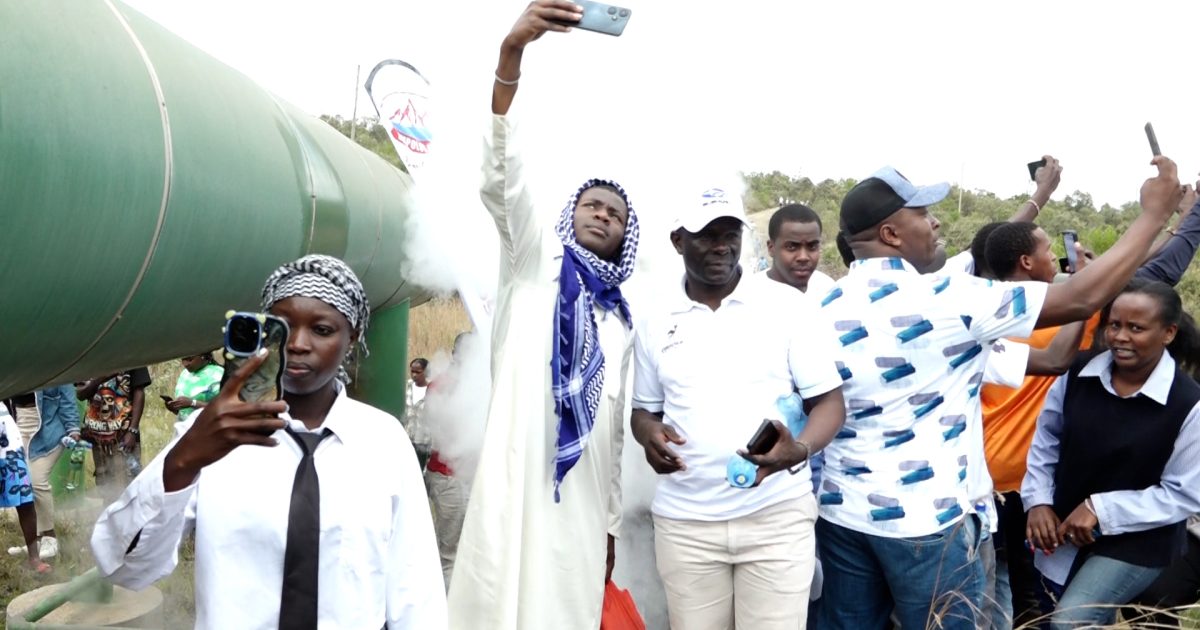
Wamanji said after derisking the fields, GDC had competitively selected three Independent Power Producers (IPPS) including Sosian Energy alongside, Quantum Power East Africa and the American Firm or Power TwentyTwo to build, operate and own the first three power plants in Menengai, each generating 35 megawatts to pump into the national grid a cumulative 105 megawatts.
The manager further explained that geothermal fluids, a byproduct of the electricity generation process by the IPPs, will be the source of the natural brine and heat for the heated swimming pool and the spa complex.
Besides the natural geothermal spa resort, Wamanji said the state agency was working with stakeholders in the tourism sector to enhance the status of Menengai crater, as a significant geological and adventure tourism site, highlighting its large picturesque views of Lake Nakuru and Lake Bogoria, opportunities for hiking and cultural significance due to local legends of spirits and demons.
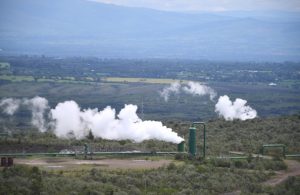
The site, which also features geothermal excavation and a rich variety of flora and fauna, draws visitors for recreational, religious, and educational purposes.
Wamanji indicated that the caldera also offers an excellent opportunity for ecological tourism, as the surrounding lush forests and crater floor are home to diverse wildlife, including dik-diks, monkeys, various bird species like the Verreaux eagle, and rare plants.
He elaborated on the natural geothermal spa resort to be modelled on Iceland’s Blue Lagoon.
Health Spa is expected to significantly boost the number of tourists visiting nearby attractions such as Lake Nakuru National Park, Menengai Crater and Hyrax Hill Prehistoric site among others.
On completion, the facility will be the second geothermal spa in Kenya after the first one built in the Naivasha Olkaria steam fields by Kenya Electricity Generating Company (KenGen).
The latter is also the biggest natural spa in Africa, with the capacity to host 500 people at once, added the deputy manager.
“Blue Lagoon is something we’re looking to replicate at Menengai. We envision geothermal-heated pools and spas here for leisure, recreation, wellness, and ecotourism. The project will also add a revenue stream to our geothermal sites,” added Wamanji.
He adds that once the spa is operational a reasonable fee just to cover maintenance of the facility would be charged to enhance the uptake of a service by Kenyans who have grown to consider spas, saunas and steam baths a preserve of the rich.
Blue Lagoon is one of the world’s largest and most visited natural spas, whose popular products include the silica mud masks and algae masks.
The spa, which is located deep in the heart of the Svartsengi Resource Park on the Reykjanes Peninsula, runs on geothermal seawater, whose temperatures range between 37 and 39 degrees.
The Menengai geothermal spa is projected to consist of several interconnected lagoons, a sauna and a steam bath.
The sauna will be designed to use brine running water in naked pipes at 150 degrees Celsius and the heat generated will raise the temperature of the room designated as the sauna.
The facility is also expected to host a geological and geothermal centre documenting the development of geothermal resources in Kenya as well as the progression of global technology for converting steam into economic activities.
Health experts say steam bathing softens the skin, reduces cholesterol and slows down ageing.
The brine is known to contain antibacterial chemicals that heal skin diseases and rashes.
In Iceland, for instance, the hot water contains minerals like silica and Sulphur that are known to help treat skin diseases such as psoriasis.
GDC is optimistic that the facility will ride on the growing popularity of balneology and the therapeutic effect of natural spas around the world.
“Our primary goal is to showcase the many uses geothermal resources can be put into. The health spa is expected to bolster Kenya’s decisive entry into non-traditional tourism products,” the Deputy Manager for Corporate Communications and Marketing notes.
Industry players have welcomed the initiative, saying it will help Kenya exploit opportunities in the health segment of tourism.
In Kenya, spas are now a common feature in hotels and resorts, offering a wide range of treatments, including basic massage, body wraps, scrubs, and specialised treatments, including Ayurveda.
Health clubs, including spas, state-of-the-art gymnasiums and swimming pools, are now a vital selling point for the hospitality industry.
“New products are always welcome. There are already several hotels offering spas but not to this scale,” says Chairman of the Nakuru County Tourism Association David Mwangi.
Mwangi adds that the global spa industry was growing steadily as people become more health-conscious and, with rising incomes, more willing to spend on their well-being.
He stated that they were working with GDC to market the crater as a tourist destination and added that its varied terrain offers opportunities for hiking and trekking, with trails leading to the crater floor and back up the cliffs.
“The site’s ‘holy’ caves attract pilgrims who seek spiritual refuge, fasting, and praying for days. It is ideal for educational Tourism as visitors can learn about the geology, geothermal energy potential, and unique flora of the region through organised tours,’’ he added.
He pointed out that some establishments at the Coast had invested heavily in health tourism facilities and changed their names, led by the Sarova Whitesands & Spa Resort and Leopard Beach Resort and Spa.
Whakarewarewa in New Zealand, commonly referred to as the living thermal village; Karlovy Vary thermal mineral springs in the Czech Republic; Hamam in Turkey; and Arenal Volcano and Thermal Baths in Costa Rica are also renowned natural spas in the world.
Others are the Lake Hévíz thermal bath in Hungary, El Tatio in the Andes, Chile, the Valley of Geysers in the Kamchatka Peninsula, Russia, Therme Vals in Switzerland and Bad Gleichenberg in Austria.
Tourism consultant at Olanka Safaris, Kepha Mathews, hailed the move as a step in the right direction towards supporting various initiatives by both the government and the private sector aimed at marketing diverse tourism products in the country, including mountaineering, sporting, medicinal, cuisine, horticulture and lake tourism, to attract more tourists.
Mathews observed that due to its unique topography, the caldera was an ideal destination for Ziplining, an adventure sport where a person is suspended by a harness and pulley system on a steel cable, gliding from a higher point to a lower one, often across valleys or forests, to experience a sense of flying and an adrenaline rush.
He said that although Kenya continued to be a popular destination, stakeholders must put more focus on other products to boost the sector.
“We are renowned for beaches and safari; they are our main signature products. But we need to diversify and present to the world other products such as mountaineering, lakes, horticulture, agriculture (tea and coffee), Nyama Choma, culture and heritage,” indicated the consultant.
By Esther Mwangi and Dennis Rasto