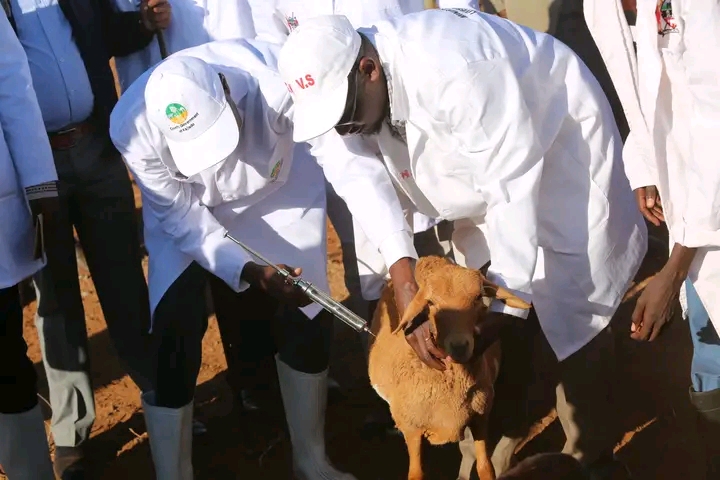
Pastoralists in Kajiado county have been urged to present their livestock for vaccination, ahead of a mass livestock vaccination drive, set to be launched next week.
The planned mass vaccination is part of the National Livestock Vaccination Program, aimed to safeguard animal welfare, improve productivity and ensure a sustainable livestock sector.
According to the County Executive for Agriculture, Livestock, Irrigation and Fisheries, Francis ole Sakuda, the exercise will target to control Foot and Mouth disease(FMD) and Pestes des Petits Ruminants (PPR).
“For healthy livestock, especially during this time when we are experiencing drought, we must vaccinate the livestock. This will protect the herds against diseases and improve their productivity,” said Sakuda.
He stressed that animal and human health are intertwined, as people consume the animals, thus they face a greater risk of contracting zoonotic diseases if their livestock are not vaccinated.
The County Executive noted that teams of veterinary officers will be dispatched across the county, added that the vaccination exercise will be conducted free of charge.
Sakuda further urged the local pastoralists to disregard propaganda being peddled by detractors saying that the whole exercise is about disease control for quality livestock, which can fetch better prices both at the local and international markets.
Though the exercise will be carried out across the county, Sakuda said it remains voluntary and farmers will not be forced to vaccinate their animals.
The national government rolled out a nationwide inoculation exercise in January this year, targeting to vaccinate 22 million cows against FMD and an additional 50 million goats and sheep against PPR.
The exercise is being spearheaded by the Kenya Veterinary Vaccines Production Institute (KEVEVAPI) through the Ministry of Agriculture and Livestock Development.
Meanwhile, according to the World Organization for Animal Health (WOAH), Foot and Mouth Disease is a severe, highly contagious viral livestock disease that has a significant economic impact.
The Transboundary disease affects swine, sheep, cattle, goats and other cloven-hoofed ruminants.
by Diana Meneto