Transparency International Kenya (TI Kenya) has embarked on a three-day training program to equip investigative journalists with the skills to detect and report corruption risks in public infrastructure projects using the Infrastructure Corruption Risk Assessment Tool (ICRAT).
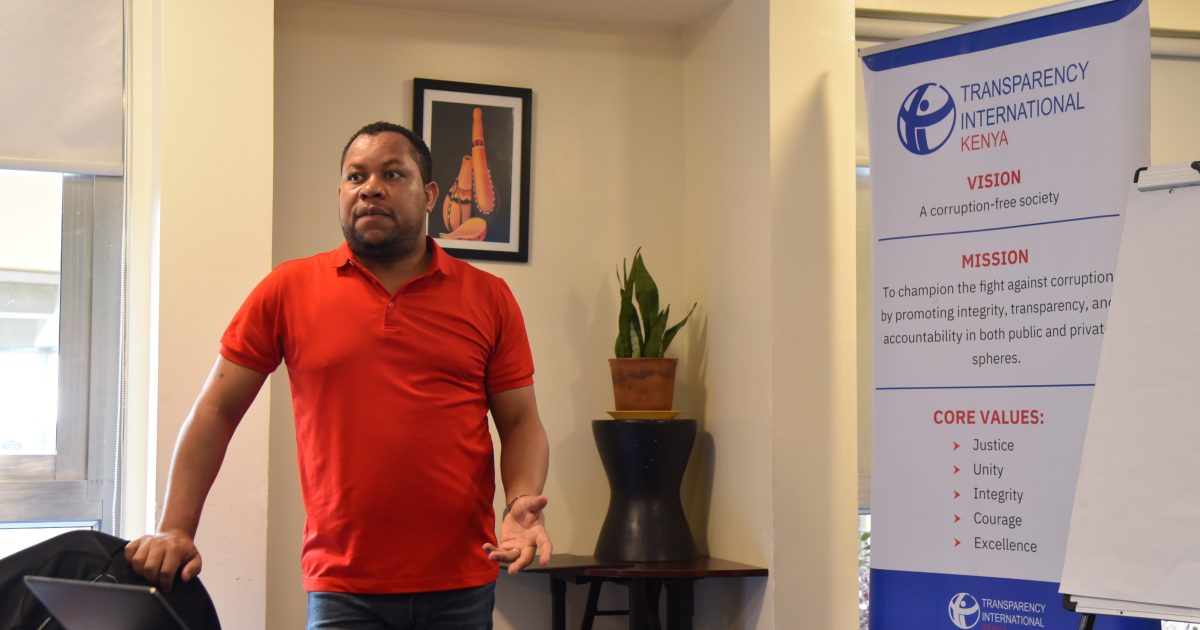
The workshop, which took place at Nairobi hotel brought together journalists covering governance, public finance and procurement, alongside TI Kenya’s program team.
The initiative is part of the organization’s Responsible Infrastructure Investment Project, which seeks to enhance integrity and transparency in the management of public investments.
TI Kenya Head of Program Gibson Mwaita said the new tool will help journalists and oversight actors identify corruption vulnerabilities at the earliest stages of project planning and selection.
“ICRAT provides a structured, data-driven method for assessing risks before the damage is done,” Mwaita said.
“Our goal is to strengthen evidence-based reporting that holds decision-makers accountable and ensures infrastructure projects serve citizens, not private interests,” he said.
Developed by Transparency International Australia (TIA), ICRAT guides users in mapping corruption risks and identifying mitigation measures during the selection phase of infrastructure projects.
The tool was piloted in Indonesia and the Solomon Islands between 2022 and 2023 and has since been adopted in several African countries including Zambia, Tanzania, Malawi, and Angola.
In Kenya, TI Kenya has selected two high-profile projects for ICRAT application, the Standard Gauge Railway (SGR) and the Boma Yangu affordable housing program.
The SGR, which cost over Sh650bn in its first two phases, remains the largest public infrastructure investment in the country, while Boma Yangu, aims to deliver more than 200,000 housing units annually through public-private partnerships.
“These projects are central to Kenya’s development agenda, but have also raised serious governance and accountability concerns,” said Mwaita.
“ICRAT will enable us to generate empirical data that can guide corrective action and policy reforms,” he said.
According to the 2025 Projects Progress and Status Report, Kenya has 37 public-private partnership projects, of which only eight are under active implementation.
The rest remain stalled or delayed due to mismanagement, funding gaps, and alleged corruption. Analysts estimate that the country loses over Sh600bn annually in stalled and mismanaged infrastructure investments.
For journalists attending the workshop, the tool presents a new frontier for investigative reporting. Africa Uncensored reporter Elsa Kariuki said the training offers a practical framework for data-based journalism.
“In most cases, we rely on whistle-blowers or leaked reports to expose corruption,” she said, adding, “ICRAT gives us a structured way to trace risk patterns, follow the money, and challenge secrecy in public projects.”
Her colleague, The People’s Daily newspaper correspondent Victor Mukabi, said the training would help shift media focus from reactive to preventive reporting.
“Instead of waiting for scandals to erupt, we can now use the tool to flag vulnerabilities before funds are lost,” he said, adding, “It’s empowering to know that investigative journalism can also be part of prevention.”
The sessions included hands-on exercises on using the ICRAT framework, analyzing project selection criteria, and identifying red flags in public investment management.
Participants were also trained on how to access and interpret budget data, procurement plans, and environmental impact assessments for investigative purposes.
TI Kenya head of Communications department Judy Njeri said empowering the media is vital in combating corruption in Kenya’s infrastructure sector.
“Journalists have the power to amplify accountability. When the public understands where corruption risks lie, there is greater pressure for transparency and reform,” she said.
The training concluded with a simulation exercise in which participants applied the ICRAT tool to assess selected infrastructure projects and presented their findings.
TI Kenya said it will use the insights gathered from the exercise to guide future engagements with government agencies and the media.
“As Kenya continues to invest billions in infrastructure, accountability must remain central,” said Mwaita said in his closing remarks.
“Through ICRAT, we are building a network of journalists and stakeholders committed to protecting public resources and ensuring development serves the people,” he added.
by Grace Naishoo