Kenya is developing an ambitious National Marine Spatial Plan (MSP) to guide the sustainable use of its ocean resources and unlock the vast potential of the Blue Economy, which largely remains untapped.
The MSP is a 20-year strategic framework approved by the Cabinet, designed to guide the sustainable and integrated use of Kenya’s 250,000 square-kilometre ocean space, ensuring a balance between economic growth, environmental conservation, and social equity.
Although the still in draft form, the final plan is expected to be ready by June 2026 for submission to the Cabinet for approval. The initiative is supported by the Government of Kenya and the World Bank through the Kenya Marine Fisheries and Socio-Economic Development (KEMFSED) Project.
The MSP covers the country’s coastline, stretching from Vanga in Kwale County to Kiunga in Lamu County, which faces increasing pressure from overexploitation and user conflicts.
Experts say Kenya must integrate environmental management with economic, fiscal, and social goals to ensure sustainable marine development.
Marine Spatial Planning has increasingly gained attention globally as a practical framework for coordinated management and decision-making in marine areas.
The plan’s scope includes inshore waters in Kwale, Mombasa, Kilifi, Lamu, and Tana River Counties, territorial seas, and the Exclusive Economic Zone (EEZ).
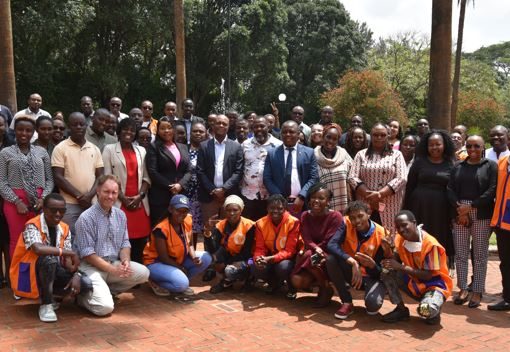
The Mining, Blue Economy and Maritime Affairs Ministry, through the State Department for the Blue Economy and Fisheries, has finalised a series of community engagement sessions in Kilifi, Lamu, Tana River, Kwale, and Mombasa.
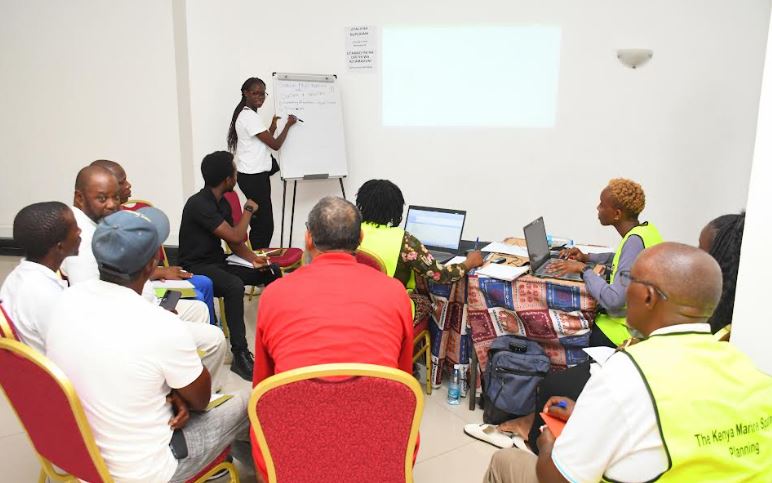
Participatory forums aimed to raise awareness, build capacity for meaningful participation, and gather local perspectives on resource use, conservation, and development priorities. Participants included representatives of different local stakeholder groups that have an interest in the ocean space.
Representatives of national and county governments, local non-governmental and community-based organisations involved in various activities, community groups, minority groups, beach management units, hotels and tourism and the private sector/business networks, were mainstreamed in the discussions among others.
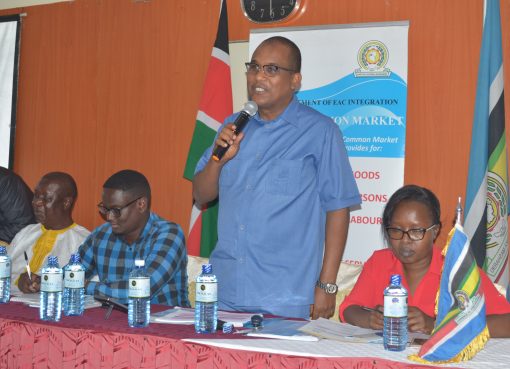
Deputy Director Physical Planning at the State Department for Lands and Physical Planning, John Tabu said public participation is central to the MSP process as it incorporates the voices of communities directly affected by marine activities.
Kenya’s Vision 2030 identifies the MSP as a key frontier in expanding the food economy, while the Fourth Medium Term Plan (MTP IV) recognises the Blue Economy as a driver of national growth.
“The MTP IV provides that the preparation of the MSP is the framework to unlock the resources that are in the Blue Economy,” he stated, adding that the plan will zone the marine space for fishing grounds, tourism, energy, shipping lanes, conservation, water sports and mining.
He added that the plan would also establish management frameworks and regulations to ensure sustainable use of marine zones.
“We are doing this so Kenya can advance to the next stage of development. As the President said, we aim to become a first-world country within 30 years, and that starts with developing and properly managing what we have,” Tabu emphasised.
Secretary of the Mombasa Beach Management Unit (BMU) Network, Halima Mweru said the MSP would help reduce conflicts among ocean users. She noted that activities such as port dredging often disrupt fishing grounds, reducing fish catches and sparking tensions between port operators and fisherfolk.
“If we follow the plan, it will end or reduce such conflicts,” she stated.
National Land Commission (NLC) Mombasa County Coordinator, Patrick Waweru said the Commission is ensuring the MSP process aligns with constitutional, legal, and international obligations.
“NLC is in the MSP process to ensure that stakeholders in the marine space are involved. They participate in identifying the issues, challenges and potential and also coming up with proposals to advance the national development goals and at the same time conserve marine biodiversity.”
Coach Twalib Yusuf, Secretary of Aquatic Sports, called for the establishment of community rescue centres along the beaches and the embedding of lifeguards on the beaches to improve the safety of ocean users.
By Sadik Hassan and Hadrine Joyce