Residents of the arid Mbeere North Constituency in Embu County are upbeat as the national government has injected close to half a billion shillings for implementing water projects.
Currently, three projects are underway with the first two being Kamata and Kanyuambora Irrigation Projects at a cost of slightly over Sh400 million.
The two projects are expected to be completed next year and will benefit over 1, 500 households in Nthawa and Evurore Wards according to Principal Secretary (PS) State Department for Irrigation Ephantus Kimotho.
The third one is Micro-irrigation project whereby the government assists individual farmers in sinking of small earth dams in their farms to store rainwater for later use at a cost of Sh120, 000 each.
The PS said that some of the key enterprises that the government was keen on promoting through the projects was horticultural farming with an average gross income of Sh208, 000 per acre, per year.
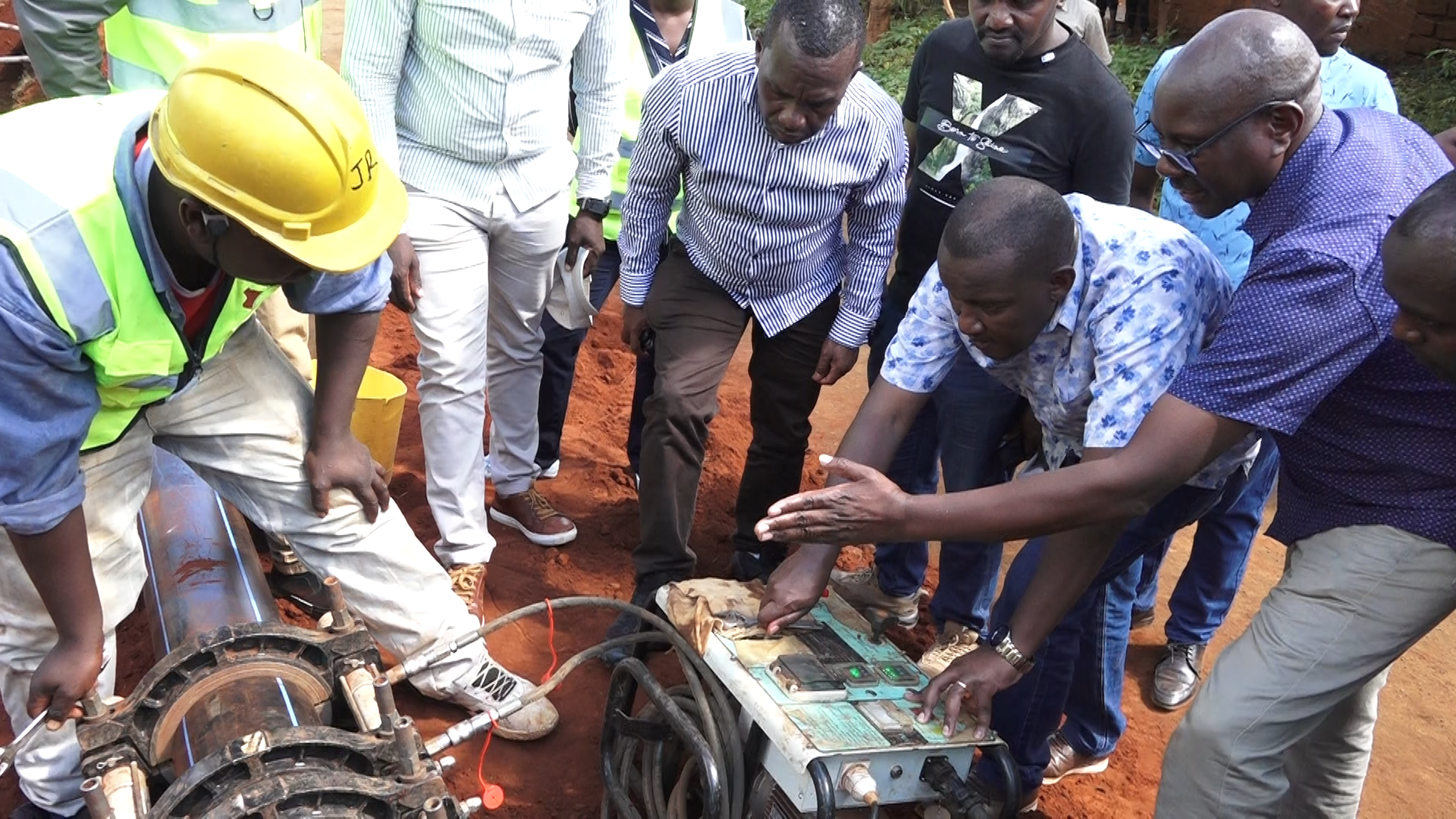
Speaking yesterday, during an inspection tour of Kamata Project where construction of the main pipeline is ongoing, PS Kimotho said they will continue increasing investment in irrigation for sustainable food supply and incomes for farmers.
“We cannot continue relying on rain fed agriculture due to climate change. We must change our way of farming for us to be food secure and also create self-employment for our farmers,” he said.
National Irrigation Authority CEO Eng. Charles Muasya confirmed that the government was scaling up irrigation connectivity not only in Mbeere North, but also in other dry areas across the country.
He said the projects will open thousands of acres for irrigation, directly impacting on farmers and boosting the area’s food production capacity.
Engineer Mwasia noted that once complete, the systems will support year-round farming and improve household incomes.
For years, farmers in the semi-arid constituency have relied heavily on erratic rainfall, often leading to poor harvests and prolonged hunger seasons.
However, with the new development, the tide is turning and farmers will be able to grow crops all year round to feed their families as well as earn incomes.
The Beneficiaries have hailed the projects, saying they are now able to enjoy steady food supply and surplus produce for sale.
They note that irrigation has given them stability, dignity, and renewed hope in agriculture that has for decades been threatened by perennial drought.
Farmer Caroline Karimi said her life has significantly improved since she started using water from a local sand dam. She now grows a variety of crops and vegetables throughout the year, earning substantial income to support her family.
By Samuel Waititu