Ndia Member of Parliament and chairperson of the Transport and Infrastructure Committee in Parliament, George Kariuki, has instructed contractors to always fill up quarry sites to eliminate the dangers they pose to communities.
The stern instructions come to address the dangers posed by abandoned quarries which include death through drowning after the quarries fill up, running with water.
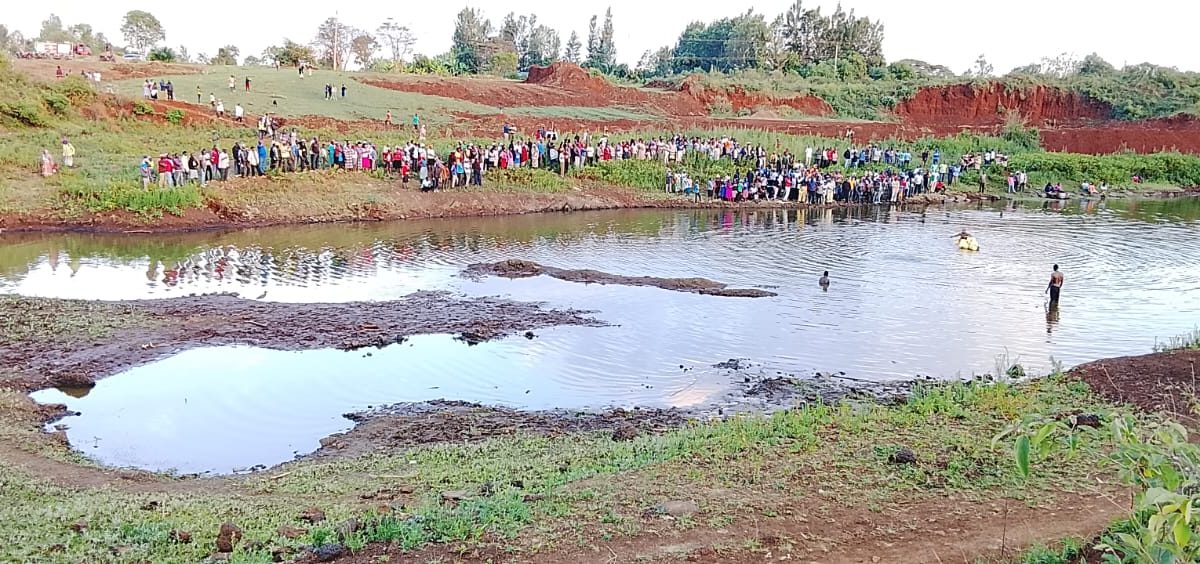
He specifically addressed a most recent case in Kiandai, Ndia Constituency, that claimed the lives of three people, including two children.
The MP emphasized the need for immediate safety measures and long-term solutions to ensure such tragedies are not repeated.
The two children reportedly drowned while swimming in the water-filled pit, having initially gone to the quarry to fish. One child got into difficulty, prompting the other to attempt a rescue, resulting in both losing their lives. A previous incident at the same site had already claimed another life, highlighting the urgent need to secure the area.
Speaking to journalists after meeting affected families and residents, Kariuki expressed deep sympathy for those grieving and vowed to ensure the families receive support.
He said he would engage the construction company responsible for the quarry to discuss how the families could be compensated for their loss.
“It is heartbreaking to lose young lives in a place that should have been secured long ago. I will speak with the company to ensure the families receive some form of assistance during this difficult period,” he said.
Kariuki also stressed the broader responsibility of contractors to ensure that abandoned sites do not pose a danger to the community.
“It is good practice for contractors to either fill these pits or find ways to make them beneficial to the surrounding community. We must turn potential hazards into assets rather than leave them as threats,” he said.
The legislator announced plans to fence and rehabilitate the quarry so it can be safely used for community development.
Options being explored include recreational facilities, controlled water storage, or agricultural use, all designed to benefit local residents while preventing future accidents.
The MP appealed to residents to protect fenced-off areas once they are secured, warning that vandalism or theft of materials compromises safety.
“Once sites are secured, it is everyone’s responsibility to safeguard them. Community cooperation is essential to prevent similar incidents from recurring,” he said.
Residents welcomed Kariuki’s initiative, describing the quarry as a long-standing danger. Community leaders praised the move to turn the site into a resource rather than leaving it as a hazard.
Many emphasized that such proactive measures could prevent future tragedies and provide lasting benefits to the community.
By David Wandeto