As unpredictable rainfall patterns slash harvests in the wake of climate change, smallholder farmers in Nakuru are turning to indigenous knowledge and agroecology to stabilise their food systems.
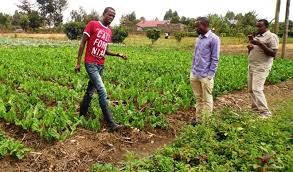
For 53-year-old Francis Ngiri, the value of indigenous crops is clear: they require minimal rainfall and are naturally resistant to pests, making them ideal for semi-arid regions.
His bulk work involves multiplying assorted indigenous seeds in a controlled environment to prevent contamination after collecting them from elderly farmers who have carefully preserved them over the years.
“Our grandparents were often food-secure because they preserved their choice seeds in gourds and granaries. Unfortunately, we have exposed ourselves to the vagaries of climate change by dropping our guard,” Ngiri points out.
Ngiri is part of a rapidly growing community of smallholder farmers at Kiptangwany village within Gilgil Sub-County confronting climate change effects such as erratic rainfall through agroecology, a holistic approach to agriculture that emphasises indigenous seed banks, soil health, environmental conservation, biodiversity, and reduced reliance on expensive chemical inputs.
Through his involvement with the Eden Indigenous Seeds Network’s journey to rediscover traditional farming methods, Ngiri has not only transformed his own life but also sparked a broader movement toward sustainable agriculture in his community.
He says that a recent High court ruling that declared key provisions of the Seed and Plant Varieties Act, 2012, unconstitutional, effectively decriminalising the traditional practice of farmers saving, sharing, and multiplying indigenous seeds, was a breakthrough for small-scale farmers, as it paves the way for enhanced conservation efforts for small-scale farmers who rely on indigenous seeds for food security and income; the outcome of the case is transformative.
Mr Ngiri notes that the ruling affirms that Farmer-Managed Seed Systems (FMSS) are a protected constitutional right and not a criminal activity, validating age-old practices that are essential for food production for a majority of small-scale farmers.
He observes that indigenous seeds are mentioned in the Constitution, Article 11, 3b, which explicitly states that parliament should enact laws that recognise and provide for the utilisation of indigenous seeds by the local community.
The November 2025 judgement, delivered by Justice Rhoda Rutto, removes long-standing restrictions that previously imposed hefty fines and potential jail terms on farmers for dealing in uncertified seeds or exchanging them outside the formal commercial market.
Mr Ngiri emphasises the need to strengthen the formal systems and lay out guidelines for the farmer-managed seed systems.
He points out that both seed systems are important for the development of agriculture, the economy and food systems and need to work together.
The Biodiversity and Biosafety Association of Kenya, GreenPeace Africa and Seed Savers Network had filed a petition before Justice Rutto challenging certain provisions of Kenya’s Seed and Plants Act Cap 326 on the grounds that it curtailed the sharing of indigenous seeds and instead impacted negatively by increasing the seed import bills to the country.
The Seed and Plant Varieties Act had previously criminalised the sale, barter or exchange of uncertified and unregistered seeds, including indigenous ones.
The law imposes penalties of up to Sh1 million, an imprisonment of up to two years or both for individuals involved in the unauthorised sale or distribution of seeds.
“A person who, while not registered as a seed merchant, imports, processes and packages seed for sale purposes, sells or displays for sale any seed which does not correspond with the description in any certificate required to be produced, offers for sale seed that fails to meet the requisite standards or has been rejected at any seed certification stage shall be guilty of an offence,” it reads in part.
Gideon Muya from the Biodiversity and Biosafety Association of Kenya notes that the preservation of indigenous seeds is not just a cultural matter; it is a critical strategy for food security and climate resilience in Kenya.
“The preservation of indigenous seeds and traditional foods is not merely a cultural task, it is a strategic imperative for food security, climate resilience, and social equity in Kenya,” states Mr Muya.
He explains that the Kenya National Agroecology Strategy for Food System Transformation 2024-2033 which was launched last year, further echoes this sentiment.
The strategy envisions a future where farming practices not only improve soil health but also conserve water, enhance biodiversity, and reduce the reliance on harmful chemical inputs.
Mr Muya underscored the importance of sensitising the public on the critical need to conserve indigenous seeds while also addressing the challenges that hinder the growth of indigenous seed systems.
“Legal barriers that restrict the exchange and sale of uncertified indigenous seeds, inadequate funding for community seed banks, and low public awareness have been key challenges undermining the efforts to strengthen local food systems,” he says.
He emphasised that food security begins with seed security.
According to Mr Muya, a shift in mindset is needed to break the cycle of seed dependency, noting that we must relax prohibitive laws that penalise farmers for sharing their seeds.
He highlighted the potential of digitisation to support farmer-managed seed systems.
Mr Muya observes that through communication programmes, such as radio shows, magazines, and databases like Infonet, farmers are gaining access to valuable information about seed saving, organic farming practices, and agroecology.
“The High Court’s decision is a victory for food sovereignty, reducing the dominance of large commercial seed developers and challenging the “corporate capture” of the food system. The ruling is crucial for conserving genetic diversity needed for climate resilience and adaptation,” he observed.
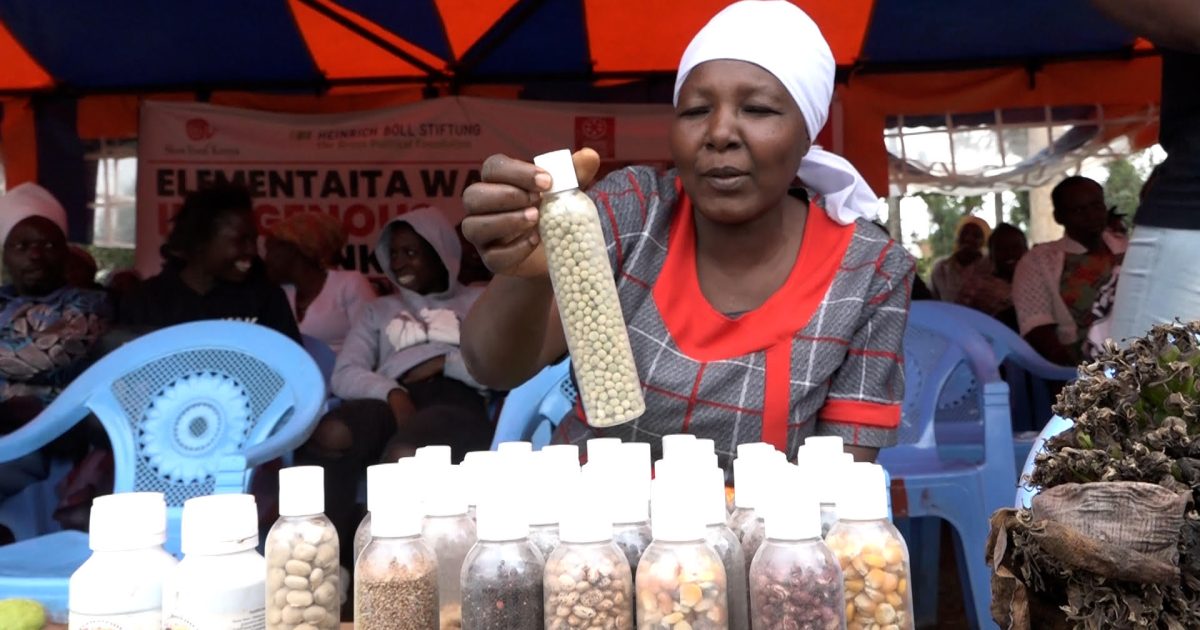
60-year-old Mary Wambui, a member of the Seed Savers Network, states that sharing of seeds will protect the country’s food sovereignty and protect the country’s biodiversity, warning that the country might continue to spend more on food imports and subsidies programme due to conventional seeds that are not drought resistant and reduce their productivity if replanted multiple times.
The indigenous seeds and plant varieties, Ms Wambui notes, have unique traits that are well-suited to local climatic conditions because they have proven to be resilient to pests and diseases and therefore prohibiting their distribution within these localities could lead to loss of biodiversity.
“We are asking the government to consider establishing an indigenous seed bank as a matter of priority in the budgetary allocations to encourage propagation of such varieties and the practice of organic farming to reduce the cost of food production,” she says.
Ms Wambui adds, “We are preserving these seeds so that our children and the community can get back to traditional foods that our ancestors ate. We are advocating for everyone to go back to the traditional vegetables, to come and get seeds from our seed bank to plant on their farms so they can have vegetables to eat, sell and multiply for subsequent seasons.”
The smallholder farmer observes that with seed sharing and exchanging, she is guaranteed planting and harvesting every other season.
“If I have millet seeds and my neighbour has maize seeds, we can simply exchange a portion of what we have and get what we lack,’’ she says. “Seed sharing and exchange is money-free, which makes it cost-effective for any smallholder farmer.’’
Mercy Chepkemoi from Slow Food Kenya notes that exchanging and sharing seeds among farmers remains the only option for many “who cannot afford to buy certified seeds from registered seed companies or dealers.”
“If we are talking about realizing food and nutrition security for the country, then we must allow farmers to use whatever seeds that grow well on their soil. We cannot talk about food security while limiting the farmer from sharing climate resilient seeds,’’ Ms Chepkemoi adds.
She says that the policy makers should tap into the traditional methods used by smallholder farmers to multiply and preserve seeds to formulate strategies that will help the country’s agriculture adapt to “changing weather patterns.’’
When you restrict a farmer from sharing and exchanging seeds they can freely and easily access, the result is diminishing production, less food and starving populations,’’ says Chepkemoi. “Certified seeds come at a cost, which works against most smallholder farmers, and at times, the supply fails to meet the demand.’’
She explains that the Court ruling now paves the way for integrating the farmer seed management system into the law to enable smallholder farmers to share and exchange indigenous seeds.
“We need a law that is keen on documenting all Kenyan indigenous seed varieties to protect their sovereignty and history. Using indigenous seeds enhances the sustainability of food systems and natural resources. “Indigenous seeds are naturally adapted to the environment, and restricting their use puts our biodiversity at risk, especially in this era of climate change,” notes Chepkemoi.
She emphasized that special attention must be accorded to the farmer-managed seed system because it has the capacity and knowledge to nurture indigenous seeds, and any prohibitive laws should be scrapped to allow continuity.
By Jane Ngugi and Dennis Rasto