The Government has reaffirmed its commitment to fast-track the completion of stalled education infrastructure projects in Chebara, Elgeyo Marakwet County, as part of a nationwide programme to revive incomplete public investments and maximise returns on public expenditure.
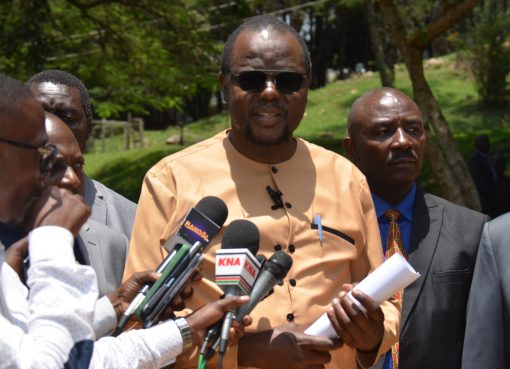
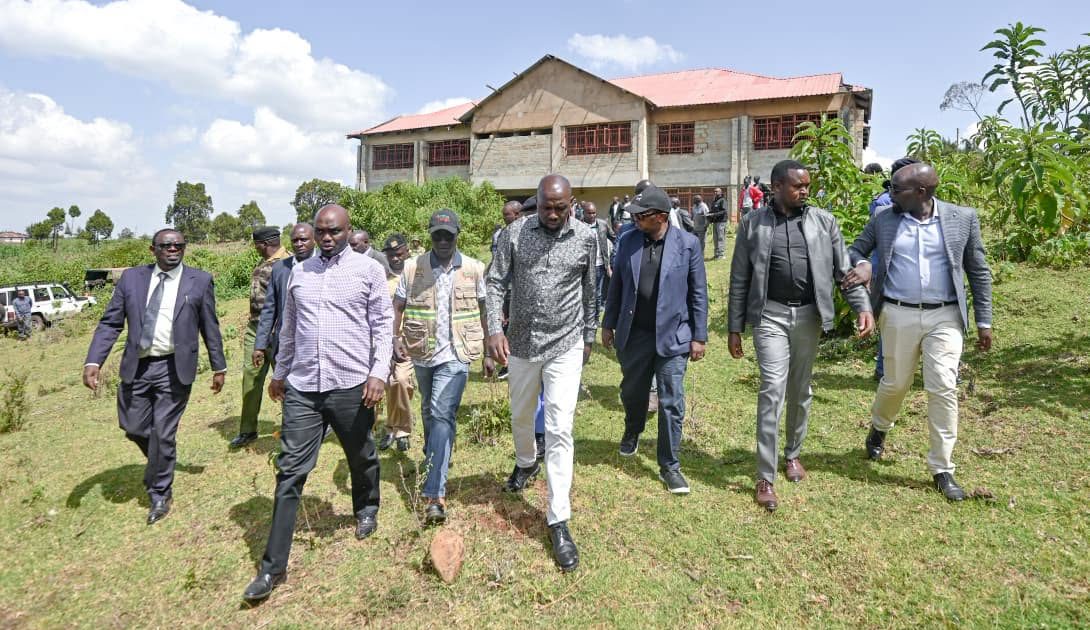
Interior and National Administration Cabinet Secretary Kipchumba Murkomen made the commitment during an inspection of education facilities relocated to pave the way for the Chebara Dam Project but which have remained incomplete for more than a decade.
Murkomen said the Kenya Kwanza Administration had prioritised the completion of stalled capital projects to improve public service delivery, optimise infrastructure use and safeguard public investment.
“The Kenya Kwanza Administration is firmly committed to completing all stalled projects across the country to unlock their socio-economic benefits and deliver value for resources invested,” he said.
The Cabinet Secretary toured the stalled Chebara Vocational Training Centre, Chebara Boys High School, AIC Chebara Girls High School, Chebara Comprehensive School and AIC Chebara Chapel, all relocated under the Chebara Dam Resettlement Programme.
He said delays were occasioned by the non-performance of the initial contractor, leaving the facilities unfinished and affecting learning for communities displaced by the dam project.
Murkomen noted that the prolonged suspension of the projects had limited access to quality education, technical and vocational training and other essential social services in the area.
He said the Government would implement a Presidential directive to mobilise the required resources, complete procurement for a replacement contractor and accelerate construction in line with approved engineering standards and contractual requirements.
“We will ensure full implementation of the Presidential directive to mobilise resources and fast-track the work of the new contractor following the previous contractor’s failure to complete the projects,” he said.
During the inspection, Murkomen reviewed the progress of the stalled facilities and directed implementing agencies to strengthen project supervision, contract management and inter-agency coordination to ensure timely completion and adherence to quality standards.
The Cabinet Secretary later visited Tambach Teachers Training College, where he inspected the ongoing rehabilitation of academic infrastructure and construction of additional student hostels.
He said expanding the institution’s capacity would strengthen teacher training and improve the quality of education.
Murkomen also assessed the proposed site for Kerio University, describing the planned institution as a strategic investment that will expand access to university education, research, innovation and skills development in the region.
Local leaders welcomed the Government’s renewed commitment, saying completion of the projects would restore learning services disrupted by the Chebara Dam development, increase access to technical and higher education and spur socio-economic growth.
The inspection is part of the Government’s national monitoring and evaluation programme for stalled public infrastructure projects aimed at improving project governance, enhancing accountability in public resource utilisation and accelerating implementation of priority development programmes under the Bottom-Up Economic Transformation Agenda (BETA).
By Rennish Okong’o