By S, KNA
The national government has officially launched the Kenya National Ultra-Poor Graduation (UPG) Strategy in Nairobi, a landmark programme designed to lift the most vulnerable households out of extreme poverty through structured and sustainable interventions.
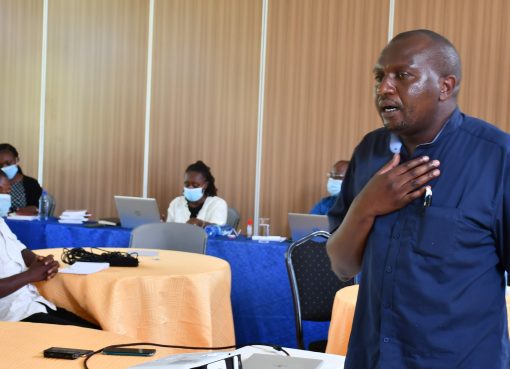
Speaking during the launch, the Principal Secretary (PS) for Social Protection and Senior Citizens Affairs, Joseph Motari, hailed the initiative as a transformative step in Kenya’s fight against chronic poverty.
“This strategy represents a bold government commitment to ensuring that every citizen, regardless of circumstances, has the opportunity to rise out of extreme poverty. It is not merely a handout, but a structured pathway to self-reliance, dignity, and sustainable livelihoods for our most vulnerable citizens,” explained Motari.
According to the PS, the UPG strategy provides ultra-poor households with a sequenced support package that includes consumption support, asset provision, skills development, mentorship, and access to financial services. Further, it aims to build household resilience, strengthen adaptive capacity to climate shocks, and empower participants to achieve economic independence over time.
Further, Motari noted that the programme aligns closely with Kenya’s broader social protection agenda and the Sustainable Development Goal 1, which seeks to end extreme poverty.
As well, he underscored the importance of coordination among national and county governments, development partners, and community-based organisations in ensuring the programme’s success.
“The impact of poverty is not just economic. It affects education, health, social cohesion, and overall community well-being. Through the UPG strategy, we aim to provide households with the tools, skills, and support to not only meet immediate needs but also build long-term resilience,” stated the PS.
Meanwhile, the launch comes amid persistent poverty challenges in several counties and according to recent national statistics, approximately 39.8 percent of Kenyans live below the poverty line, with 7.1 percent experiencing extreme deprivation.
In this regard, the PS highlighted that programmes such as the Youth Enterprise Development Fund, the Subsidised Fertiliser Programme, and cash transfers under the Indo-Pacific Transfer Programme have previously helped households improve food security, generate income, and gain access to basic services.
He emphasised that the UPG strategy seeks to consolidate these efforts into a unified, evidence-based framework.
During the launch, Motari also stressed that the programme prioritises inclusivity, targeting women, youth, and persons with disabilities, who are disproportionately affected by extreme poverty.
“By supporting ultra-poor households through mentorship, enterprise development, and savings groups, we are not only tackling poverty but also empowering communities to thrive independently,” he reiterated.
On the other hand, County representatives attending the event, including deputy governors and social protection officials, pledged to collaborate closely with the national government to ensure that resources reach intended beneficiaries.
Several counties, including Makueni and Taita Taveta, have already piloted similar programmes with encouraging results, demonstrating improved household income, food security, and access to education.
Similarly, Motari called on development partners and civil society organisations to actively engage with the programme stating, “The government cannot achieve these ambitious goals alone. Partnerships with NGOs, community groups, and private sector actors are crucial to ensure that no household is left behind”.
The PS at the same time pointed out that the UPG strategy also incorporates a robust monitoring and evaluation framework, enabling the government to track progress, identify challenges, and scale successful interventions across the country.
“This is a historic moment for Kenya. With the UPG strategy, we are taking a decisive step towards a future where poverty is no longer a barrier to opportunity, and every Kenyan has the dignity and chance to prosper,” he asserted.
The launch was attended by county representatives, development partners, and officials from both the national and county levels, signaling a unified commitment to tackling poverty and building inclusive economic growth across Kenya.