By M, KNA
Safaricom M-PESA Foundation has offered Sh30 million for the upgrading of infrastructure at Lumakanda Township Comprehensive School, in Lugari Sub County, Kakamega County.
The project, which is part of the Foundation’s efforts to support schools across the country with infrastructure, once complete, is expected to ease congestion challenges due to inadequate facilities in Lugari’s most populated school.
According to the school head teacher Paul Simiyu, the project encompasses construction of modern classrooms, laboratories and several ablution blocks.
He said: “Under the multi-million funding the Foundation is constructing and fully equipping with furniture, 8 new classrooms.
“It is also constructing two laboratories; a science laboratory which will be fully equipped and a computer one which will serve our learners, those from neighbouring schools and the local community.
“In addition the Foundation is also building two ablution blocks for the junior school and one for the teachers.”
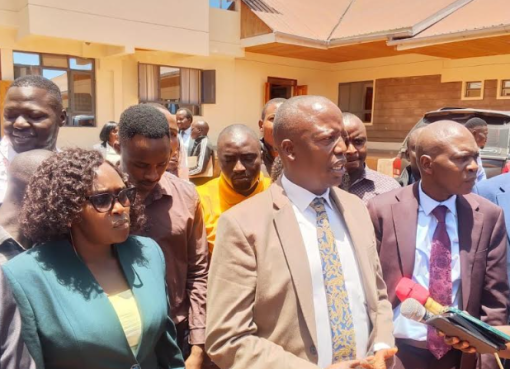
Simiyu who spoke during a visit by a team from the office of the Presidential Advisor on Women Rights, Harriet Chigai, said the construction work of the classrooms, the ablution blocks and the two laboratories is already in completion stage.
He noted that the only remaining bit from the upgrade package is the administration block, the gate and the information center which the contractor is set to embark on soon.
Simiyu also disclosed that the Foundation has agreed to establish more infrastructure at the school to accommodate the increasing number of learners owing to the school’s town location and improved academic performance.
“Besides the ongoing scope of work the Foundation is going to construct a modern kitchen and a dining hall to accommodate the over 800 learners who eat lunch at school. It is also going to construct 8 more classrooms.” He stated.
Simiyu lauded Chigai who is an alumna of the school for lobbying and picking her old school to benefit from the multi-million initiative calling on other local leaders to emulate her and support the school.
Dr. Anthony Akoto from the office of the Presidential Advisor on Women Rights Harriet Chigai, urged the contractor to speed up the construction works so that the learners can make use of the new structures.
He said: “As a team we are very impressed with the ongoing construction. The classrooms are getting ready. The other amenities that were part of the works are also coming up.
“We are here just to remind the construction team that we need the classrooms and the other amenities up as soon as possible so that the learners can enjoy a conducive learning environment. We also hope that the new infrastructure will immensely benefit the local community.”
Lugari Sub County Director of Education Joan Sakwa also appreciated Chigai for the initiative and ensuring her old school receives a facelift.
She noted that once the infrastructure development is complete the school will be a model school to others in the sub county.
“We also want to appreciate Safaricom M-PESA Foundation for partnering with the Ministry of Education and offering support in terms of infrastructural development of schools across the country.