The national government’s affordable housing programme is creating employment opportunities and stimulating economic growth in Tharaka Nithi County, even as several housing and infrastructure projects advance under the State Department for Housing.
Speaking to the Kenya News Agency during a site visit in Chuka town, Tharaka Nithi County Director of Housing, Nelly Kawira, said the county is implementing key national government projects including affordable housing, economic stimulus initiatives and modern market developments.
Kawira said the county currently hosts three major affordable housing projects which includes Chuka Public Works Affordable Housing, Majira Affordable Housing, and Marimanti Affordable Housing, which are all being implemented through the State Department for Housing.
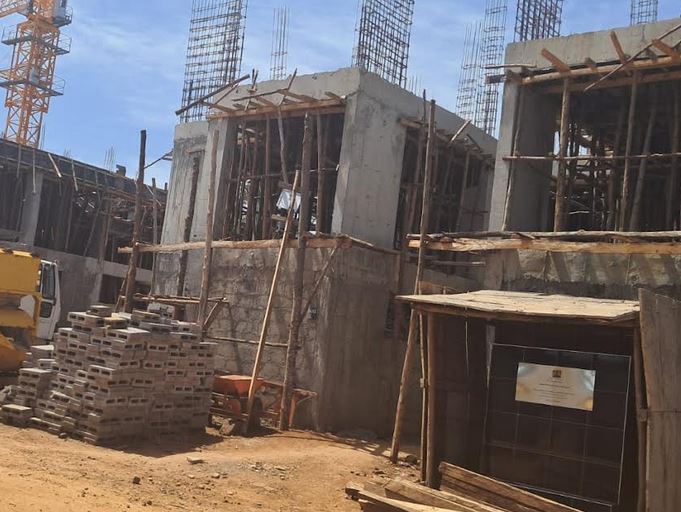
She noted that the Chuka Affordable Housing Project which will comprise 385 housing units across different categories commenced in December 2024 and is supposed to be complete by July this year, after 18 months of construction.
“The project is progressing steadily and has so far reached 30 per cent completion. However we might not beat the deadline considering that there were some initial challenges including very many huge trees at the site which took time to uproot. This calls for addition of a few more months to compensate for the lost time,” said Kawira.
She added that the Marimanti project in Tharaka Constituency currently stands at four percent completion after the site was handed over in November last year, while the holding process for Majira project has just been completed.
Beyond housing provision, Kawira said the projects have generated significant socio-economic benefits for local communities, particularly women and youth.
“Many people have benefited economically. Women have come out in large numbers to work at the construction site, while small-scale traders such as mama githeri and fruit sellers are earning a living due to increased activity around the projects,” she said.
She explained that Jua Kali artisans including masons, carpenters, and welders have also secured employment through the projects, improving household incomes and livelihoods.
“Affordable housing has brought in multiple benefits. Families are able to support their children’s education and meet daily needs using income earned from these projects,” Kawira said.
She further revealed that many of the artisans engaged in the projects are registered with the Micro and Small Enterprises Authority (MSEA), a move that has enhanced professionalism, accountability and access to government support programmes within the construction sector.
Further, she added, the projects have created opportunities for both technical and non-technical interns.
The Director also disclosed that the government has absorbed 5,000 young men and women nationwide as interns, under the affordable housing programme, with 63 internship slots allocated to Tharaka Nithi County.
She said the interns have been deployed across various ongoing projects to gain hands-on experience and develop practical skills in the construction industry.
Kawira said the affordable housing programme forms part of the government’s broader strategy to address housing shortages, while promoting job creation, skills development, and economic empowerment.
“Once completed, the projects are expected to ease housing pressure in Tharaka Nithi County and deliver long-term socio-economic benefits to residents which is one of the Kenya Kwanza’s development agenda,” said the director.
A resident employed at the Chuka construction site, Purity Mutegi, said the project has provided her with a stable income and improved her family’s wellbeing.
“This job has helped me take care of my family and pay school fees. It has given me hope and stability,” she said, referring to the growing involvement of women in construction-related works.
On his part, Dominic Mugendi, a mason working on the project, said the initiative has boosted employment for local artisans, while enhancing professionalism within the sector.
“Government projects like this provide steady work for us and help improvement of our skills and standards,” he said.
By Dickson Mwiti & Christine Ngitori