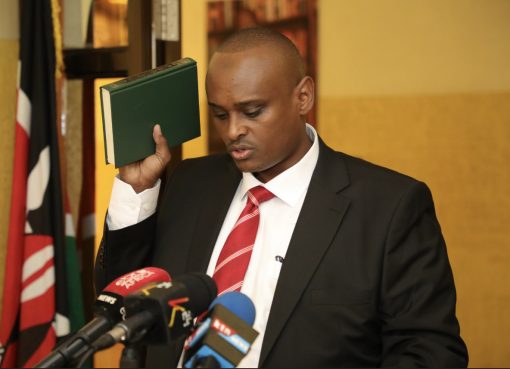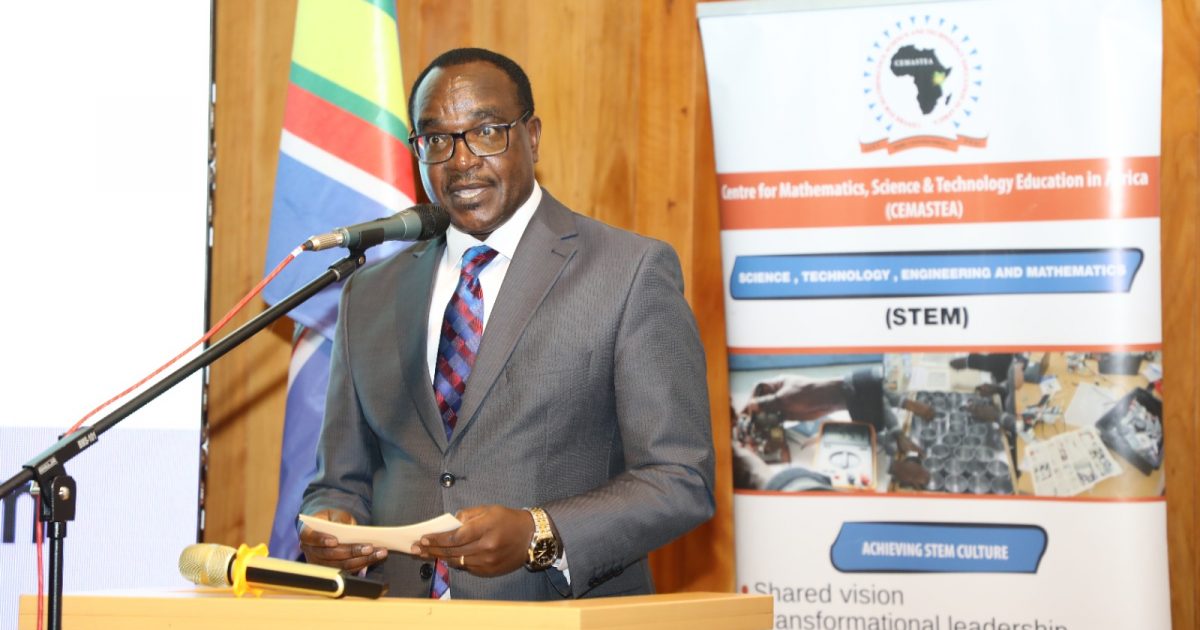
STEMTastic Adventures! Africa 2025 Symposium has officially kicked off at the Centre for Mathematics, Science and Technology Education in Africa (CEMASTEA) in Karen, Nairobi, with a clarion call for African states to harness the transformative power of STEM education.
Education Cabinet Secretary Julius Ogamba, who presided over the opening ceremony alongside Principal Secretary (PS) for Basic Education, Amb. Prof. Julius Bitok, commended delegates from over 30 African nations and around the world for attending the event.
In his keynote address, the CS underscored the urgency of placing Science, Technology, Engineering, and Mathematics (STEM) at the heart of Africa’s development strategy to position the continent on the global stage as a leader in solving everyday challenges.
“STEM is not just a curriculum; it is the engine of our transformation,” Ogamba affirmed, adding, “In a world shaped by artificial intelligence, climate change, and digital economies, Africa’s greatest asset lies in its young, tech-savvy population.”
He noted that Africa is home to the world’s youngest population, with projections indicating that by 2050, one in every four youth globally will be African.
The CS therefore emphasised the urgent need to equip this generation with the skills and mindset required to thrive in the Fourth Industrial Revolution.
The week-long symposium, running from July 22 to 25, 2025, has attracted a continental powerhouse of educators, policymakers, innovators, researchers, and students committed to reimagining Africa’s learning systems.
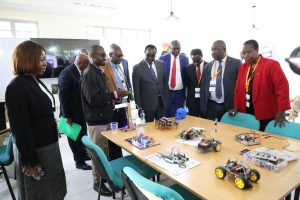
Ogamba, who toured the bootcamps showcasing innovations and technology, applauded partners including the mEducation Alliance and AUDA-NEPAD among other key sponsors for creating a dynamic platform for information exchange, where states can share insights and benchmark best practices among themselves.
The CS lauded the ongoing education reforms in Kenya, particularly the rollout of the Competency-Based Education (CBE), as a critical step toward nurturing a new generation of creative, adaptable, and solution-oriented learners.
“We have prepared our learners up to Grade 9 and they are now ready to transition to Grade 10 next year,” he said, adding, “Kenya’s education shift is not merely about changing content, but about transforming mindsets.
“We are also developing a generation that can ask the right questions, solve real problems, and build practical solutions,” reiterated Ogamba.
On his part, Prof. Bitok reaffirmed the government’s strong commitment to advancing STEM to transform education and for the country to achieve sustainable development.
The PS emphasised that STEM, one of the pathways under the Competency-Based Education (CBE), is designed to nurture critical thinking, creativity and innovation skills, which are essential for addressing real-world challenges.
“Kenya is home to STEM,” he said, adding that the other CBE pathways, including Arts and Sports and Social Sciences, empower learners to pursue their passions and future ambitions.
One of the major highlights of the symposium is the STEM Village, a dynamic space for student-led exhibitions, interactive labs, tech showcases and science demonstrations.
Ogamba described it as a vessel of curiosity, critical thinking, and collaboration, designed to ignite innovation at an early age.
He said the symposium strives to break down systemic barriers that continue to hinder the participation of marginalized groups in STEM especially girls, students with disabilities and underserved communities.
“We cannot build an inclusive future without equitable access to the skills that define tomorrow,” Ogamba stressed.
“This symposium is a firm step toward dismantling the historical and structural obstacles to STEM learning,” he added.
The CS commended the participants for coming together to lay a framework for achieving the African Union’s Agenda 2063.
He highlighted the importance of this shared aspiration for an integrated, peaceful, and prosperous continent, driven by its own people through science, innovation, and technology.
In his closing remarks, the Cabinet Secretary challenged participants to rethink boldly, collaborate across borders and take decisive action in reshaping Africa’s educational landscape through innovation, inclusion, and strategic partnerships.
“Let us light the path for our youth, not just with knowledge, but with hope, opportunity, and the courage to lead,” he urged.
“As the STEMTastic Adventures! Africa 2025 Symposium unfolds, may it spark meaningful dialogue amongst us and forge new partnerships, and inspire transformative solutions that will shape the future of STEM education across the continent,” he remarked.
The symposium brought together a dynamic lineup of organisations revolutionising education through innovation and technology.
Led by host CEMASTEA, the exhibitors featured edtech giants such as Amazon Web Services, SMART Technologies, AUDA – NEPAD, Digiskool, Snapplify, eLimu, Nyansapo AI, Kalamu by Angaza Elimu, and Edutab Africa, each showcasing cutting-edge digital learning tools aimed at enhancing access and improving learning outcomes across the continent.
Also on display were solutions from CASIO, eKitabu/Chipurobo Centre, and MsingiPACK, offering a rich variety of educational tools tailored to diverse learning environments.
Meanwhile, platforms like Soma Siri Afrika, SomaChat and Recess, among others, continue to highlight the increasing demand for interactive, locally relevant content that speaks directly to the needs of African learners and educators.
By Ian Chepkuto