The Office of the Attorney General has taken centre stage in spearheading a new wave of governance reforms, leading the development of three critical legislative proposals: the Public Participation Bill, 2025, the Whistleblower Protection Bill, and the Anti-Corruption and Economic Crimes (Amendment) Bill.
These bills, now formally submitted to Parliament, aim to entrench accountability, citizen engagement, and anti-corruption safeguards in Kenya’s legislative framework.
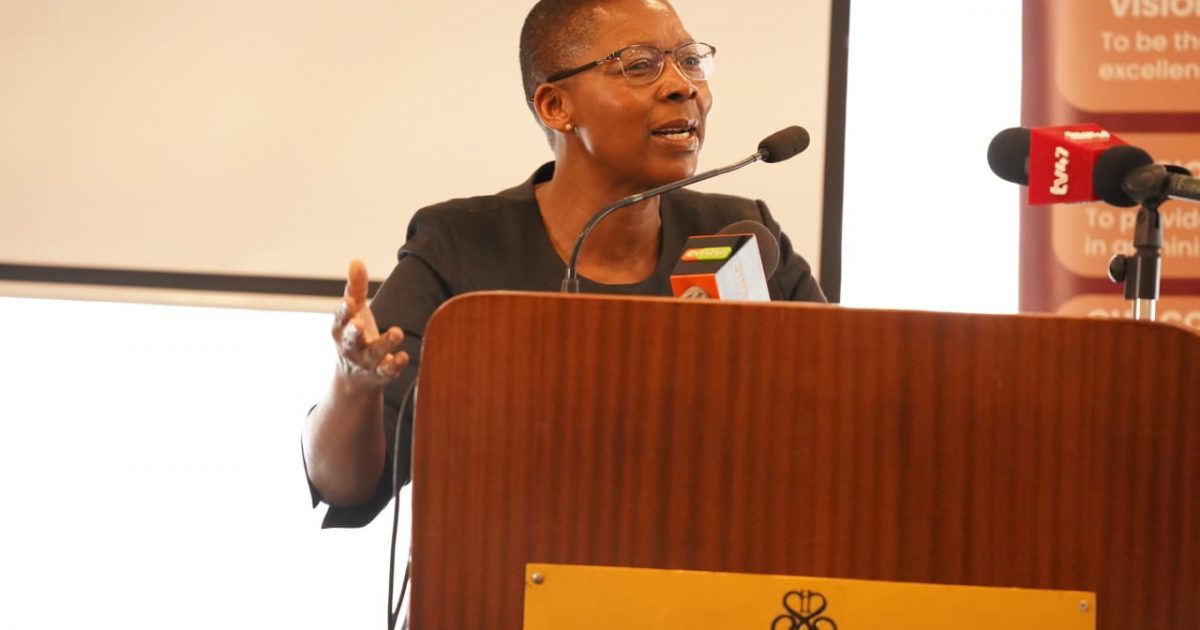
Speaking during a stakeholder breakfast engagement in Nairobi, Attorney General Dorcas Oduor emphasised that Public Participation is not merely a democratic ideal, but a constitutional imperative.
“As you all would agree, the principle of public participation is not merely aspirational, it is a constitutional obligation,” she said.
The AG cited Article 10 of the Constitution, which identifies public participation as one of Kenya’s national values and principles of governance, alongside Articles 118, 174(c), and 232(1)(d), which guarantee citizens the right to be involved in decisions that affect them at all levels of government.
She noted that although public participation has become a common practice, the absence of a uniform legal framework has led to inconsistencies and accountability gaps.
Oduor explained that the Public Participation Bill was the result of a rigorous, multi-stakeholder consultation process that engaged civil society, academia, faith-based groups, and citizens across several counties.
“This bill is born out of the recognition that, while legal upgrading strides have been made, there is still a lack of a coherent, enforceable, and inclusive framework for citizen engagement,” she said.
She noted that the Bill formalizes participation as a legal standard, creating minimum thresholds, clear obligations, and enforceable mechanisms for meaningful public engagement in policymaking and lawmaking.
Oduor also lauded the Whistleblower Protection and Anti-Corruption Bills, which are currently before Parliament, as critical tools in strengthening governance.
“These bills are crucial in reinforcing our anti-corruption architecture and promoting accountability in public service,” she noted.
Making his remarks, Prof. Makau Mutua the Presidential Advisor on Constitutional Matters, affirmed the executive’s support for the proposed laws, describing them as essential to restoring rule-based governance.
“Our republic can no longer continue to reward impunity and corruption,” said Prof. Mutua. “These bills reflect a presidency anchored in the rule of law and guided by the voice of the people.”
On the other hand, Judith Pareno, Principal Secretary for the State Department for Justice, Human Rights and Constitutional Affairs, said the State Law Office had undertaken public engagement in 13 counties with support from development partners such as UNDP Kenya and the World Bank.
“These reforms are not just legal instruments, they are tools for justice and national transformation,” said Judith Pareno.
She added that the Public Participation Bill operationalizes Articles 6, 10, and 232 of the Constitution and ensures citizen involvement is institutionalised in law.
Pareno said the Whistleblower Protection Bill provides safeguards for individuals who report misconduct, calling it an “economic necessity” in combating corruption.
She noted that the Anti-Corruption and Economic Crimes (Amendment) Bill seeks to reduce trial timelines to six months and enforce asset verification, adding that digital tools and targeted outreach had helped broaden citizen input despite budgetary constraints.
Concurrently, Aurelia Rono, Principal Secretary for Parliamentary Affairs, applauded the Attorney General’s Office for fast-tracking the three governance bills.
“We are grateful to the Office of the Attorney General for prioritizing these bills. They are not just legal instruments but tools for national transformation,” she said.
She termed the Public Participation Bill as long overdue, stating, “For over a decade, we have relied on court precedents to guide public participation. This bill finally provides clarity.”
Rono confirmed that the bills have already been submitted to Parliament, adding that her department is engaging MPs to expedite debate.
The President of the Law Society of Kenya (LSK), Faith Odhiambo also voiced strong support for the reform agenda, describing the Public Participation Bill as a constitutional milestone.
“Public participation is not a favour granted by government—it is a constitutional imperative,” she said.
The LSK President welcomed the Whistleblower Protection Bill for addressing the historical vilification of informants and supported stronger asset verification clauses under the Anti-Corruption Bill.
She outlined four proposals to anchor the framework: set participation thresholds, ensure procedural clarity, institutionalise inclusivity, and build robust monitoring systems.
“It would be an irony of profound proportions if a bill meant to govern public participation were to be passed without public participation itself,” she remarked.
The stakeholder engagement forum marked a significant step in Kenya’s constitutional implementation journey. With the three bills now tabled in Parliament, stakeholders expressed optimism that the proposed reforms will institutionalize meaningful citizen engagement, protect integrity champions, and strengthen transparency in public service.
By Joan Ogolla