The Public Benefit Organizations Regulatory Authority (PBORA) has cautioned Kenyans against engaging Public Benefit Organizations (PBOs), formerly referred to as Non-Governmental Organizations, without performing due diligence.
The head of legal services at the authority, Nicholas Lindon, is now asking Kenyans to reach out to the authority to ascertain the status of the said PBOs to avoid getting scammed or duped.
Speaking in Nyeri County, Lindon noted that the authority had received numerous reports from members of public regarding rogue PBOs operating in the country. He noted that most of the cases could have been avoided had the victims done thorough background checks.
“We are saying that due diligence cuts across the board. If someone is confronted with a situation they do not feel right about and one that involves large sums of money, it will not cost them to pick the phone and call the authority to find out whether the organization they want to engage with is rightly registered.
You will find that if a PBO has been deregistered, the information will be on the website but the person didn’t look at the website so they don’t know the PBO has been deregistered so they engage without doing due diligence,” he said.
“At the end of the day when they come to complain we find out that all sorts of things that could easily be avoided had they carried out due diligence so we are requesting donors and the public alike to make sure they talk to the authorities before they engage with PBOs,” he added.
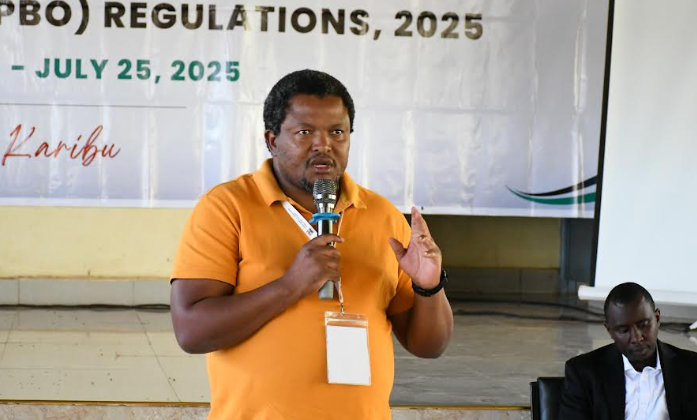
The head of legal services spoke during a public participation exercise on the proposed Public Benefit Regulation 2025. The Public Organizations Benefits Regulatory Authority (PBORA) -formally Non-Governmental Organizations Co-ordination Board-was established under Section 34 of the Public Benefit Organizations Act ,2013 and is mandated to register and regulate PBOs in the country.
The Public Benefits Organizations Act 2013 came into force on 14 May 2024 with the aim of regulating non-governmental organizations and public benefit organizations.
A Public Benefit Organization is a charitable membership or non-membership grouping of individuals or organizations, which is autonomous, non-partisan, non-profit making, and engages in public benefit activities.
Lindon noted that the new Public Benefits Act had incorporated new provisions which will be key in reigning sanity in the PBO sector. Some of the key reforms that the Act will introduces include introduction of a monitoring mechanism which will allow the authority to engage constitutional agencies to conduct forensic or criminal investigations on suspicious organizations.
Other provisions that the new Act has introduced include the establishment of a tribunal within the Authority’s Secretariat which will provide a mechanism for the Authority to quickly resolve disputes without engaging the courts.
“Currently as things are matters get to go to the courts and as we all know; the court’s calendar is crowded. We are hoping that the tribunal will be able to deal with the cases that are in court and sort them out within record time and allow these PBOs to discharge their mandate as per the law,” he said.
On whether the 14,000 PBOs registered under the old Act will be de-registered following the enactment of the new law, Lindon said that they are closely working with organizations to ensure that they update their status to align with the new law.
“There few things that have been provided for in the new law and PBOs will have to change. For example, certain provisions were not in the previous act but in the current act we have governance structures clearly indicated so these PBOs will have to update their records to reflect the new status quo. They will also be required to change the title from NGO to PBO on certificates of registration,” he said.
While welcoming the proposed regulations, Victor Karanja, a member of Kenya na Youth group in Murang’a requested for inclusivity in the management and running of NGOs operating in the country.
He questioned how the drafters on the regulations failed to capture the needs of marginalized persons as part of requirements for those intending to register a new PBO, terming the omission unfortunate.
“Given that over 70 per cent of Kenya’s population is under 35 years, why does the draft bill fail to include mandatory representation of youth, persons with disability, indigenous communities and other marginalized voices in its regulatory structure, yet it claims to be inclusive? “He posed.
On his part Elijah Wangai who runs the Movement for Bridging Equity and Unity, a CBO operating from Mukurwe-ini faulted a requirement for PBOs to have a physical premises as unfair especially for upcoming organizations. He also claimed the requirement for the President to be appointing the Chair of the Board could rob its independence and reduce it as an appendage of the executive.
Apart from the Chair, other members who shall sit at the PBORA Board include the Interior Principal Secretary, his counterparts in Foreign Affairs and Treasury, the Attorney General, chairperson of the National Federation of PBOs and the Chief Executive Officer who shall serve as an ex-officio member and secretary to the Board.
“The requirement for BPO to have a physical address may be a challenge to many of us who operate virtually and with no physical offices. We also fear that the mere fact that the Chair of the Board is an appointee of the Executive may interfere with the independence of the decisions at that level and in the process impact negatively in the running of PBOs in the country. In addition, some of PBOs operating in the local levels do not have donors and steady sources of income and therefore Asking such entities to submit annual financials returns may be an impediment to their operations,” he submitted.
Article 26 of the proposed regulations require PBOs to prepare and submit annual returns to the Authority after every six months. The returns must be submitted on or before the 31st of March in each calendar year.
Zacharia Kweyu, from Amnesty Circles of Conscience urged the State to weed out rogue entities masquerading as PBOs from the country to allow only registered ones to operate. Kweyu also called for the involvement of the local CBOs during the formulation of key decisions regarding the running of PBOs in the country saying that majority of them operate in the rural areas.
“It does not augur well when every decision regarding the running of Public Organizations is decided in Nairobi including which entity to register or deregister. In addition, the State should be on the lookout for organizations whose sole aim is to solicit for funds for selfish gains under the disguise of offering community service.
Every registered organization must prove that what it offers is for the good of the community and not for self-seeking interests,” he stressed.
The public participation sessions will be concluded on July 25.
By Samuel Maina and Wangari Mwangi