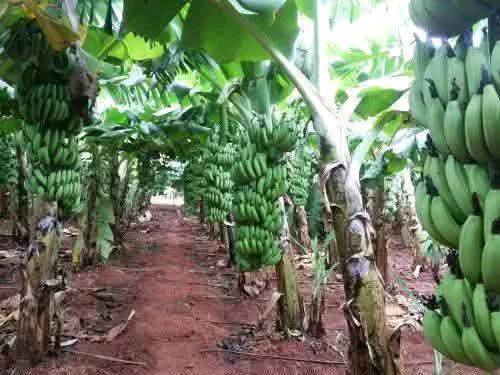
Banana farming is fast emerging as one of the most reliable sources of income for households in Tindiret Sub county, where farmers have embraced the crop as both a staple food and a commercial venture.
Farmers across Tindiret are shifting to bananas because of their resilience and market demand.
A local grower Joseph Kiptoo from Kapkoros village says he turned to banana farming five years ago after unpredictable maize harvests left him struggling to feed his family.
“Bananas are more reliable,” he noted, explaining that the crop produces year-round harvests, unlike maize which is grown for one season in a year.
Another farmer, Mary Jepchumba from Chepsangor, shared that bananas have transformed her life. She initially planted one acre but has since expanded to three, earning enough to educate her children and build a permanent house.
“The returns are steady, and there is always a buyer, whether locally or in nearby markets,” she said.
According to Tindiret Sub County Agricultural Officer Peter Sang, banana farming has become a cornerstone of food security.
He observed that more than 600 farmers have taken up the crop in the past three years, encouraged by county extension services.
“We are promoting tissue-cultured bananas that are disease-resistant and have higher yields,” he explained.
For many households, the shift has gone beyond income to nutrition. Families like that of Samson Chebet in Songhor rely on bananas for daily meals, reducing dependence on maize flour.
Nutrition officers in the county have also praised bananas as a rich source of vitamins and fiber, important in combating malnutrition in rural areas.
The financial impact has been significant. Middlemen and traders from Eldoret and Kisumu flock to local markets in Tinderet to buy bananas in bulk. Janet Cheruiyot, a farmer from Tinderet Centre, said she earns over Sh30,000 monthly from banana sales, money that sustains her household and supports her small dairy project.
County officials have acknowledged the challenges, including limited irrigation and post-harvest handling.
“We are working with farmer cooperatives to improve storage and link them to bigger markets,” said an officer from the County Agriculture Department, adding that plans are underway to establish a banana collection centre in Tindiret.
Success stories abound. Paul Kemei, a retired teacher from Meteitei, invested his pension in banana farming and now runs a thriving enterprise with more than 800 stems.
He supplies bananas to hotels in Nandi Hills and reports that he earns more now than during his teaching years.
Youth groups have ventured into transport, packaging, and marketing, creating small but steady streams of income. Women, too, are increasingly taking up banana farming as a way to support household budgets.
Despite challenges of pests and fluctuating market prices, banana farming is gaining momentum as a crop of the future for Tindiret. With support from county extension officers, farmers are optimistic that bananas will rival tea and maize in terms of profitability.
By Sammy Mwibanda