The County Government of Kilifi is working with strategic non-state actors in the Blue Economy to empower women to venture into maritime economic activities that have traditionally been the preserve of men.
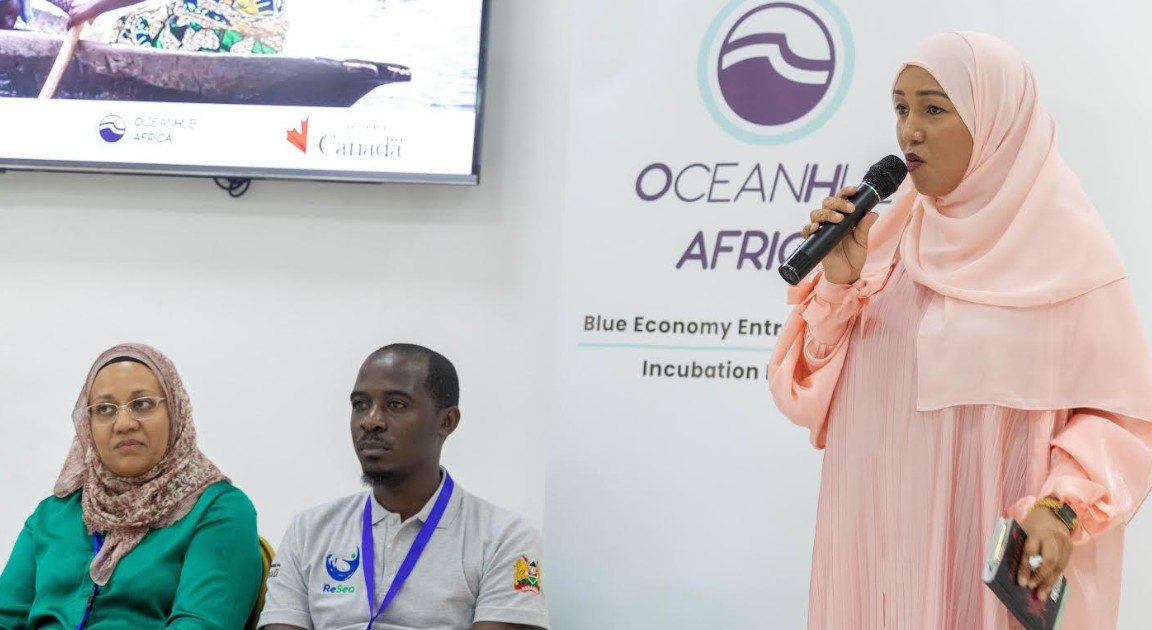
Kilifi Chief Officer for the Blue Economy Zamzam Ali says the county administration is working with organisations such as Grassroots Organisations Operating Together in Sisterhood (GROOTS) Kenya to implement Blue Economy activities targeting women.
Speaking at a Malindi hotel, Ms Ali said the county administration had made significant strides to empower women in the Blue Economy, driven by targeted efforts through collaboration with relevant stakeholders.
She said this after officially closing a training workshop organised by GROOTS Kenya for leaders of 30 women groups under the Regenerative Seascapes for People and Nature (ReSea) project, an ambitious initiative aimed at strengthening the physical and socio-economic resilience of people living in coastal communities.
“As the government, we have provided the necessary support so that non-state actors can implement their projects directly based on their proposals and criteria,” Ms Ali, adding that the county administration had created a political-free supportive environment to enable innovative ideas to take root.
Perpetual Angima, the Chief of Party for the Resea Project, described the initiative as a collaborative effort supported by Global Affairs Canada, the International Union for Conservation of Nature and natural Resource (IUCN), and various women’s rights organisations.
“We are co-creating solutions that meet the needs of youth, women, and marginalized groups,” Angima explained.
Beneficiaries of the project who spoke to journalists said their eyes had been opened to see opportunities in the Blue Economy and that the religious and cultural barriers that prevented women from venturing into the sea were slowly being broken.
Ms Muthuira Yusuf, a fishmonger, expressed hope that the project would help recognise women in leadership roles and address the longstanding cultural and religious barriers.
“For a long time, women have yearned to be recognised in leadership and government affairs and we are grateful that the Resea Project has opened our eyes and provided us with great opportunities in the Blue Economy,” Yusuf said.
Her sentiments were echoed by Ms Fatma Ahmen, a Malindi businesswoman, who also urged women to overcome fear and venture into business and exercise their constitutional rights to gradually dismantle restrictions that barred them from venturing beyond the seashore.
The ReSea project is present in the Western Indian Ocean region, including Kenya, Tanzania, Mozambique, Comoros, and Madagascar, and relies on nature-based solutions and gender-sensitive conservation practices to preserve, restore, and sustainably manage ecosystems.
The project also focuses on improving the livelihoods of local communities, with a particular emphasis on women and young people, through value chains that are part of a climate change adaptation approach.
The project that was launched in 2023 by Mr. Salim Mvurya, then Cabinet Secretary in charge of the Blue Economy, together with Kilifi Governor Gideon Mung’aro, is aimed at equipping women and the youth with skills needed to thrive in the sector.
By Victor Baraka and Emmanuel Masha