Residents of Busia have been urged to conserve the wetland areas to help cope with the environmental changes, support livelihoods, and reduce existing environmental risks.
Speaking during the celebrations to mark World Wetlands Day in Sio Siteko Wetland on Monday, Busia County Director of National Environment Management Authority (NEMA), Cliff Barkatch, said a decline of wetland will pose a huge risk to the environment as well as human life.
“Decline of wetlands will lead to loss of reservoirs for carbon and thus expose humans to the risk of climate change. Human life is at risk when wetland is destroyed because provision from the wetland helps much in the sustainability of human life through water and food,” explained Barkatch.
He urged residents to seek approval from the NEMA office and have an environmental impact assessment prior to undertaking any development to know the impact the activity will cause to the wetland before it is undertaken.
“There is a wetland policy that is guiding us on how to interact with the wetlands whereby some of the activities, including cultivation, building permanent structures, and opening up wetlands, have been prohibited. Activities like sustainable harvesting, fishery activities, and planting of environmentally friendly trees are highly protected,” explained Barkatch, adding that the rules don’t allow planting of some species of trees at the wetland areas like eucalyptus.
The County NEMA Director further reminded the local residents to stop polluting the wetlands but instead conserve them and use them appropriately while minding future generations.
“We have a duty to ensure that our wetland is well managed and conserved for prosperity,” he said.
The Head of Programmes at Eco Green Kenya, Jackline Namadi, expressed concern that the Sio-Siteko wetland in Busia is getting depleted at a very fast rate, adding that they are working hard to ensure they control the damage being inflicted.
“We are trying to make sure we curb the damage caused to the wetland to ensure the activities of the wetland are on. Most of the indigenous species that were once at the wetland have been depleted by the use of the communities that live within the wetlands,” she said.
Namadi noted that Sio-siteko, which is a trans-shared wetland with Kenya and Uganda, has policy guidance challenges on the Kenyan side due to individual land ownership of the resource.
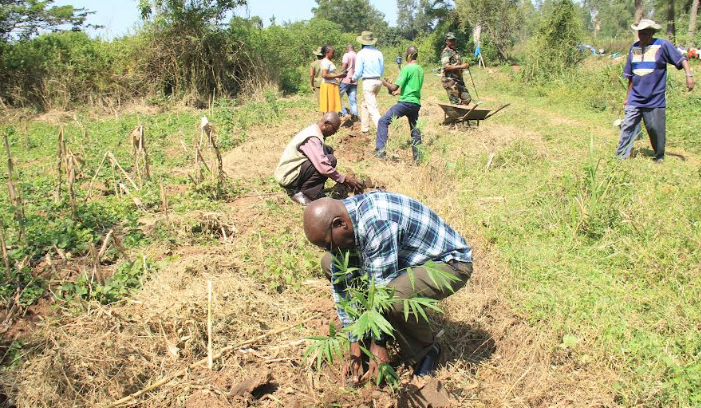
“This calls for co-sharing the mandate of protecting it with the owners. We are encouraging the owners of this wetland to plant bamboo for it to enable the wetland to remain wet all through and even restore biodiversity,’ she said.
She blamed poverty for the encroachment of the wetlands, adding that the organisation is encouraging communities living along the wetland areas to embrace bamboo growing as a way of protecting the areas and improving their livelihoods.
“We currently have more than 6,000 farmers planting bamboo trees in different parts of Busia County because we are targeting livelihoods using bamboo,” she said, adding that there was a need for more public sensitisation to adopt the tree.
Busia County Forest Conservator, Branice Wanyonyi, noted that many wetland areas had been encroached and people were planting some tree species that are not recommended for them.
Wanyonyi advised farmers to seek advice from KFS offices so that they plant the right tree species and conserve the environment.
“We are also encouraging farmers to seek advice on which species to plant even at their homes and farms,” she said, adding that there are special tree species that are recommended for establishing common boundaries.
Busia County Director for Energy, Silas Njuguna, said there is the need to embrace renewable energy technology, alternative sources of energy, and conserve the resources that we already have for the benefit of the community in their day-to-day activities.
“The wood fuel consumption in Kenya is 1.9 kg per person per day, and the production rate of wood fuel is 0.49 kg per person per day, and this shows the deficit, which calls upon us to preserve wetlands for us to get the wood fuel source,’ he said.
Njuguna added that wetlands were also sources of rivers through which hydroelectric power is generated.
Getrude Omondi, a bamboo farmer, stated that planting bamboo has improved her livelihood and urged other farmers to embrace the planting of bamboo.
“Bamboo has really helped me because I no longer go to look for firewood since I use bamboo. I also do sell one post of bamboo for Sh500, and through that I am able to buy food. I want to urge other residents to plant more bamboo because they have many advantages. It can be used to make furniture and aid in the construction of houses, she said.
By Rodgers Omondi