Period poverty remains a major challenge to the education of girls in low-income settlements in urban and rural areas in Kenya.
Limited access to sanitary products, inadequate information on menstrual hygiene, and cultural stigma cause over one million girls in Kenya to miss three to four days of school every month.
According to data from UNESCO, approximately one in every ten girls in sub-Saharan Africa misses school three to four days every month during their menstrual cycle. This translates to six weeks of learning time in an academic year. These frequent absences often lead to long-term consequences, including declining academic performance, increased school dropout rates, and low self-esteem.
According to Ruth Kinyua, AIDS Healthcare Foundation Kenya, no girl should miss class because of a lack of sanitary towels.
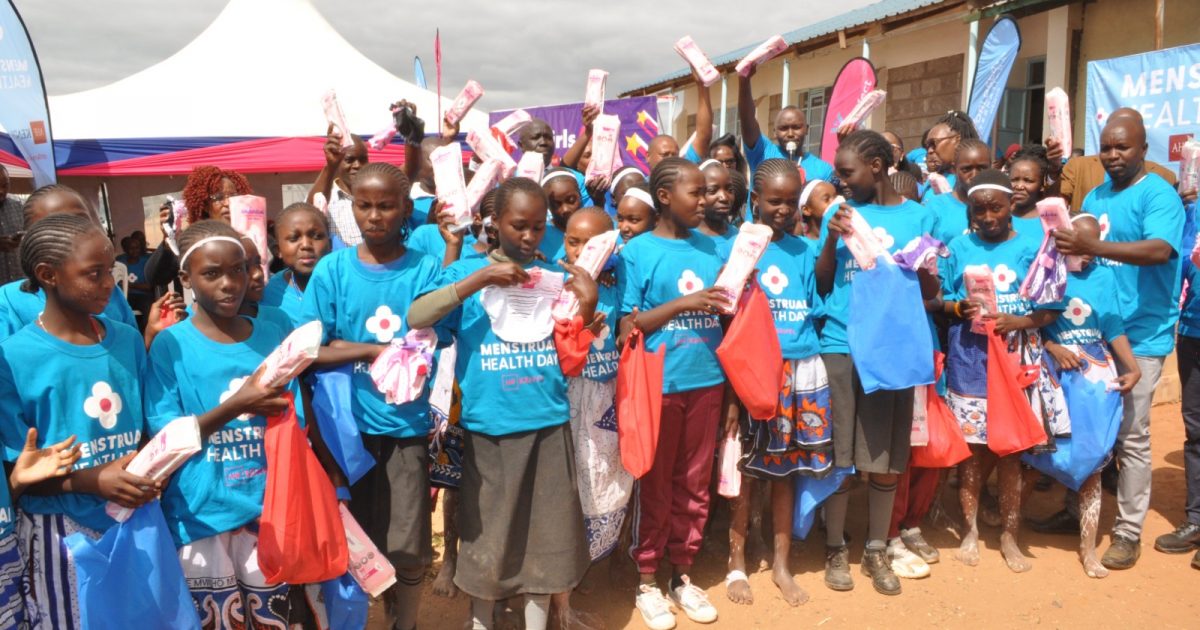
Speaking at Saina Primary School, Kajiado County, during an event to mark World Menstrual Hygiene Day, Kinyua noted that access to menstrual hygiene products is not a luxury but a fundamental human right.
Kinyua called on well-wishers to support the girls by donating sanitary towels to enable them not to miss school and live in dignity during their menses.
She added that every sanitary pad donated is a gift of dignity and a step toward uninterrupted education for the girls.
“No girl should miss school because of a lack of menstrual hygiene products. I am calling on well-wishers to support the girls by donating sanitary pads to enable them to experience their menstrual period with dignity,” she said.
Rita Seii, Programs Officer, World Vision Kenya, called for an end to traditions and taboos that require girls and women to remain indoors during menses, terming it as discriminatory.
Seii noted the need for education and awareness of menstrual hygiene, adding that it was disheartening that girls from poor family backgrounds still use unhygienic materials such as old rags and clothes during their menses, resulting in infections.
Kajiado County Public Health Officer Eddy Kimani noted the need to educate the community about Menstrual Hygiene so as to end period stigma.
Kimani noted that this year’s theme, “Period-Friendly World,” aims at empowering girls and women by normalizing conversations around menstruation, dismantling harmful beliefs, and advancing menstrual equity.
By Rop Janet