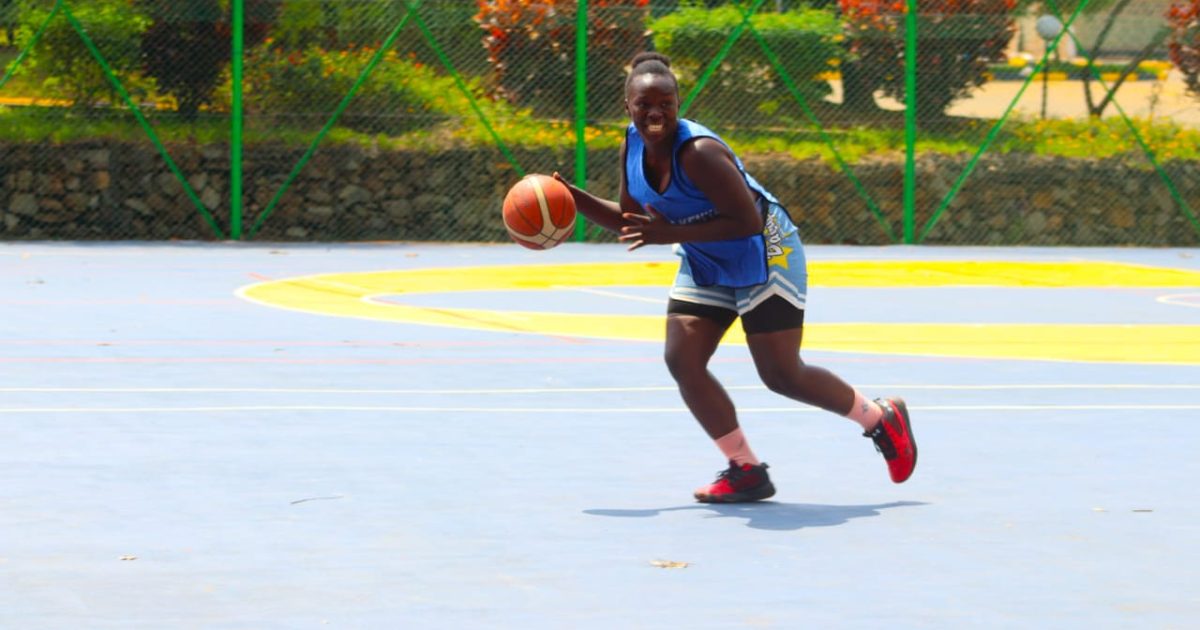
Winnie Adhiambo, will be one of Kenya’s basketball key players at the Tokyo 2025 Summer Deaflympics Games set for November 15 to November 26 this year.
The 34 year old Adhiambo and a mother of one, said she embraced the basketball sport at the age of 19 after being inspired by friends.
She says that although she did not enjoy the game at first, her passion for it grew over time. She features for Footprints in the Kenya Basketball Federation League.
Beyond being the team’s pillar owing to her vast experience, Adhiambo will also lead from the front as captain, a new role she has fully embraced, while setting her sights on guiding Kenya to a historic medal finish.
Kenya will be competing in the women’s basketball at the 25th edition of the Summer Deaflympics Games for the third consecutive time after debuting in the 2017 showpiece held in Samsun, Turkey.
The Deaflympics, also known as Deaflympiad (previously called World Games for the Deaf, and International Games for the Deaf), are a periodic series of multi-sport events, sanctioned by the International Olympic Committee at which deaf athletes compete at an elite level.
Boasting a wealth of experience, which includes playing with non-hearing-impaired players, Adhiambo said ahead of the Tokyo Games, the team needs to sharpen both their offense and defense as well as work on key drills such as man marking.
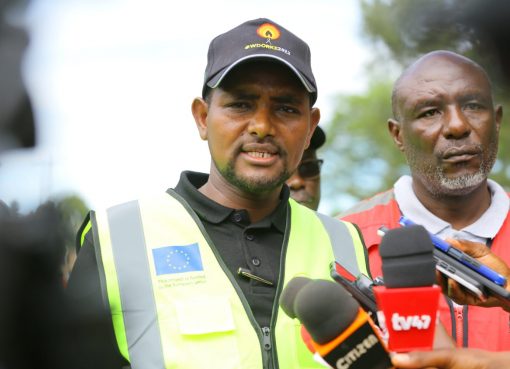
“We have been training so hard and our main aim is to make it to the podium in Tokyo,” said Adhiambo, while addressing the media on the sideline of the team’s training at USIU-Africa Grounds in Nairobi.
“At times I have been training with the hearing friends and also participating in their league. That has been of great benefit to me. For example, you find that players in the hearing team are very fast so that helps me to be a good player,” she said.
“I also share with my colleague (in the Deaf basketball team) what I have learnt on the other side (KBF),” added Adhiambo, who dreams of being a basketball coach in future.
Kenya’s coach, Mary Chepkoi, said they settled on Adhiambo as the team’s captain owing to her leadership skills, and courage to compete with non-hearing-impaired players.
“She is not limited to the Deaf team. She is this person who is outgoing and ready to compete in any platform, so that’s the courage and leadership we need in the squad,” said Chepkoi who also coached the team in the 2022 Games held in Caxias Do Sul, Brazil.
In Brazil, Kenya recorded a historic maiden win against the hosts, a performance they are keen to improve on. Kenya’s players are in Group “A” alongside giants Italy, Lithuania and Australia.
According to Chepkoi, the team of 20 players have been training three times a week – Friday, Saturday and Sunday.
She said that having gotten players from different regions, they have not been exposed to training so there are a couple of fundamentals of basketball that they are working on.
“We won one game at that time (in Brazil). We are looking forward to posting better results this time around. We are looking forward to picking a win in the group stages,” she said, singling out Lithuania as their biggest threat.
Chairperson of Kenya Deaf Basketball Federation, Christine Kirui said they expect the team to win a medal in Tokyo.
“As a federation, we are promising Kenyans that when we reach Tokyo in Japan, we are going to get a medal and bring it home. We know that is what will make Kenyans proud, so we will give our best,” said Kirui.
Unlike the athletes in other International Olympic Committee sanctioned events (the Olympics, the Paralympics, and the Special Olympics), in Deaflympics athletes cannot be guided by sounds such as starting pistols, bullhorn commands or referee whistles.
To address the issue of Deaflympians not being able to be guided by sounds, sports officiating methods are adapted; for example, football referees use flags instead of whistles, and track races are started with lights instead of pistols.
It is also customary for spectators not to cheer or clap, but rather to wave with both hands, the Deaf form of applause.
By Anita Omwenga