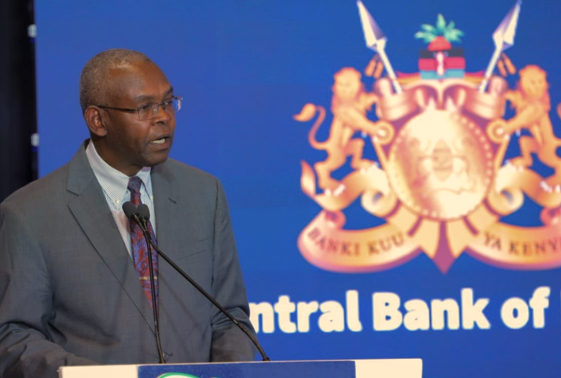
The Monetary Policy Committee (MPC), which met on Tuesday, has lowered the Central Bank Rate (CBR) by 25 basis points to 9.75 percent from 10 percent.
Central Bank of Kenya (CBK) Governor Dr. Kamau Thugge, who is also the chairman of the MPC, said that the average lending rates in the domestic market have continued to decline, while private sector credit growth has recovered modestly.
“The Committee concluded that there was scope for a further easing of the monetary policy stance to augment the previous policy actions aimed at stimulating lending by banks to the private sector and supporting economic activity, while ensuring inflationary expectations remain firmly anchored and the exchange rate remains stable,” said Dr. Thugge.
He further explained that the MPC will closely monitor the impact of this policy decision as well as developments in the global and domestic economy and stands ready to take further action as necessary in line with its mandate.
According to Dr. Thugge, the Committee met against a backdrop of elevated uncertainties to the global outlook for growth, lower but sticky inflation in advanced economies, heightened trade tensions, and persistent geopolitical tensions.
“Global growth is projected at 2.8 percent in 2025 compared to 3.3 percent in 2024, mainly reflecting significant downward revisions to growth in the United States and China due to the effects of higher tariffs on U.S. imports and retaliatory tariffs by trading partners,” said the Dr. Thugge.
He highlighted that although the U.S. and China have retreated on their previously announced tariff levels, the outcomes of bilateral trade negotiations between the U.S. and key trading partners remain highly uncertain, adding that reduced global demand, particularly in China, and escalation of geopolitical tensions in the Middle East and the Russia-Ukraine conflict remain key risks to growth.
Dr. Thugge disclosed that global headline inflation has moderated but is projected to decline at a slower pace due to the expected inflationary impact of higher tariffs on trade.
According to the Governor, Central banks in major economies have adopted a more cautious approach in lowering policy rates.
“International oil prices have moderated due to increased production and subdued global demand, mainly from China, but the risk of potential volatility remains elevated due to higher tariffs on imports and persistent geopolitical tensions. Food inflation has eased slightly, mainly driven by lower cereal and sugar prices inflation, but edible oil price inflation remains elevated,” he said.
He added that Kenya’s overall inflation declined to 3.8 percent in May 2025 from 4.1 percent in April and remained below the mid-point of the target range of 5 plus or minus 2.5 percent.
Dr. Thugge said that non-core inflation declined to 6.0 percent in May from 8.4 percent in April, reflecting lower prices of food crops and related items, particularly vegetables.
“Additionally, lower energy and utilities inflation continued to moderate non-core inflation on account of lower electricity prices. Nevertheless, core inflation rose to 2.8 percent in May from 2.5 percent in April, mainly on account of higher prices of processed food items,” he said.
Dr. Thugge said that overall inflation is expected to remain below the midpoint of the target range in the near term, supported by stability in food and energy prices and continued exchange rate stability.
The Governor highlighted that the recently released Economic Survey 2025 shows that the performance of the Kenyan economy slowed down in 2024, with real GDP growing by 4.7 percent compared to 5.7 percent in 2023, mainly reflecting deceleration in growth in most sectors of the economy.
“However, leading indicators of economic activity point to improved performance in the first quarter of 2025. The projected growth of the economy in 2025 has been revised to 5.2 percent from 5.4 percent on account of higher tariffs on trade. The resilience of key service sectors and agriculture, expected recovery in growth of credit to the private sector, and improved exports are expected to support the pickup of growth in 2025,” he said.
By Joseph Ng’ang’a