In recent times, the world has witnessed a shift towards a more health-conscious society.
This trend has led to the adoption of healthier eating habits, including the increased consumption of fruits and vegetables. The changing market demands and health concerns have left many farmers struggling to make ends meet, especially non-food crop growers.
In Migori County, the new trend has hit hard on tobacco, maize and sugarcane farming, which for decades dominated the region as staple money-minting crops towards boosting the area’s economy.
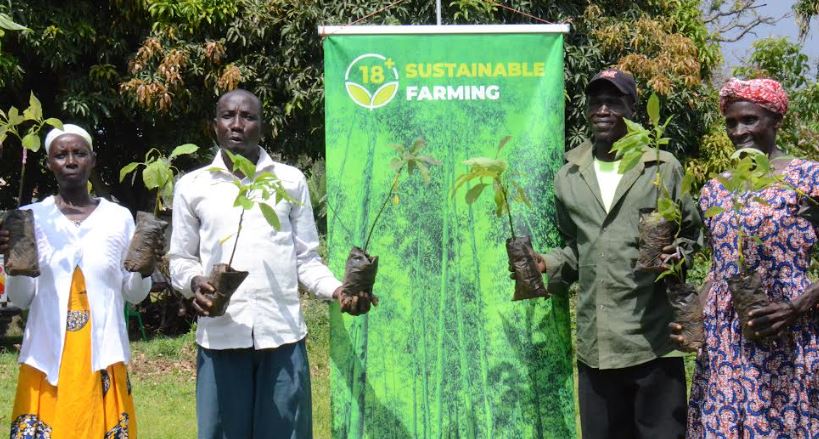
However, a new initiative has emerged within the region that aims to provide farmers with alternative crops that can help them diversify their income streams and improve their health.
British American Tobacco (BAT) Company Kenya, a non-indigenous entity, has taken this cue to introduce avocado farming to tobacco farmers in Migori County to increase their income sources and improve their economic and health needs.
In recent months, the avocado fruit has gained significant popularity and has been touted as a superfood due to its numerous health benefits.
With a ready market both domestically and internationally, BAT now hopes that by introducing the crop to its farmers, the beneficiaries will be able to improve their livelihoods and reduce their dependence on tobacco as their main source of income.
“Starting this month, BAT will give out thousands of free avocado seedlings to our tobacco farmers with a view to making them grow this crop in some of their plots, even as they continue with tobacco farming,” said William Okello, one of the many company field officers, while training a group of farmers recently.
The negative health impacts of tobacco on farmers and those consuming its sticks and fermented leaves have become the campaigning tools to make a paradigm shift to alternative safe crops such as avocado that in recent years have hit the market with attractive prices and high demand.
Other than its effects on farmers’ health, tobacco use is associated with a wide range of health problems, including several types of cancer and other chronic diseases to smokers, among them Chronic Obstructive Pulmonary Disease (COPD), bronchitis and emphysema. COPD can lead to difficulty in breathing, chronic coughing, and other respiratory symptoms.
Many countries are enforcing strict regulations on the tobacco industry, making it slowly adopt mixed farming, bringing on board safe crops, preferably avocado.
These regulations have made it more difficult for tobacco farmers to grow and sell their crops, and many have been forced to look for alternative sources of income.
Influenced by the ever-rising global demand for avocados, it would be suicidal for a company like BAT Kenya to ignore this crop, said Okello, adding that’s why they have decided to weave its growth alongside tobacco.
Avocado is considered a “superfood” due to its high nutritional value, and its popularity, especially in Western countries, has ignited a big demand from Kenya and Migori has not been spared.
Its introduction has generated significant opportunities for farmers in the region, where the climate and soil conditions are ideal for growing the fruit.
Avocado farming has several advantages over tobacco farming. For instance, avocado is a perennial crop that can yield fruit for up to 50 years with proper care.
This means that farmers can enjoy a more stable source of income for longer and avoid the cycle of planting and harvesting alongside tobacco growing. Avocados require less water and pesticides than tobacco, making them a more sustainable crop.
But perhaps the most significant advantage of avocado farming is its potential for improving farmers’ health.
By contrast, tobacco farming is notoriously dangerous, with farmers exposed to harmful chemicals and at risk of developing respiratory illnesses such as “green tobacco sickness.”
Mary Atieno, a 45-year-old widow and mother of five, has been farming tobacco for over a decade, but says that all she has gained out of this activity is ill health as a result of the harmful chemicals.
“While I relied on tobacco growing as my sole source of income, it did not change my poor income to anything good; instead, it became a great cost to my health,” she rued during an interview, explaining, “I have been suffering from breathing problems and chest pains for years now. With very little money in my pocket, I have to take medication every day just to remain alive.”
Additionally, the chemicals she uses to grow and the method of curing the tobacco leaves have greatly affected her eyesight, she complains.
But now Atieno is excited about the prospect of switching to avocado farming, noting that she will spend less on medical bills and also will not expend as much energy in producing avocados as in the much more laborious tobacco farming.
Similarly, John Ouko, a 35-year-old father of three, has also been farming tobacco for many years. John says that while he has been able to eke a living from the crop, the market for tobacco has become increasingly unpredictable in recent years.
He believes that avocado farming would provide a more stable source of income for him and his family once the crop starts to yield.
“With avocados, I know that I will be able to sell my crop for a good price every year and use the funds to do other investments,” he says.
Akin to farmers who have jumped into growing avocado, there are those who have shifted their farming to growing sweet potatoes, cassava, millet, and sorghum crops and planting bamboo trees, which are more promising in the world markets than sugarcane and tobacco crops.

Collins Chacha, a farmer from the Nyanchabo area of Kuria West, says he abandoned growing tobacco and went into sweet potato growing, a move that is now giving him a good income and, subsequently, a better life.
“From my three acres of sweet potato plants, I am now able to get good income to take care of my large family. I am now able to educate my children, feed them and take care of their health well and still remain with good money to save from the annual sales of my produce,” bragged Chacha during an interview with him.
Another farmer who has digressed from growing tobacco and sugarcane and picked on cassava as her new farming line is Mrs Caroline Awino. She has diverted to growing this crop on her four acres, giving her a complete change of life.
“I have transformed into a serious producer of cassava in this region and I am now earning good income from this crop compared to what I used to get from growing maize and tobacco,” she told KNA recently.
“This crop is resistant to drought and gives me assurance of a good harvest any time I plant new seedlings compared to maize, which is always hit by bad weather,” added Awino.
There are those farmers who have fully embraced bamboo crops as well as fish farming from ponds. Others still have diversified to producing millet and sorghum crops, which are also drought resistant and enjoy high market demands right now due to their positive recharge to human health.
From Awendo to Rongo and to Nyatike, Kuria East and Uriri sub-counties, the farming trend has obviously changed, with a drive through villages giving you a picture of vast farms of millet, cassava and sorghum, and avocado tree thickets dotting homes and farms.
Meanwhile, this is a real diversification from a previous farming norm of growing only tobacco, maize and sugarcane to producing crops that were hitherto hated by the local farmers.
By George Agimba