Child neglect is the most reported form of abuse in Kajiado County, with officials warning that it remains the leading threat to children’s welfare.
Other rising cases include defilement, abandonment, physical and sexual violence, child marriages, Female Genital Mutilation (FGM), Early marriages, child labour and other harmful cultural practices.
This was revealed during a Kajiado County Children Advisory Committee (CAC) meeting where the Directorate of Children Services (DCS) presented the county’s child protection and safeguarding strategies.
County Coordinator for Children Services, Ann Kang’ethe, said many cases, especially defilement, continue to go unreported, leaving children exposed to cycles of abuse.
“Defilement is one of the most underreported forms of abuse due to stigma, fear and sometimes silence within families. In many cases, the perpetrators are close relatives, which makes it even harder for victims to speak out or for guardians to report. Communities must be sensitised to break this cycle and ensure that offenders face justice,” she said.
Kang’ethe urged the community to take responsibility by reporting cases of abuse promptly.
“Every unreported case denies a child the right to justice, dignity and safety. Protecting children is not the duty of the government alone, but a collective responsibility of all of us,” she stressed.
Kang’ethe further expressed concern over the growing number of early pregnancies, which she said was forcing many school-going girls to drop out, jeopardising their education and future.
She emphasised that the trend was not only a violation of children’s rights but also a major contributor to poverty cycles in families.
The Coordinator outlined several ongoing initiatives spearheaded by DCS to protect children, among them community sensitisation through chiefs’ barazas, recruitment and training of child protection volunteers, and capacity building for National Government Administrative Officers (NGAOs).
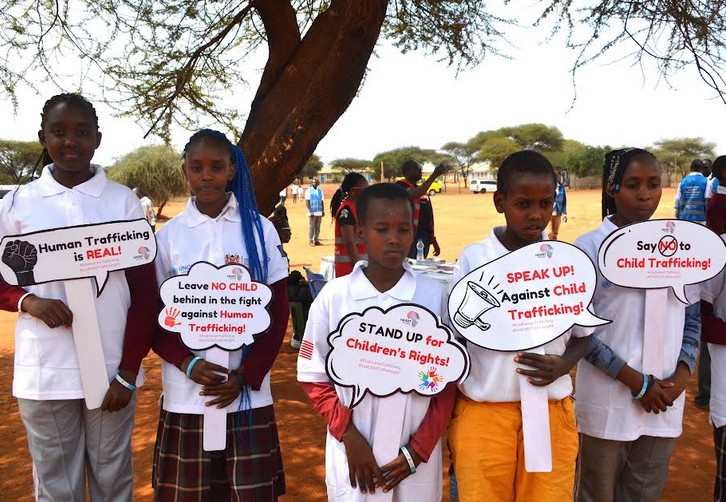
She noted that schools have become critical platforms for awareness creation, with the formation of child rights clubs and child protection forums that empower children to speak out and seek support.
Kajiado Central Assistant County Commissioner (ACC) Sylvia Mintina emphasised that a multi-agency approach was crucial in safeguarding children.
“A collaborative approach towards solving children’s issues is key. Government departments, faith-based organisations, civil society, community leaders and parents must all join forces if we are to make real progress in protecting our children,” Sylvia said.
The meeting further underscored the role of County Area Advisory Committees (CAACs) in coordinating child protection efforts across various agencies and ensuring no child falls through the cracks.
Another key priority is the ongoing Care Reforms Strategy, which seeks to reduce overreliance on institutional care such as orphanages and promote family- and community-based care for vulnerable children. According to officials, family-based systems provide children with safer environments and better chances for rehabilitation and reintegration into society.
Stakeholders present, reiterated the need for stronger enforcement of child protection laws, community awareness campaigns, and grassroots monitoring structures.
They noted that cultural practices such as early marriages and FGM remain widespread in parts of the county, undermining children’s rights despite being outlawed.
Child labour, especially in livestock herding, sand harvesting sector and domestic work, was also cited as a growing concern that denies children access to education.
The CCAC resolved to intensify child protection programmes, strengthen partnerships with local leaders and schools, and scale up public education campaigns to ensure children’s safety and well-being.
by Rop Janet