Civil society organizations are advocating for transitioning from debt-financed energy projects to grant-based funding from international financiers to alleviate Kenya’s increasing debt burden.
Promoting non-debt financing models could assist Kenya and other African nations in mitigating excessive borrowing that burdens their development budgets.
The calls come after concerns over inadequate funding from developed countries that had pledged billions in climate change adaptation funding through the Paris Climate Change Agreement.
However, some nations, particularly the United States and certain European countries, have reduced funding for addressing climate change and instead allocated resources to defense initiatives.
In recent years, Kenya and other African nations are seeking international loans to finance energy projects, resulting in significant debt accumulation.
According to Jackline Kimeu, Energy Transition Advisor at Christian Aid, more than 90 per cent of energy financing should be grant-based to accelerate access to electricity for millions across the continent.
Kimeu urged the African Development Bank (AfDB) and the World Bank to expedite funding of at least 30 per cent towards the “Mission 300” project, which seeks to connect over 300 million Africans to electricity.
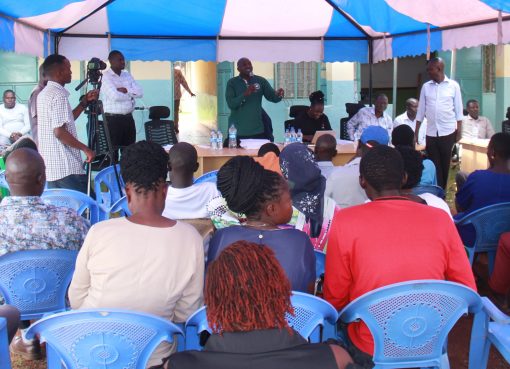
Speaking in Naivasha during the ongoing Kenya Climate Change Working Group stakeholders’ meeting, Kimeu said Kenya remains on track to meet its goal of sourcing 100 per cent of its energy from renewables by 2030.
She noted that Kenya has so far achieved 75 per cent electricity access and 34 per cent clean cooking access, adding that stakeholders remain committed to tracking funding commitments for decentralized energy solutions such as solar and wind.
Meanwhile, Gibson Kiragu, a consultant with the African Development Bank, said the institution provides both grants and concessional loans to help countries accelerate their transition to renewable energy.
Kiragu welcomed ongoing efforts to link 50 per cent of mini-grids to main power sources, saying this would boost electricity access and help dismantle the existing monopoly that has excluded millions from the grid.
“Africa contributes only about four per cent of global emissions yet bears the greatest brunt of climate-induced disasters. The continent must therefore invest in low-carbon energy pathways to reverse the damage,” Kiragu said.
On the other hand, Stephen Ogutu, representing persons with disabilities (PWDs), said people with disabilities are among the most affected by climate change and must be included in energy access policy formulation.
Paul Butita, a PWD advocate, added that the Mission 300 initiative, which aims to connect 300 million Africans to power, must ensure that people with disabilities are among its beneficiaries.
“People with disabilities continue to face barriers in accessing energy. This must be addressed through inclusive policymaking, it’s time for action,” said Butita.
By Erastus Gichohi and Susan Wangari