Women in the Coast region have been urged to venture into elective politics ahead of the 2027 general election to advance women’s interests and help meet the constitutional requirement of the two-thirds gender rule.
In the 2022 elections, the region produced one elected Governor, Fatuma Achani, and three Members of the National Assembly: Mishi Mboko (Likoni), Capt. Ruweida Obo (Lamu East), and Amina Mnyazi (Malindi).
At the county level, Mombasa led the pack with six elected MCAs, followed by Kilifi with three; Kwale, Tana River, and Taita-Taveta each had one, while Lamu had none.
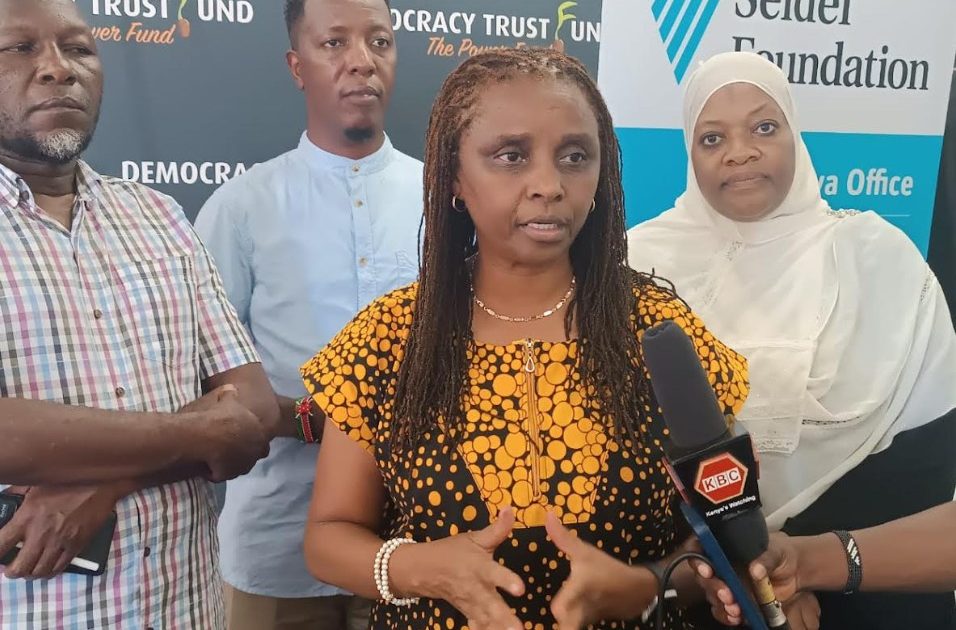
To boost women’s participation in elective politics, Echo Network Africa, in partnership with the Hanns Seidel Foundation, has trained 100 aspiring, nominated, and elected women leaders from the six coastal counties in Mombasa.
Sarah Muhoya, Chief of Party at Echo Network Africa Foundation, said the workshop sought to address the challenges behind the low representation of women from the Coast in elective politics.
“Overall performance of the women in the Coast region in general elections has really been very low. Even though that is a reflection of the national performance, we are very concerned about the performance of women,” she stated.
Muhoya explained that the organisation is creating support networks, identifying potential women candidates, and equipping them with skills to overcome cultural constraints, hostile political party environments, and financial limitations.
“We have encouraged them to start preparing early. We, as Echo Network Africa Foundation, have monthly meetings where we train women from end to end, from when you decide to run, in between and when you win or lose,” she said, adding that they have tailored tools to prepare the women.
The Foundation and its sister organisation, the Democracy Trust Fund, also have a fund for women to save money for their campaigns.
The Chief of Party further underscored the importance of women owning and investing in their campaigns to have money not to lose because of being incapacitated.
She noted that they want more women to be elected, as the country has struggled to achieve the constitutional threshold of not more than two-thirds gender representation, both through elections and nominations.
“It has been very difficult; right now, even at the National Assembly, we haven’t achieved the constitutional threshold of not more than two-thirds,” said Muhoya.
“We can shore up those numbers by getting more women preparing and running to win because they can,” she added, calling for concerted efforts to encourage more women on the ballot.
On his part, Joseph Maathai, Elections and Governance Expert, lauded the women who venture into politics for their resilience in the face of cultural, financial, cyberbullying, and political party barriers.
“The women are becoming more courageous because they can also look at the national landscape and see that they are women who have weathered the storms, so to speak. Women have to storm and occupy the spaces in leadership so that they can elevate the position and raise the voice of women,” he said.
Maathai further advised women to network and share valuable political experiences to get solutions. “We must position ourselves strategically and we must have value in our political parties,” he emphasised.
On her part, Zuleikha Hassan, a former Women’s Representative of Kwale, urged women to vie for positions in political parties for the advancement of women’s interests.
She further cited the handout and fear of being ostracised from the community as one of the major barriers hindering women from joining elective politics.
“Women don’t have money to dish out; we should look at their manifestos and their character instead,” Hassan said.
Robertson Kabucho, a Programme Officer of the Hanns Seidel Foundation, said they will continue to promote and enhance women’s participation in politics.
“We want to see more women’s representation in the national and county assemblies, despite the existing cultural, religious, financial, and political barriers,” he added.
By Sadik Hassan