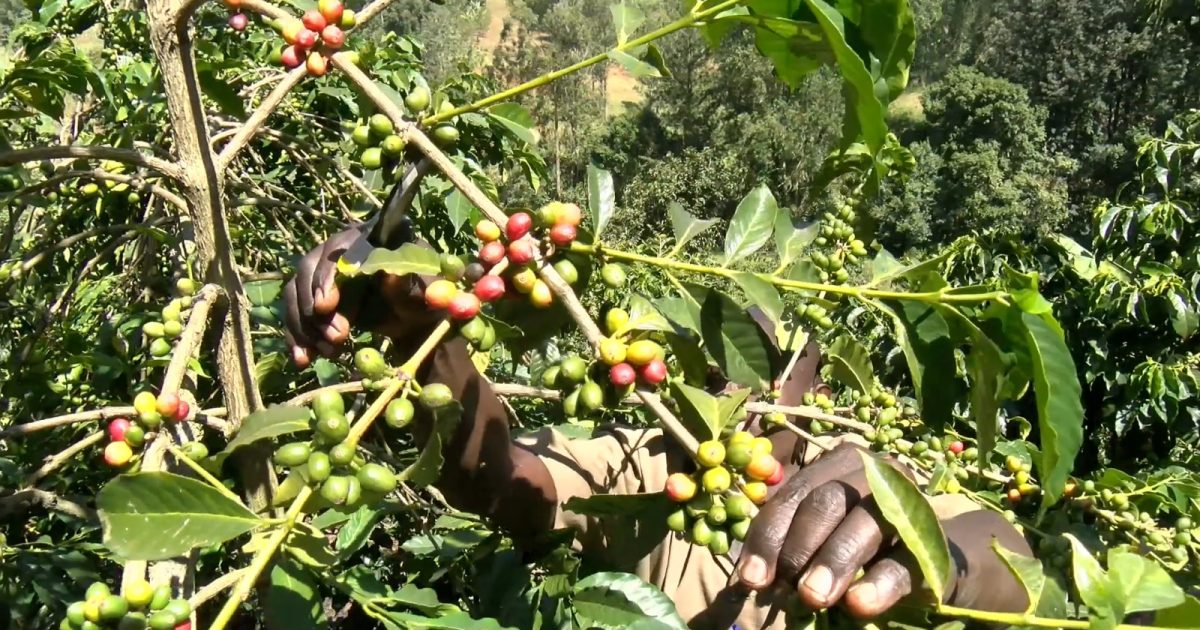
Coffee farmers in Murang’a have opposed the Direct Settlement System (DSS) model in payment and warned that bypassing the traditional cooperatives’ structure will destabilise the delicate coffee sector.
While lauding the reforms the government has put in place to revive the once ailing coffee sector so far, the farmers note that this particular reform will take the sector back to its knees.
While the DSS model is aimed at streamlining payments by reducing the exploitation of smallholder farmers by middlemen, the farmers argue that its introduction will kill the strong cooperative movement that has served them throughout the years.
The new model is a policy shift that will henceforth mandate mobile-based payments directly to farmers’ mobile phones.
At the Marumi Coffee Cooperative Society in Kigumo, the farmers who spoke to KNA noted that the move to pay them directly through mobile phones will affect even the quality of cherry delivered, as farmers will no longer be able to cater for agricultural extension services individually.
“Last year our cherry fetched a high price at the coffee auction, making it the best-paying coffee society in Murang’a County at a rate of Sh92 per kilogram and that is because the cooperative has invested in educating us on the best coffee practices,” says Peter Mwangi.
“The cooperative society has also been able to facilitate other farmers, who come to the farm to train us with the aim of increasing production while also producing quality cherry, so if I receive my payment via Mpesa, the money will meet other pressing needs at the expense of carrying out activities that will improve my coffee’s production,” he added.
Notably, cooperatives play a critical role in pooling resources together, accessing farm inputs, processing coffee and providing services such as low-interest credit and extension support services.
“We are not against reforms but transitioning to the DSS system will mean that every farmer is on their own; we will not have a voice to even question discrepancies therein,” Mawangi further notes.
Mary Njeri argues that payment through mobile money will open the door for exploitation, especially for the aged people by cartels and middlemen and even criminals disguised as well-wishers.
“I am advanced in age; how will I be able to follow up on my cherry payment and who will I question if the amount received is not commensurate with the cherries delivered?” she poses.
Another farmer, James Murage, observes that the DSS model will return the sector where it was failing.
“We have educated our children through the cooperatives but it will be difficult to get substantial returns pooled together; let us maintain the cooperative movement, as that is our heritage,” he says.
She notes that their cooperative society has enabled them to access the best farm inputs to increase production and deduct the money from their payment but with mobile payment directly to her account, it will be impossible to prioritize the best farm inputs.
The farmers are urging the Ministry of Cooperatives to consult widely with farmers and allow a hybrid model that incorporates cooperatives in the disbursement of payments while enhancing transparency and accountability.
This opposition comes as the coffee sector in the country struggles to recover from years of mismanagement, poor prices, exploitation by middlemen and dwindling productivity as the government continues to debate the future of the crop and how best to empower farmers.
By Florence Kinyua