The National Gender and Equality Commission (NGEC) has called on county governments to establish and operationalise safe houses for survivors of gender-based violence (GBV).
NGEC Vice Chairperson Thomas Koyier observed that such facilities were cornerstones in protecting victims and supporting the survivors’ recovery.
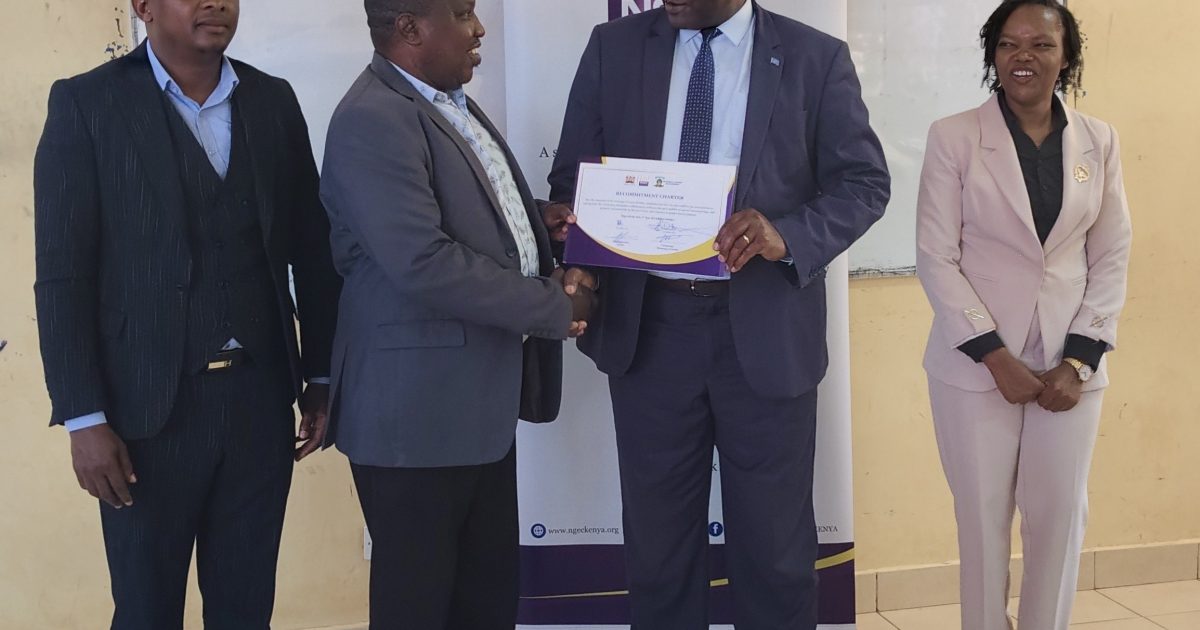
Speaking during the recommitment ceremony of the Equality and Inclusion Technical Working Group (EITWG) in Murang’a, Koyier emphasized that survivors of GBV needed more than legal compensation as they required immediate safety, shelter and psychosocial support.
“Every time a woman or girl is assaulted, the first question is, where will she go for safety? Too often, survivors are forced to return to the very environments where violence occurred, exposing them to further harm,” Koyier said.
“Safe houses are not a luxury. They are an essential service that can mean the difference between life and death,” he noted.
According to the NGEC official, safe houses served as secure spaces where survivors could find temporary shelter while they received medical care, counseling and legal support. They provide an environment free from intimidation and victim-blaming, giving survivors time and stability to rebuild their lives.
Currently, most counties in Kenya lack functional safe houses, leaving survivors with little choice but to rely on friends, relatives, or community leaders, a situation that often compromises their safety and prolongs trauma.
Koyier warned that this gap undermined efforts to combat GBV, despite strong national policies and laws in place.
“Even the strongest legislation means nothing if survivors have nowhere safe to turn to,” Koyier noted.
He urged county governments to allocate specific budget lines for GBV response and to partner with civil societies and faith-based organizations in establishing and running safe houses.
“Counties should also invest in training staff to manage these facilities, ensuring survivors receive professional care, confidentiality and dignity,” Koyier advised.
During the forum which brought together various stakeholders, Murang’a County was hailed for recommitting itself to equality and inclusion, but NGEC challenged its leadership and others across Kenya to back up pledges with practical action.
“Murang’a has taken the right step in recommitting to equality, but the real test is whether it will establish safe houses, allocate funds and make this a priority in county development plans,” Koyier stated.
He also cited recent disturbing incidents of GBV including the assault of a young woman in Narok and cases of humiliation of schoolgirls in Nakuru as evidence that survivors urgently needed safe spaces.
With statistics showing that nearly 70 percent of female athletes in Kenya experience violence or abuse in sports, NGEC argued that safe houses were critical not only for women and girls but also for men, boys and persons with disabilities affected by violence.
“Safe houses should be accessible, inclusive and spread across counties so that no survivor has to travel long distances to find protection,” Koyier emphasised.
NGEC pledged to continue working with Parliament and the National Treasury to support counties in resourcing safe house programmes. It will also monitor county commitments to ensure that equality and GBV prevention are embedded in governance structures.
“We must not leave survivors to suffer in silence. Counties have the responsibility to protect, and safe houses must be the starting point. Let this recommitment in Murang’a be remembered not just for the signatures, but for the day we turned words into safe shelters for survivors,” he remarked.
On his part, Murang’a County Executive Member for Sports, Gender and Culture Manoah Gachucha said the county has established various programmes aimed at curbing GBV.
He observed that Murang’a was among counties with high cases of GBV and called on victims to make reports to relevant authorities.
“Handling GBV cases in Kangaroo courts will not help much in dealing with this menace. Victims of GBV should report the matter to police among other relevant government agencies for help,” he said.
“In Murang’a, victims of GBV who need medical care are served for free and together with NGEC, we are working to ensure the victims get more assistance as we also work towards a GBV free society,” he added.
by Bernard Munyao