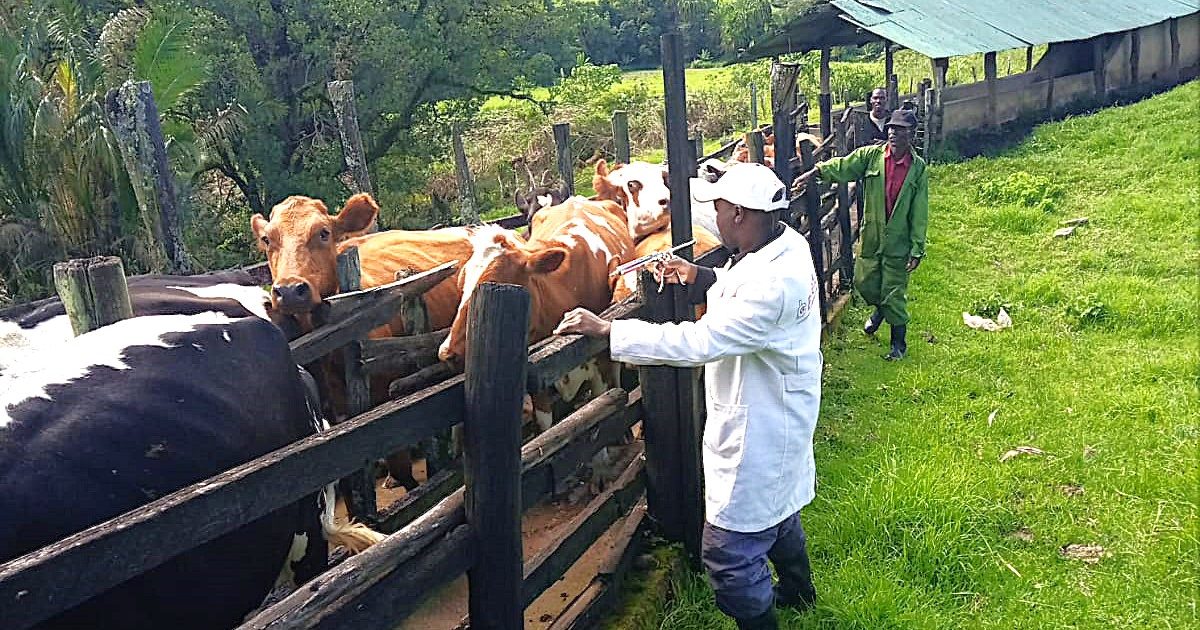
Kericho government has intensified a joint Foot and Mouth Disease (FMD) livestock vaccination campaign, with 23 Savings and Credit Cooperative societies engaged to support the ongoing countywide exercise.
The programme, being implemented by the Ministry of Agriculture and Livestock Development, aims to protect livestock from FMD, safeguard farmers’ investments and stabilize household incomes, while reinforcing broader government’s initiative of increasing agricultural productivity under the Bottom-Up Economic Transformation Agenda (BETA).
Speaking during the opening of a two-day BETA sensitization forum held at a Kericho hotel, the County Chief Officer for Livestock Management, Dr. Michael Bett, said the cooperative-based approach was designed to enhance farmer mobilization and ensure efficient delivery of veterinary services.
“We have engaged 23 cooperative societies to work closely with our veterinary officers to mobilize farmers, register animals, and support the vaccination exercise.
This will help us achieve wide coverage across the county,” said Dr. Bett, who was representing the Kericho County Executive for Agriculture, John Cheruiyot at the forum.
He noted that the FMD vaccination drive, which began last week, was already underway in all the sub-counties, with veterinary officers deployed on the ground to register animals and administer vaccines.
“Foot-and-Mouth Disease poses a serious threat to livestock productivity and farmers’ incomes. This vaccination programme is a critical intervention to protect livelihoods and ensure sustained livestock production,” he added.
Beyond disease control, Dr. Bett said, the county was strengthening livestock production systems by addressing feed availability.
The Chief Officer also revealed that a county-supported fodder farm has been established in Soin Sub-county to promote sustainable livestock feeding, particularly for dairy farmers.
“The fodder farm will serve as a demonstration and multiplication center for quality fodder planting materials, helping farmers cope with feed shortages, especially during dry seasons,” he said.
Dr. Bett further said the county was subsidizing Artificial Insemination (AI) services to improve livestock breeds and boost milk and meat productivity, noting that cooperatives would play a central role in service delivery.
“Through our cooperatives, we are supporting the availability of quality semen, so that farmers can access affordable AI services. This will significantly improve herd genetics and long-term productivity,” he said.
On crop production, the Chief Officer said soil testing remained a key component of the county’s agricultural strategy, enabling farmers to apply the correct type and quantity of fertilizer based on soil requirements.
“Soil testing allows us to provide accurate recommendations, so that subsidized fertilizer is used efficiently and reaches farmers who genuinely need it,” he explained.
He further said the county had adopted a decentralized system for distributing subsidized fertilizer through designated centers to improve accessibility and reduce costs for farmers.
In the dairy subsector, Dr. Bett said the county had strengthened cooperative societies to improve milk handling and marketing, where a total of 43 dairy cooperatives have been established, with 19 qualifying for milk cooling equipment.
“Kericho County is expected to receive 12 milk coolers by mid-month. This will significantly reduce post-harvest losses and improve earnings for dairy farmers,” he said.
Dr. Bett also noted that improved coffee prices had renewed interest in the crop farming, prompting the county to invest in value addition through the establishment of coffee pulping stations.
“By improving our processing capacity and diversifying beyond tea, we are helping farmers stabilize their incomes and build resilience,” he said.
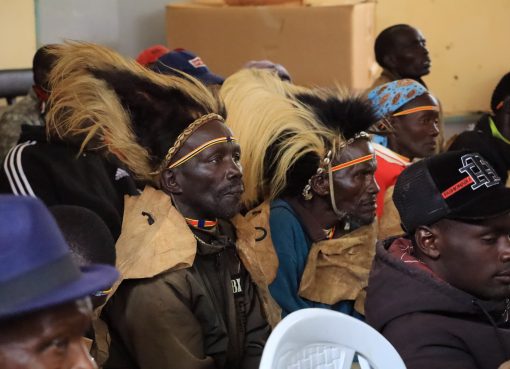
The two-day sensitization forum, organized by the Executive Office of the President, brought together National Government Administration Officers (NGAO) in Kericho County and officers from various government departments to strengthen coordination and ensure effective implementation of BETA programmes.
Dr. Bett reaffirmed the county government’s commitment to practical, farmer-centered interventions, emphasizing that collaboration with cooperative societies remains central to achieving agricultural transformation under the BETA framework.
By Gilbert Mutai