The County Government of Nakuru has shifted its focus on early detection, accessible and affordable treatment and sensitization programs towards improving diabetic patients’ care.
The devolved unit’s administration has indicated that the initiative involves promoting healthy lifestyles and utilizing technology to enhance access to patient care, medication and education.
County Executive Committee Member (CECM) for Health Care Services) Ms Roselyn Mungai said they were focusing on preventive services to reduce complications and urged Kenyans to take responsibility in the prevention of diabetes and regularly avail themselves for screening for diabetes in all public health facilities.
She highlighted the County Government’s ongoing efforts to raise awareness and improve early detection and management of diabetes, particularly at the community level.
“We have made significant progress in public education on diabetes. A key achievement is the deployment of Community Health Promoters (CHPs), equipped with glucometers and essential testing supplies,” said the CECM.
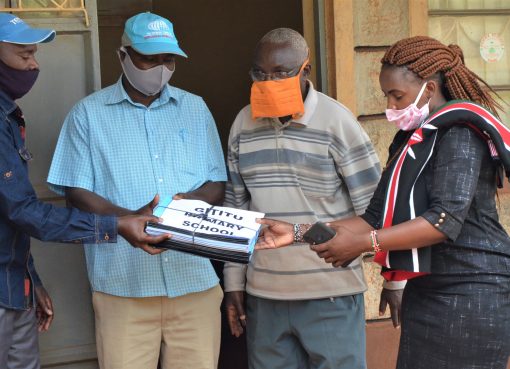
The CECM made the remarks when she led the County Health Management Team (CHMT) in receiving essential medical equipment from Medtronic Lab to enhance diabetes care services.
The equipment included two Getein 1160 analyzers, two Slit Lamp 3 units, monofilaments, diabetic foot care tools, peripheral vascular dopplers, and nail clippers.
Ms Mungai pointed out that besides the tools significantly improving support for diabetes patients by extending the range of diagnostics available, they will also strengthen primary care networks and enhance diabetes management across all the 11 Sub- counties.
She underscored the importance of proper handling and maintenance of the equipment to ensure their durability and optimal patient care.
The CECM further noted that the Social Health Authority, established under the Social Health Insurance Act, is now operational and managing the Primary Health Care Fund.
Through this mechanism, she added, the Fund offers free preventive services—including diabetes screening—at all Level 2 and 3 public health facilities across the county, as well as through CHPs.
Ms Mungai noted that diabetes is a serious threat to the attainment of Kenya’s health and economic aspirations, with more than 87 percent of Kenyans not knowing the status of their blood sugar.
The CECM also warned of a potentially much larger undiagnosed diabetic population, estimating that up to two million Kenyans could be living with undetected diabetes or in a pre-diabetic state.
“The average Kenyan only seeks screening when they already have a problem. Many patients are only diagnosed after experiencing complications like kidney failure or heart attacks. So, we need to educate people about this disease,” she emphasized.
She added “This underscores the need for regular screening and public education,”
While indicating that the initiative is part of Governor Susan Kihika administration’s efforts to improve the management of non-communicable diseases (NCDs) the CECM stated that they were conducting regular public health campaigns to educate residents about diabetes risk factors, prevention strategies, and the importance of healthy lifestyles.
She however assured that diabetes is a manageable condition, and with the right treatment, persons living with diabetes can live long and productive lives free of complications.
Ms Mungai pledged that they will continue investing in constant training programs for healthcare workers to enable them recognize and treat diabetes, especially in primary care settings, to enable early diagnosis and prevent complications.
“Diabetes is one of the non-communicable diseases that are being diagnosed at an advanced stage, resulting in deaths that could have been prevented. We have ensured that our primary care facilities have adequately trained staff who understand how to manage diabetes and its complications,” noted the CECM.
Ms Mungai emphasized that diabetes requires lifelong management to prevent complications such as kidney failure and stroke.
She advised people to eat a balanced diet rich in whole grains, fruits, and vegetables, and to strictly adhere to medication.
“Young people must start watching what they eat today because it determines their future health,” she said.
According to the National Strategic Plan for the Prevention and Control of Non-Communicable Diseases, the prevalence of diabetes in Kenya was estimated to be 3.1 percent in 2019, a number projected to rise up to 4.4 percent in 2035, if no action is taken.
In 2015, at least 8, 700 diabetes-related deaths were registered in Kenya.
Currently, there are about 2.3 million diabetes cases in Kenya, a number expected to rise to 3.5 million by 2045.
Ms Mungai attributed the rise in diabetes cases to a lack of screening, sedentary lifestyles, and physical inactivity.
Due to limited awareness, many diabetes cases are diagnosed late, sometimes after complications like diabetic foot, characterized by loss of nerve sensation in the legs, have already set in, leading to amputations.
By Anne Mwale