Narok County Department of Health is enhancing reproductive, maternal, newborn, child, and adolescent health (RMNCAH) services through the Uzazi Salama Programme, supported by Safaricom and M-Pesa Foundations.
During a co-creation dissemination meeting, the stakeholders discussed key interventions to improve health infrastructure across the county, including the construction of modern maternity, Maternal and Child Health (MCH), and newborn units in all nine sub-counties.
The Uzazi Salama Programme, initially launched in Narok East Sub-County, is now being expanded to all sub-counties and the Narok County Referral Hospital. The expansion aims to ensure equitable access to quality maternal and child health services for residents.
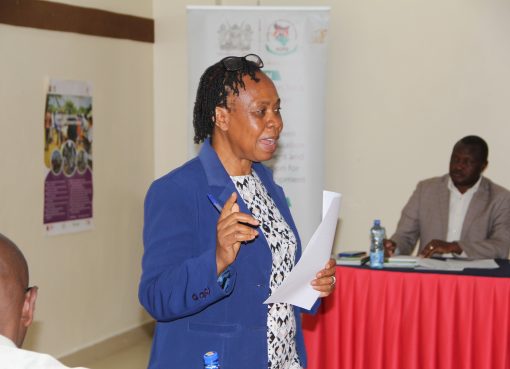
Meanwhile, Chief Officer for Preventive and Promotive Health Services Lucy Kashu, praised the initiative as a milestone in strengthening health systems.
“The success of Uzazi Salama lies in collaborative partnerships. By working together with our stakeholders, we can guarantee sustainable solutions that will safeguard the health of mothers and children across Narok County,” she said.
Echoing her remarks, Project Manager in Narok Geoffrey Sadera highlighted the programme’s significant contribution in addressing long-standing health issues.
“Scaling up this initiative across the county will bridge critical gaps in maternal and newborn health care, ensuring that no mother or child is left behind,” he noted.
The meeting brought together various health stakeholders, including AMREF Programme Manager (FRH) John Kutna, who reaffirmed the importance of joint action in improving community health outcomes.
Unfortunately, expectant mothers in Narok continue to face limited access to quality maternal health services, especially in remote areas since long distances to health facilities, coupled with poor road networks, make it difficult for many women to reach hospitals on time, particularly during emergencies.
This challenge often results in home deliveries under unsafe conditions, increasing the risk of complications such as obstructed labor and maternal deaths.
Inadequate health infrastructure and shortages of skilled personnel further strain maternal health care. Many facilities in the county lack well-equipped maternity units, neonatal intensive care units, and sufficient medical supplies.
Thus, the scale-up of the Uzazi Salama is expected to directly tackle these challenges by bringing maternal health services closer to communities and strengthening existing health systems.
Through the construction of modern maternity and newborn units, the deployment of skilled health workers, and ongoing community sensitization, the programme will reduce delays in accessing health care.
By Lamech Willy. A