Nakuru County has unveiled a programme that encourages smallholder poultry farmers to use the dual-purpose breeds that will address the challenges of poor breeds and low production.
The initiative is aimed at unlocking the County’s estimated potential of Sh 3 billion in the sub-sector.
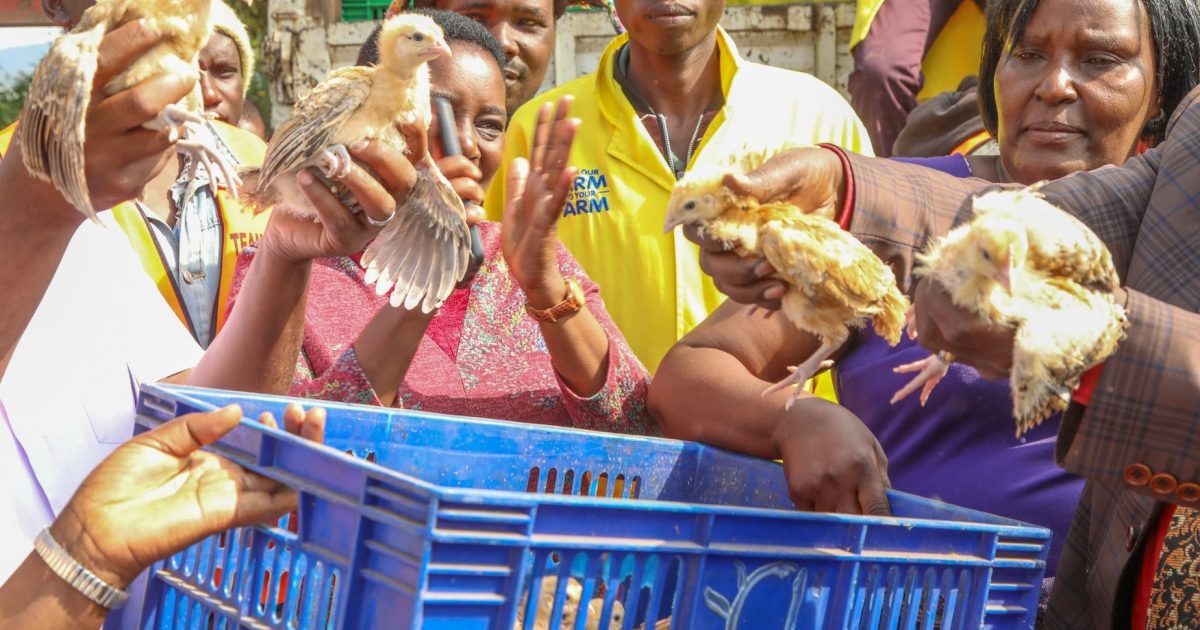
Governor Susan Kihika said through the project, more than 100 women, youth, and persons with disabilities (PWD) groups in Menengai East Ward within Nakuru Town East Sub-county had received 13,000 one-month-old improved ‘Kienyeji’ chicks under the clarion call ‘Improved Local Chicken Stimulus Project for economic vitality’.
She added that the initiative was part of her administration’s ongoing broader agricultural empowerment agenda, aimed at enhancing food security, increasing household incomes and promoting inclusive growth.
The Governor further said that all the beneficiaries had received basic training in poultry care and would get further support from ward livestock officers to help in improving breeding and multiplication of their indigenous chickens.
She explained that the project was designed to promote urban agriculture while ensuring the use of limited available space to feed the growing population in urban centers.
“Our ultimate goal is to achieve food security and nutrition as well as create employment for the vulnerable groups,” Ms Kihika elaborated.
She voiced her administration’s commitment to improving the livelihoods of Nakuru residents, particularly women, persons living with disabilities and youth, to enable them to take care of their needs and those of their families.
The programme, Ms Kihika further said, targets to have farmers rear improved Kienyeji Chicken varieties that start laying eggs only five months after being hatched and produce an average meat weight of 1.5kg, while a cock should weigh at least 2 kg.
She said farmers were expected to use the dual-purpose breeds to improve their local chicken in addition to increasing their production, which she added will help address challenges of poor breeds and low production while at the same time generating income for the communities.
To ensure that the smallholder farmers realise optimum production, the county boss said her government had attached veterinary and livestock extension officers to the project to help equip the breeders with necessary technical advice, such as how to feed the birds and administer vaccines.
Last year poultry farmers in Nakuru netted over Sh 875 million from the sale of 67 million eggs.
A further Sh 489 million was earned from the sale of 825 tonnes and 340 tonnes of chicken and turkey meat, respectively.
Agricultural experts have indicated that the earnings could exceed Sh 3 billion if farmers receive disease-resistant birds that mature quickly.
Statistics from the Ministry of Agriculture indicate that Kenya has an estimated poultry population of 31 million birds.
Out of these, 75 per cent consist of indigenous chickens, 22 per cent of broilers and layers and one per cent of breeding stock.
The traditional chicken is mostly kept in rural areas, while layers and broilers are mainly reared in the urban areas.
Nakuru now has approximately 1.5 million indigenous chickens, 18,300 improved Kienyeji breed, 212,200 layers, 275,900 broilers, 44,000 turkeys, 73,000 ducks and 14,500 geese.
The County is exploring the possibility of intensifying poultry vaccination in order to cushion small-scale farmers against the high vaccination costs as well as the high cases of disease outbreaks.
By Esther Mwangi and Esther Otieno