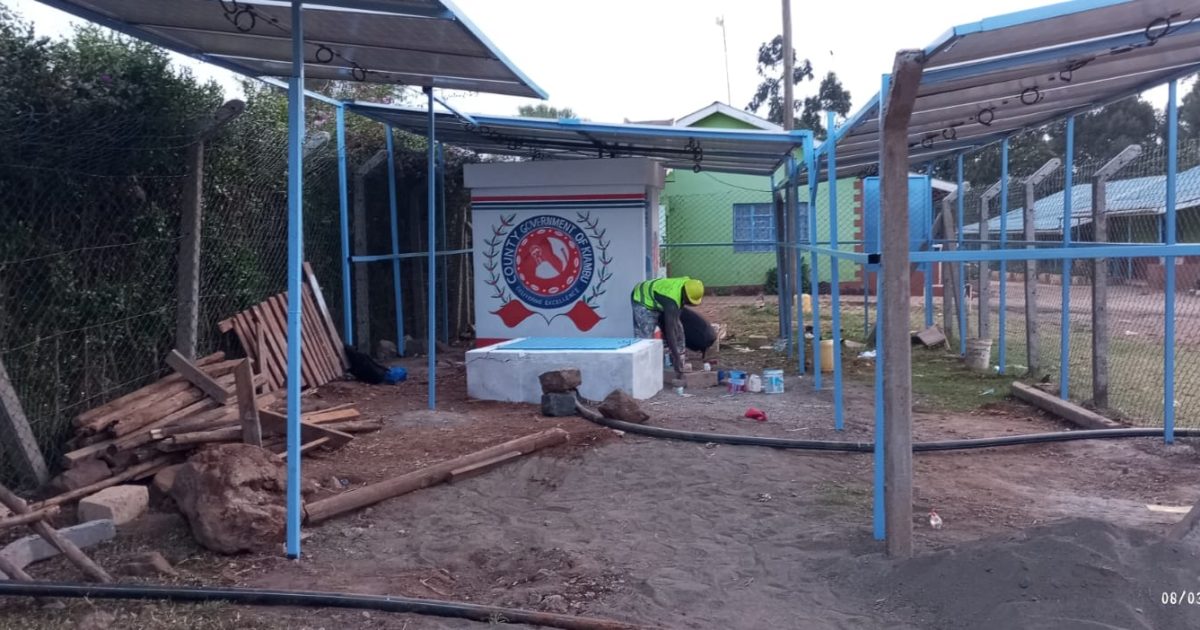
Residents across Kiambu County are witnessing a major transformation in water accessibility, thanks to a wave of ambitious infrastructure projects spearheaded by the County government and key development partners.
In collaboration with organisations such as Kiambu Water and Sewerage Company (KIWASCO) and Thika Water and Sewerage Company (THIWASCO), and supported by national initiatives such as the Financing Locally Led Climate Action (FLLoCA) programme, clean water is flowing into communities long underserved.
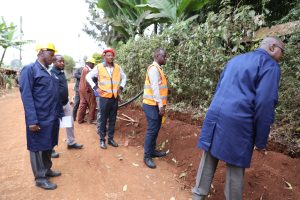
This week, County Executive Committee Member (CECM) for Water, Environment, and Natural Resources, David Kuria, conducted a supervisory tour of projects across multiple Sub-counties, reinforcing the County government’s commitment to universal access to clean, safe water.
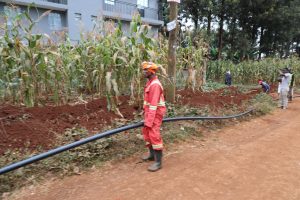
In Ndumberi Ward, Kiambu Sub-county, major upgrades to the water distribution pipeline network are progressing. KIWASCO has already laid 2.7 km of new pipeline out of a 23 km target.
Once completed, this system will serve Ndumberi, Ting’anga, and Riabai and extend from the Riabai Karemenu offtake all the way to Kiamumbi Estate.
Additionally, in Kamae, more than 200 residents will benefit from a localised upgrade that promises to bring consistent and safe water directly to homes.
“This is about restoring dignity through water,” said Kuria, adding, “It’s also about equity, ensuring every home, regardless of geography, has reliable access to water.”
In Kiambaa Sub-county, borehole projects are providing tailored solutions to the pressing water scarcity issue.
At the Rwenu police station, a newly drilled 300-metre borehole is producing 18 cubic meters of water per hour.
The project’s next Phase includes solar-powered pumping, a 64m³ elevated storage tank, and an expanded distribution network set to serve over 5,000 residents across Kagongo and Karura wards.
At the same time, Muchatha dispensary, a vital healthcare facility in the area, is now host to a 320-metre-deep borehole, yielding 19m³ per hour.
This health facility will also be solarised and paired with a 96–108m³ tank, ensuring that over 7,000 people, including patients, staff, and neighbouring households, can rely on clean water for everyday needs.
“These aren’t just engineering projects,” said Kuria, adding that “They are life-changing interventions.”
Accompanying Kuria on these visits were KIWASCO Managing Director Boniface Mbugua Karuri, Water and Sanitation MD, John Kariuki, Technical Manager George Nyutu, and key County Geologists.
Their joint presence underscored a collaborative, cross-agency commitment to long-term water solutions.
At Manguo Swamp, Borehole No. 11 is now producing 70m³ water daily, targeting the expanding residential zones of Tilisi and Tigoni.
Nearby, a 600-metre sewer line under construction in the Farmer’s area will significantly improve sanitation standards, preventing contamination and waterborne diseases.
Meanwhile, the Thingate-Kahiti area in Ngecha Tigoni has seen a 10-kilometre last-mile water connection reach 300 households, benefiting over 1,500 residents.
The Ngecha Community Water Project, with its 20m³ borehole and 108m³ elevated tank, is set to deepen this transformation.
On the other hand, one of the flagship projects is the Gatuanabu borehole, implemented under the FLLoCA programme, fully solarised and now producing 108m³ per day. The system is supplying water to 350 households.
Likewise, in Ondiri Ziwani, a newly completed borehole is already operational, providing 77m³ of water daily to 150 households.
“These are lifelines; a public service in its most basic form, providing people with what they need to survive and thrive,” added the Water CECM.
And as Thika edges closer to attaining city status, water infrastructure is a central component of its urban development framework. There are multiple ongoing projects, including the Magana Primary Borehole, now equipped with a solar-powered 50m³ elevated tank, already serving more than 5,000 residents.
Another highlight is the Lang’ata water extension project, through which new water pipelines are being installed to connect over 10,000 residents.
Meanwhile, to tackle long-standing flooding and sanitation issues, the water stakeholders also visited the ongoing sewer line projects in Kisii and Athena areas in Thika town, which frequently experience waterlogging during rainy seasons.
“These projects are foundational,” said THIWASCO Managing Director Moses Kinya, adding, “Water access is not optional; it’s essential for any city worth the name.”
These projects are part of a larger, strategic effort by the Kiambu County Government to integrate water sustainability into every level of development. By collaborating with technical partners, leveraging community input, and utilising solar energy for sustainability, the county is setting a precedent in decentralised water solutions.
The recurring theme across the county’s water projects is dignity through improved health, time savings for women and children, better sanitation, and resilience against climate-related water shortages.
“Our mission is simple: every citizen of Kiambu deserves access to clean water. It’s a human right, and we’re working tirelessly to make it a daily reality,” concluded Kuria.
By Grace Naishoo