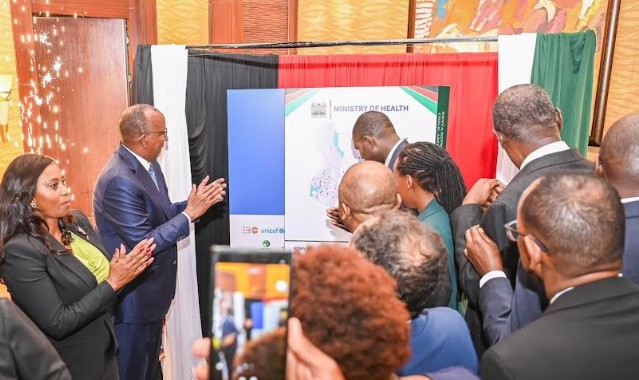
The Ministry of Health has launched healthcare readiness assessment reports that capture reproductive, maternal, newborn, child, and adolescent health and nutrition.
Three landmark documents dubbed the Kenya Quality of Care Health Facility Assessment Reports and the Reproductive, Maternal, Newborn, Child, and Adolescent Health (RMNCAH) Investment Case will guide Kenya’s efforts to deliver high-quality, equitable, and people-centred healthcare for all.
Speaking during the launch on Tuesday in Nairobi, Health Cabinet Secretary Aden Duale said that the documents provide a comprehensive picture of the current state of Kenya’s health system and the investments required to accelerate progress toward Universal Health Coverage (UHC).
“We are identifying areas that require urgent attention and collective resolve, and despite Kenya making significant progress in improving its health system, several challenges persist, chief among them being the imbalance between technical and non-technical health workers, which continues to hinder efficient service delivery,” he noted.
The CS urged county governments to address this gap to ensure equitable access to quality healthcare across the country and balance the ratio to achieve the optimum service delivery for Kenyans.
“These findings offer valuable insights into the readiness of our health facilities, the strength of our workforce, and the actions needed to close persistent service delivery gaps,” he said.
The reports unveiled, he noted, will be presented to the clerks of both the National Assembly and the Senate for review, and he called on the Senate Health Committee to exercise its oversight role by ensuring that counties with staffing disparities take corrective action.
“The Ministry’s role is policy formulation and evidence generation,” Duale said. “It is now up to the Legislature to interrogate these findings, engage county leadership, and ensure equitable staffing and efficient service delivery for all Kenyans.”
CS Duale noted that the findings will inform ongoing legislative and policy reforms, including the Quality of Healthcare and Patient Safety Bill, currently before the Senate.
He expressed appreciation to development partners, including the Bill & Melinda Gates Foundation, Global Fund, UNFPA, UNICEF, and the World Health Organization (WHO), for their financial and technical support in producing the reports.
The reports align with Kenya’s national development agenda and Sustainable Development Goal 3 on good health and well-being, reinforcing the government’s commitment to achieving universal health coverage and strengthening the country’s healthcare system.
Principal Secretary for Public Health and Professional Standards, Ms. Mary Muthoni, noted that the assessments were carried out to address stagnation in health outcome indicators and to ensure that health investments translate into measurable impact.
“Our objective was to evaluate service availability, readiness, and quality across all levels of care to strengthen accountability, enhance client satisfaction, and guide targeted resource allocation,” she said.
Principal Secretary for Medical Services, Dr. Ouma Oluga, said the reports provide an evidence base for policy, planning, and budgeting.
“These findings will help us balance technical and non-technical human resources, strengthen facility capacity, and promote accountability within both national and county systems,” he remarked.
The head of the Division of Reproductive, Maternal, Newborn, Child, and Adolescent Health, Dr. Edward Serem, said following the key indicators of the report, Kenya should be in a position to reduce the maternal mortality ratio from 262 to around 150 by the year 2030.
By Hope Kimunguyi and Daisy Gitari